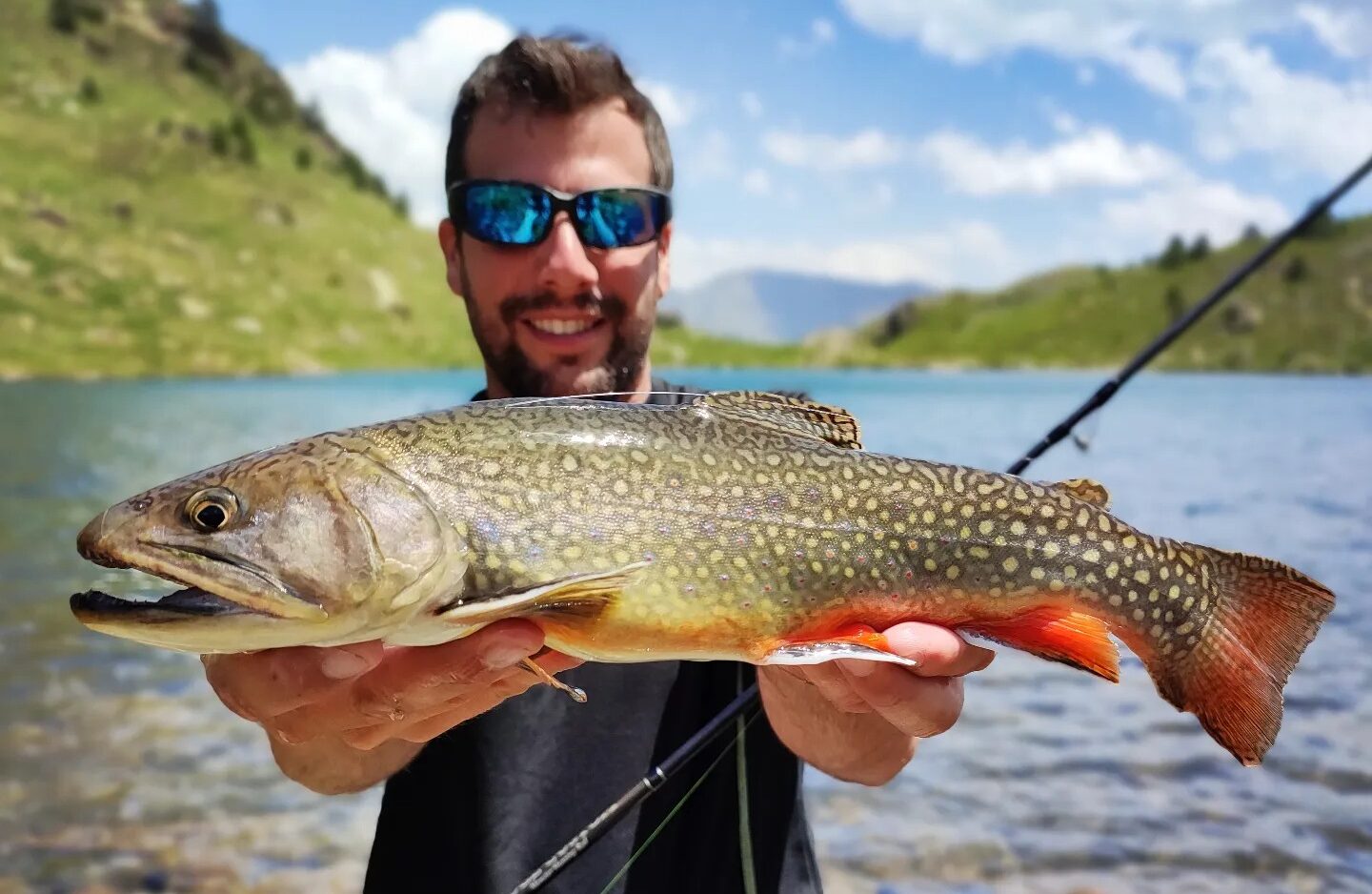
Salmonids are a mythical family of fish found in French rivers and mountain lakes. Every fish in the Salmonidae family is as beautiful as it is cunning and combative. This combination makes them a highly prized family for all lure anglers. In this article, we take a closer look at the wonderful family of salmonids.
Our article in brief:
Salmonids are the mythical fish that inhabit our rivers and mountain lakes. Here are the key points to remember about these beautiful and combative fish:
- Habitat : salmonids live in cold and well oxygenated, with a preference for 8-14°C
- Features : they have a fusiform body, an adipose fin, magnificent colouring and over-developed senses
- Diversity : trout, salmon, char and grayling, each with its own characteristics
- Ecological importance : salmonids are bio-indicators of water quality, so they play a crucial role in the ecosystem
- Threats : pollution, barriers to migration, overfishing and climate change
Characteristics and habitat of salmonids
Salmonids are a family of freshwater fish remarkable for its diversity, its beauty and its adaptation to specific environments. All salmonids have a fusiform body and ray fins that let them cope with the swift currents of our rivers. One anatomical feature sets them apart: the presence of an adipose fin. This small fleshy growth is located between the dorsal fin and the tail.
Salmonids are particularly fond of cold, well-oxygenated waters. They generally live in water temperatures of between 8 and 14°C. This is why they are mainly found in first-category rivers, characterised by a lively current and crystal-clear water.
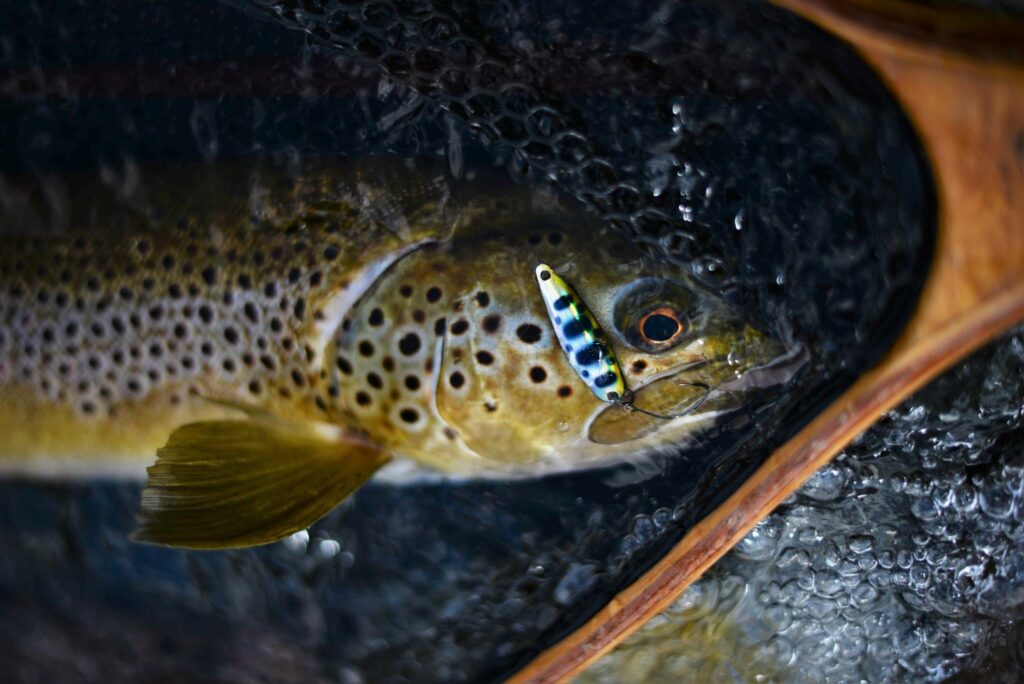
Here is a list of the main characteristics of salmonid habitats:
- Cold water (8-14°C)
- High oxygenation
- Fast current
- Stony or gravelly bottoms
Salmonids have particularly acute senses. They have keen eyesight, a keen sense of smell and a lateral line that is highly sensitive to vibrations. What's more, their ability to camouflage themselves sometimes makes them almost invisible underwater. This makes them formidable predators, but also very difficult to target and approach.
A very diverse family
The salmonid family includes several species. Each species has its own specific characteristics. Among the best known are trout, salmon, char and grayling. In France, some species are emblematic and are the delight of anglers.
Here is a summary table of the main salmonid species present in French waters:
| Species | Features | Preferred habitat |
|---|---|---|
| Brown trout | Emblematic species, spotted | Rivers and streams |
| Rainbow trout | Introduced species | Lakes and rivers |
| Salmon | Migratory, great fighter | Coastal rivers |
| Arctic char | Fish from large Alpine lakes | Deep, cold lakes |
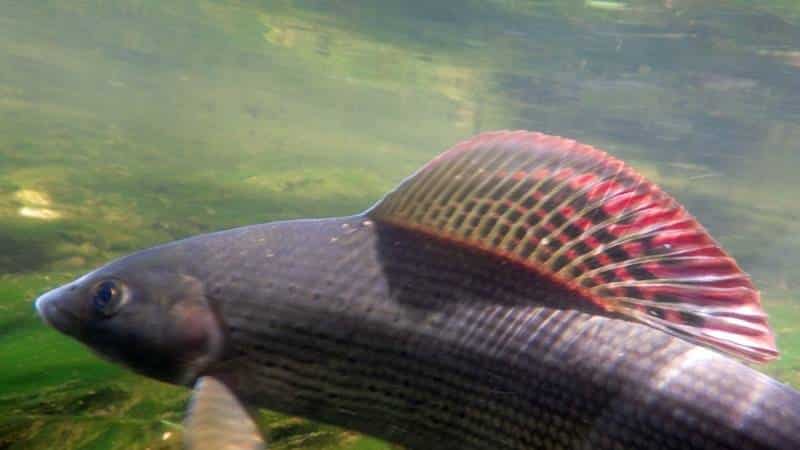
| Common Grayling | Characteristic dorsal fin | Rivers with moderate currents |
| Brook trout | Fish from mountain lakes | Lakes and rivers |
| Lake trout | Mountain lake fish. Introduced from Canada | Deep, cold lakes |
The different salmonids in detail
- The brown trout, a true jewel of our rivers, is undoubtedly the most widespread species and the one most sought after by anglers.
- The rainbow trout is a species of salmonid native to the North American subcontinent, introduced to Europe in the 19th century.
- Grayling can now be fished in a number of rivers where it is well established: Dordogne, Ain, Aude, Haut Rhône, Haute Loire, Allier
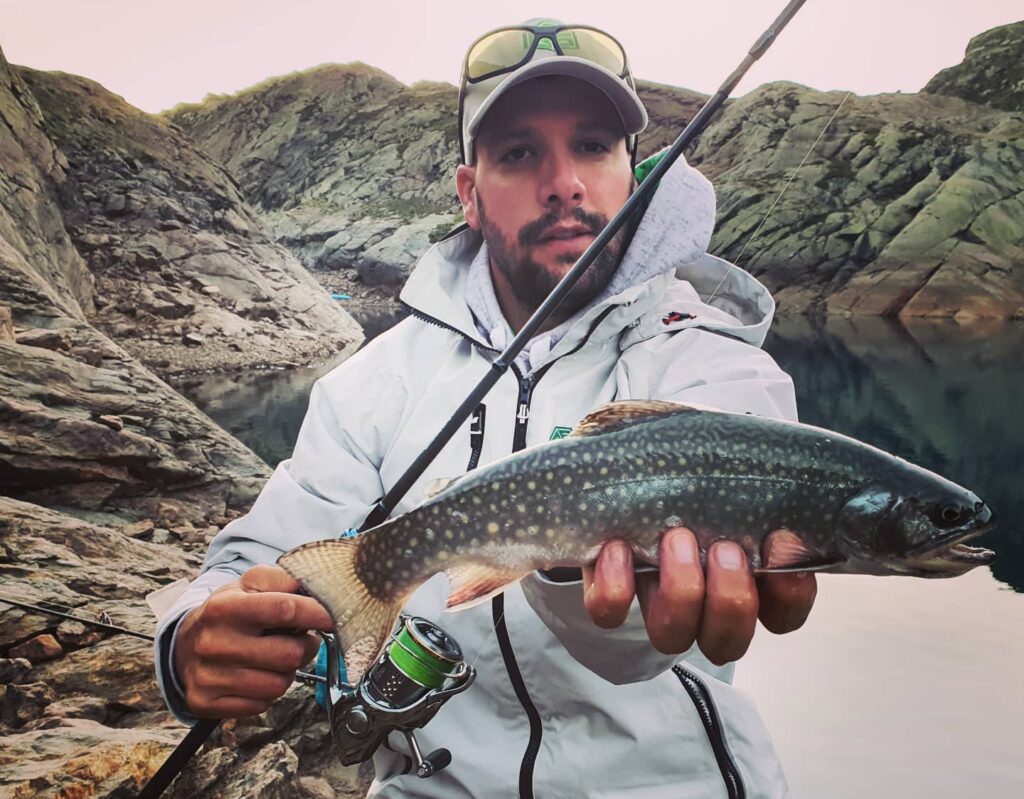
- Arctic char is essentially a lake fish. It is found mainly in the three major Alpine lakes: Léman, Bourget and Annecy..
- The brook trout differs from the Arctic char in having a greenish back with irregular yellowish spots. Its lighter-coloured sides are dotted with yellowish, black and red spots.
- The lake trout is a fish introduced in the 1950s that can only be found in mountain lakes in Savoie and the Pyrenees.
- The Atlantic salmon, for its part, is a captivating migratory fish. Its life cycle, which sees it born in a river, grow up at sea and then return to its birthplace to spawn, commands admiration. Unfortunately, this species faces many threats, mainly linked to obstacles on its migratory route and to overfishing.
Behaviour and life cycle of salmonids
Salmonids feed mainly on insects, crustaceans and small fish. Their diet varies according to species and season.
The reproduction of salmonids is an interesting spectacle that generally takes place in winter, between November and December. The females dig nests, called spawning grounds, in the gravelly bottoms of rivers. This is where they lay their eggs. The eggs are then fertilised by the males.
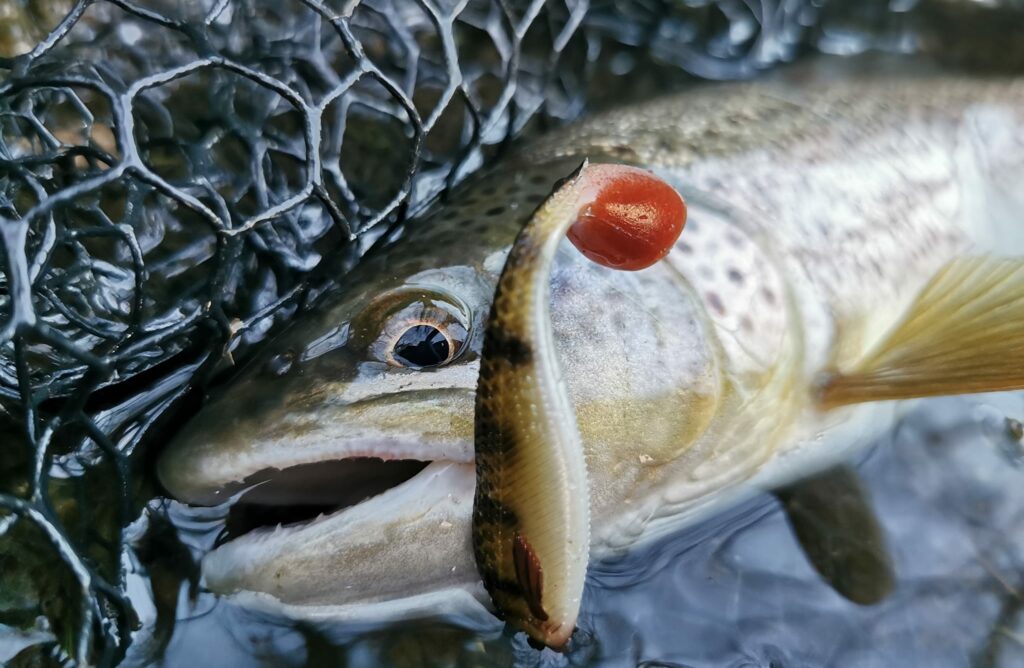
Certain species of salmonids, such as Atlantic salmon, are anadromous. They are born in freshwater and migrate to the sea to grow up. They then return to their native river to reproduce. This complex migratory cycle is a real challenge for these fish. In addition to the predators they have to avoid, they also have to overcome numerous natural and artificial obstacles.
Their presence in a watercourse is often synonymous with good environmental quality, as salmonids are very sensitive to pollution and disturbance of their habitat. This is why they are considered to be excellent bio-indicators of water quality.
The importance of this species in the ecosystem
Salmonids play a central role in the world of sport fishing. Their legendary fighting spirit and the difficulty of catching them make them formidable opponents. Whether you fish with a fly, lures or natural baits, fishing for salmonids requires technique, patience and respect for the environment.
Beyond their sporting appeal, these fish play a crucial role in our ecosystem. They help to regulate insect and small fish populations, while serving as prey for other predators such as fish-eating birds and semi-aquatic mammals. Their migration, particularly that of salmon, brings essential nutrients from the oceans to rivers, enriching freshwater ecosystems.
Unfortunately, many salmonid species face serious threats:
- Water pollution
- Dams and other human obstacles
- Overfishing
- Global warming affecting water temperatures
- Destruction of natural habitats
In response to these challenges, conservation and reintroduction efforts are underway in many regions. As responsible fishermen, we have a duty to participate in these conservation efforts, by complying with regulations and adopting sustainable fishing practices.
Salmonids are the jewels of our fresh waters. They deserve our full attention and respect. Their presence in our rivers is not only a pleasure for anglers, but also a precious indicator of the health of our waters. Let's continue to study them, protect them and pass on our passion for these exceptional fish to future generations.