The aimara, a prehistoric fish from South America, is a true legend in the world of sport fishing. Known by the scientific name Hoplias aimara, this freshwater predator attracts the attention of enthusiasts all over the world. Let’s discover this Amazonian fish, its habitat, its behaviour and the ways to fish for it.
Our article in brief:
The aimara is a fish that lives in South America. It fascinates sport anglers with its prehistoric looks, but above all with its fighting spirit.
- A unique appearance : The aimara is a fish with a streamlined body and a wide, toothy mouth.
- Its habitat : The aimara lives in the large rivers and streams of South America. It is found especially in French Guiana, where it reaches impressive sizes.
- Behaviour : The aimara is very active at dusk and dawn. It can survive in oxygen-poor water
- Fishing : It is generally fished with lures using suitable tackle
- Ecological and cultural importance : a central role in the Amazonian ecosystem and local culture
A predator with a prehistoric look
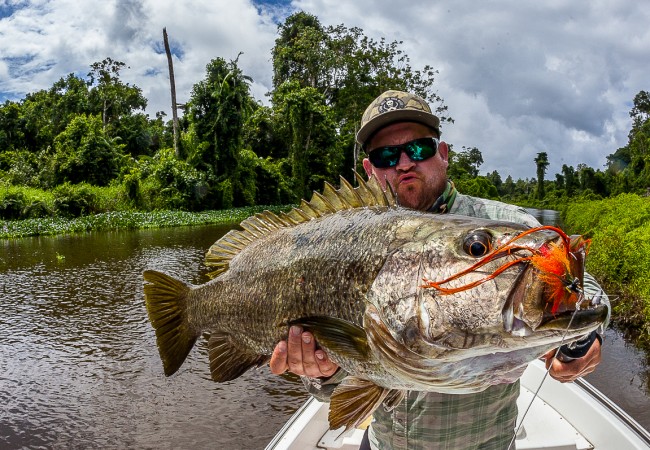
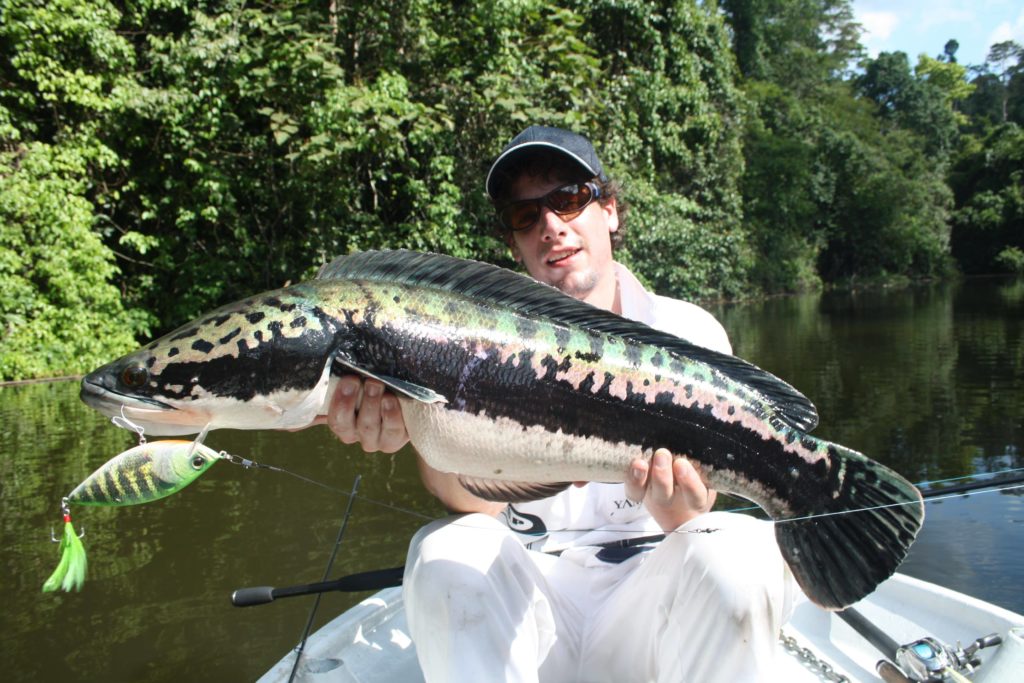
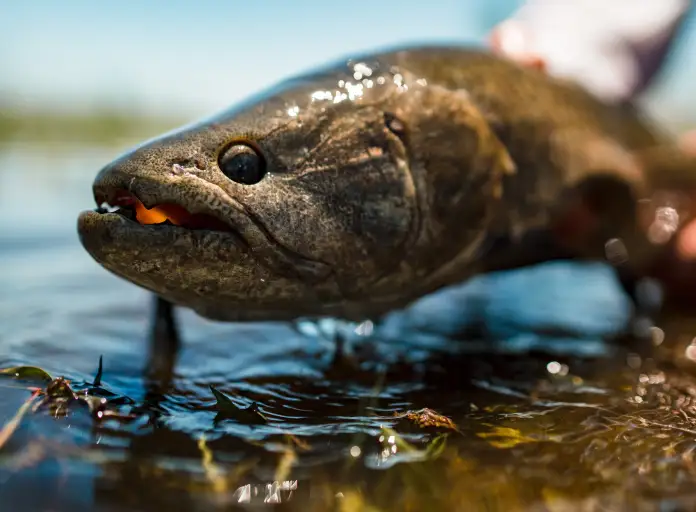
The aimara, also known as trahira or wolf fish, is a fish with a unique appearance. It has a streamlined body and an wide mouth armed with sharp teeth, giving it a very prehistoric look. Its eyes point upwards, making it easier for it to hunt from ambush.
This impressive fish can reach remarkable sizes:
- Average size: 4 to 5 kg
- Maximum size: over 30 kg
- Length: up to 1 metre
Its skin ranges from black to brown, by way of khaki. This variation allows it to camouflage itself perfectly in its surroundings and to surprise its prey in a flash.
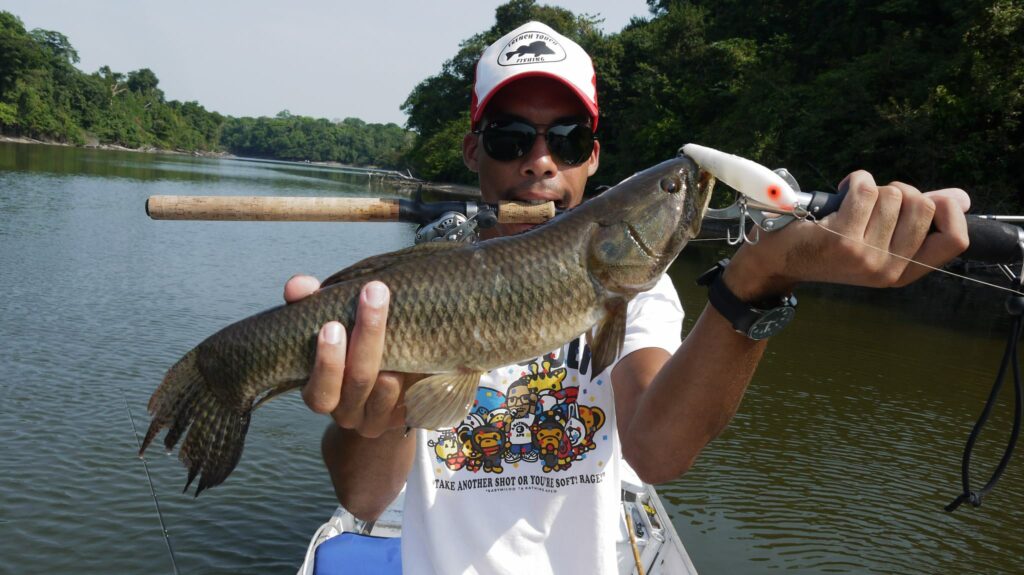
On our expeditions to the Amazon, we were lucky enough to fish for this fascinating species. Its power and aggression never ceased to amaze us. The speed and precision of its strikes were simply astonishing.
Habitat and behaviour of the aimara
The aimara has made its home in the fresh waters of South America, with a particularly strong presence in French Guiana. Its natural habitat includes:
- Large rivers
- Creeks
- Rapids
- Waterfall areas in the Amazon
The aimara is generally a very opportunistic fish. Its diet consists mainly of fish. It is most active in the first and last hours of the day. However, you can of course come across it lying in wait in the middle of the day.
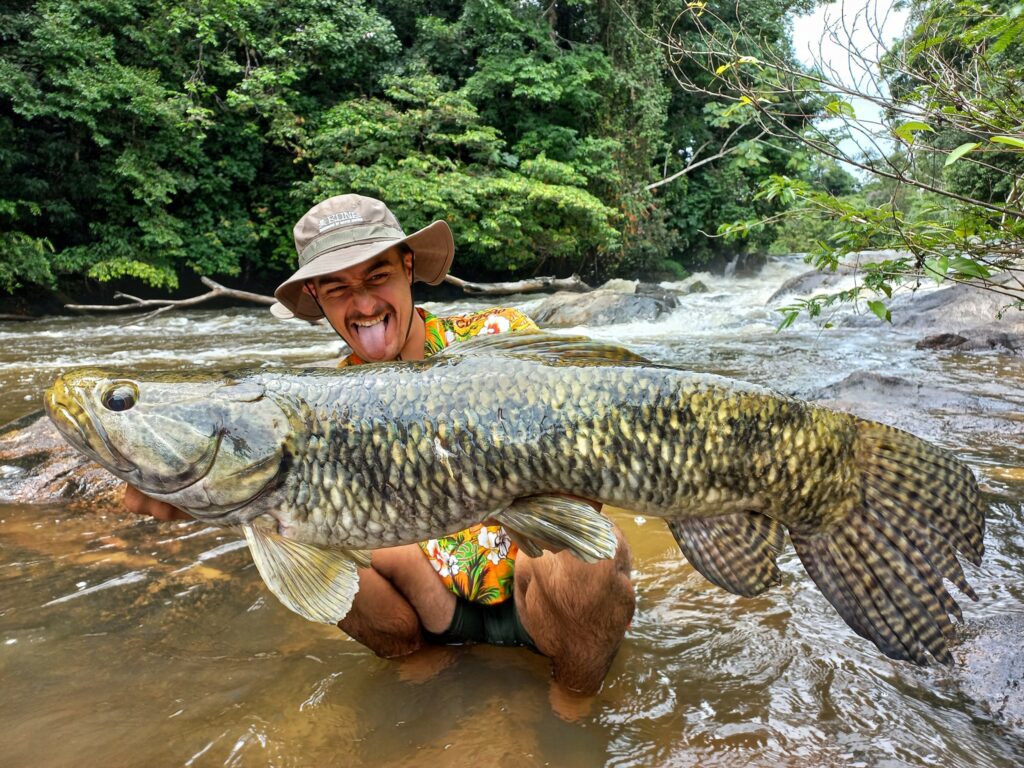
Although it thrives in the fast-flowing waters of the Amazon, the aimara can nevertheless survive in oxygen-poor water. This ability allows it to prosper where other species would struggle to survive. We witnessed this incredible resilience on an expedition to the Amazon’s swampy areas, where the aimaras seemed perfectly at ease despite the difficult conditions.
| Features | Description |
|---|---|
| Hunting technique | Explosive surface strikes |
| Activity period | Dusk and dawn (mainly) |
| Adaptation | Survival in oxygen-poor water |
Fishing for aimara: a thrilling adventure
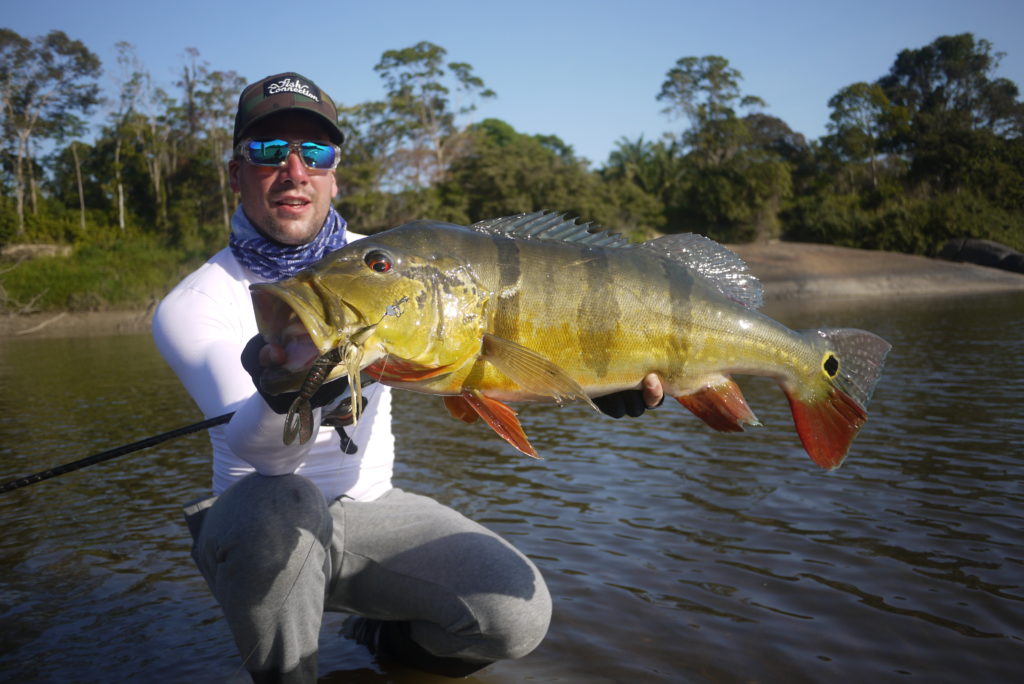
With the peacock-bass, the aimara is one of the fish most sought after by anglers travelling to the Amazon for exotic fishing. It is a powerful, hard-fighting fish that also requires robust tackle and suitable techniques. The best season to try your luck runs from September to March, during the dry season in French Guiana.
The most effective fishing techniques for targeting aimara include:
- Surface lures (poppers, stickbaits)
- Sub-surface lures (jerkbaits, crankbaits, swimbaits)
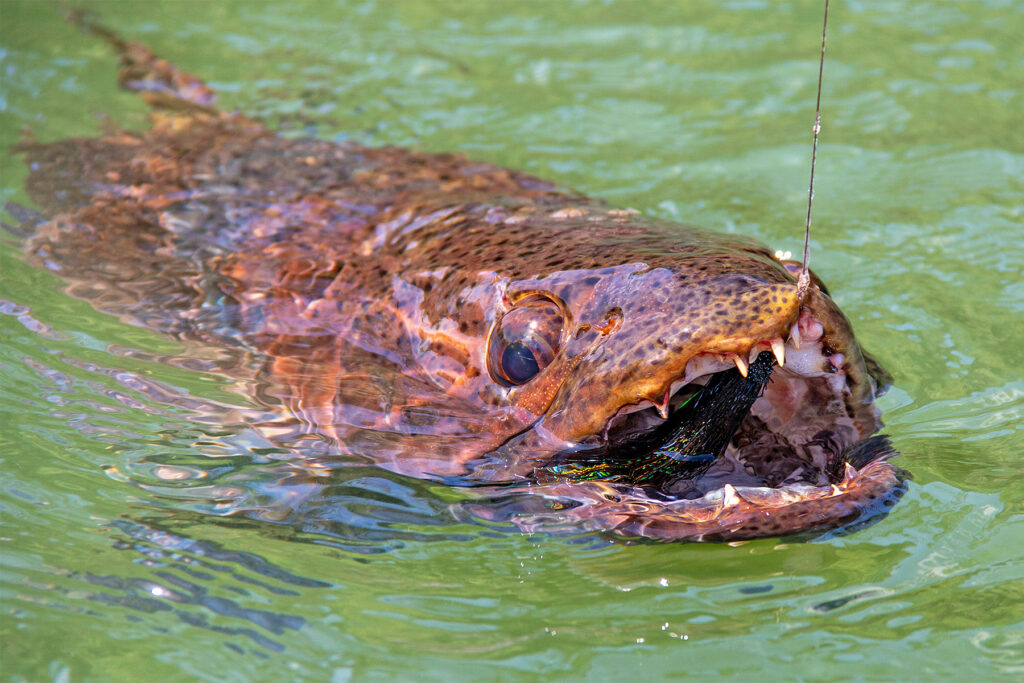
Each of these techniques offers its share of thrills. Popper fishing in particular delivers moments of intense adrenaline when an aimara bursts up from the depths to attack the lure on the surface.
It is important to note that aimara fishing must be practised responsibly. This fish faces several threats, including overfishing, gold mining and mercury pollution.
A key fish in the Amazonian ecosystem
The aimara holds a central place in the Amazonian ecosystem and in the culture of local communities. Its reputation as a legendary fish is well deserved, both for its presence and for its ecological role.
A few fascinating facts about the aimara:
- Belongs to the family Erythrinidae
- Present in most rivers of French Guiana, except the Kourou, the Iracoubo and the Organabo
- Spawns at the beginning of the rainy season
- A female can carry from 6,000 to 60,000 eggs
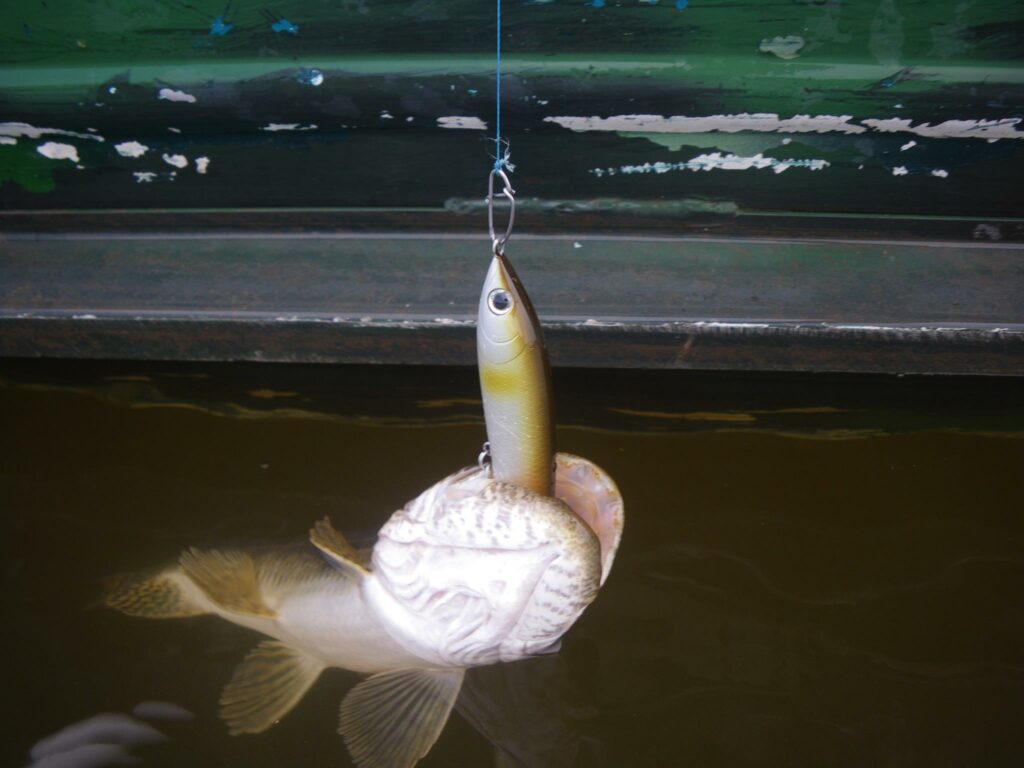
Over the course of our travels, we have seen how important the aimara is in Guianese culture. This fish is not only a valuable food resource but also a symbol of strength and resilience for local communities.
The aimara is a fascinating fish that deserves attention and respect. Whether you are a passionate angler or simply a nature lover, discovering this South American predator promises an unforgettable experience. On the other hand, let’s not forget our responsibility to preserve this iconic species and its natural habitat.