
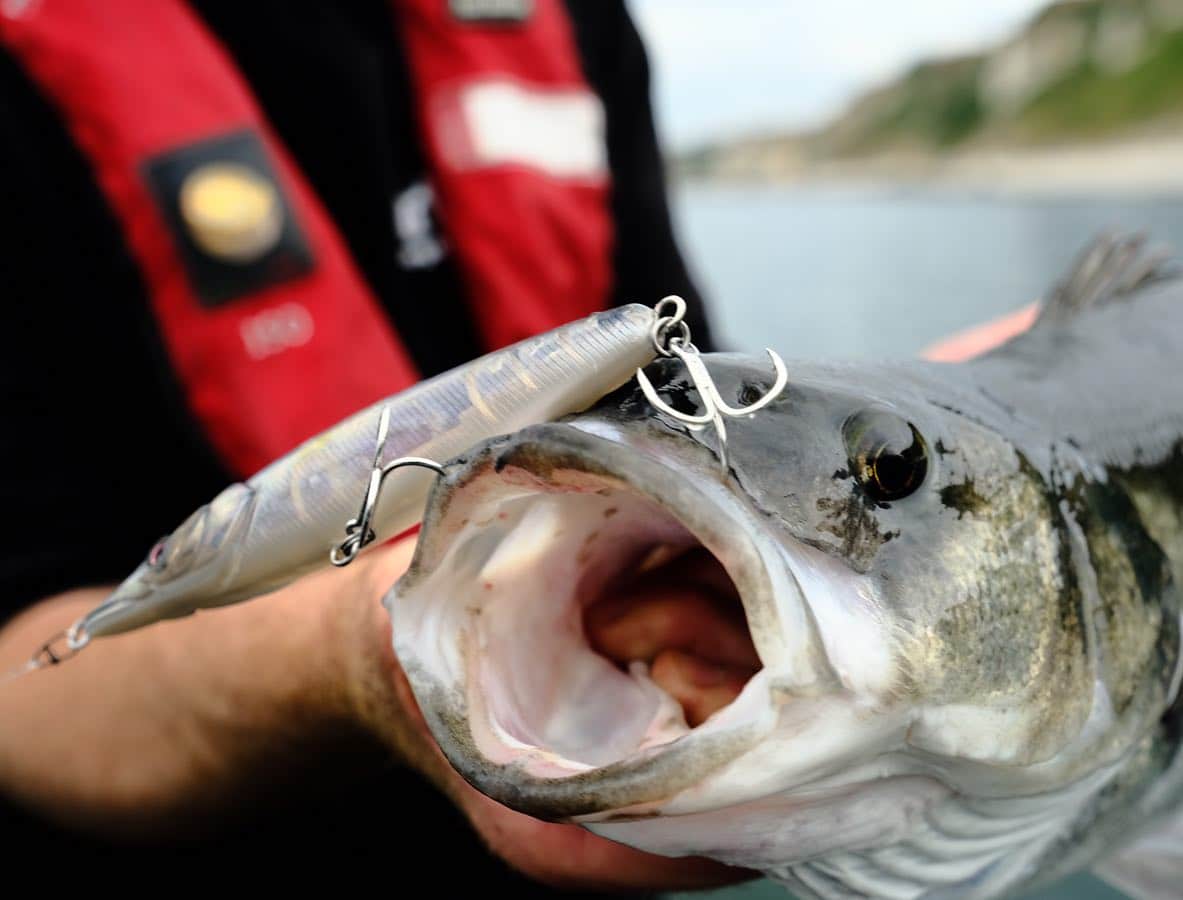
On our last sea trip in Brest, Nicolas and I tested the Asturie 110 in ideal conditions. The sea was slightly choppy, the sun was playing hide-and-seek with the clouds, and the bass were actively feeding on the surface. From the very first casts, we were impressed by the exceptional performance of this surface lure, which quickly became our favourite for the “walking the dog” technique. With its aerodynamic shape and remarkable capabilities, the Asturie 110 has become a staple of our fishing arsenal. Discover the features of this lure and what makes it a must-have to carry with you today.
Our article in brief
The Asturie 110 has now become an exceptional surface lure for surface fishing for bass. Here are its main features:
- Technical performance : Aerodynamic design allowing long casts, stability at rest and instant start-up, at 110 mm and 15 g.
- Robust hardware : The Asturie 110 is fitted with Decoy treble hooks and reinforced split rings to take on powerful predators.
- Remarkable versatility : This stickbait is particularly effective on bass, but also on perch, black bass and pike, and is available in several sizes to suit every situation.
- Adaptable colours : A range of 30 colours to match fishing conditions and target species.
Why fish the Asturie 110 for surface fishing
The Asturie 110 is a surface lure that stands out first and foremost for its unique design. It is the result of wind-tunnel studies by the brand Xorus which today give it exceptional aerodynamics. This design allows particularly long casts, even into the wind, a decisive advantage when you are fishing from the shore. At 110 mm long and 15 grams, this floating lure offers the perfect balance between handling and effectiveness.
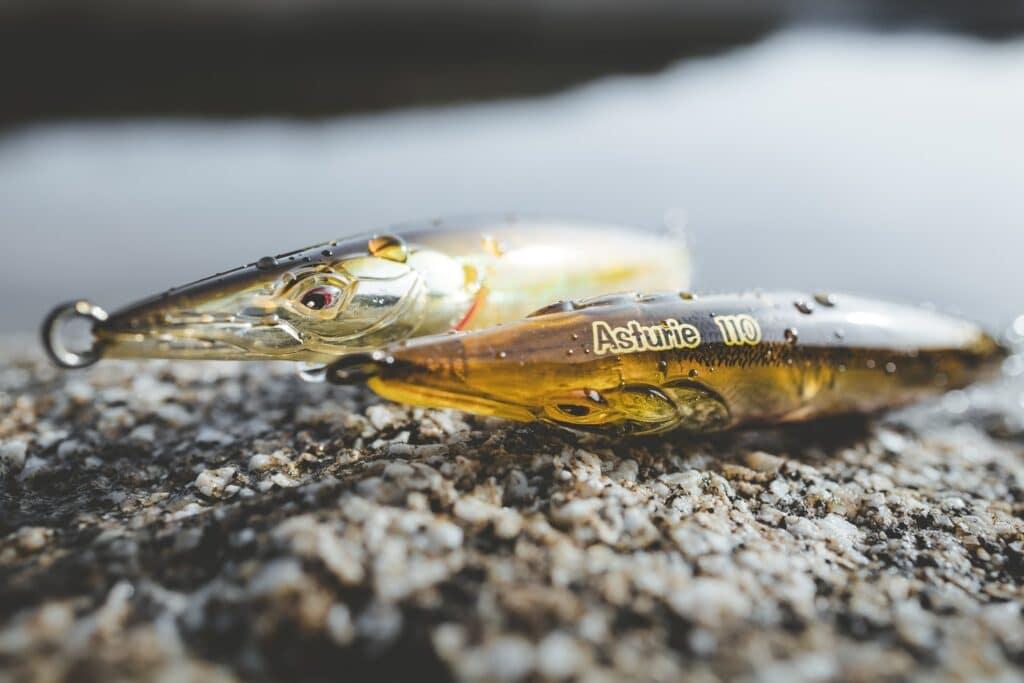
We particularly like its ability to stay stable at rest, sitting perfectly flat on the water. This feature is crucial for attracting wary predators. The lure starts instantly with short, sharp twitches, producing the zigzag that predators find so attractive.
Quality hardware adds to its reliability, with Decoy treble hooks (TS 21 size 4 under the belly and YS 21 size 4 at the tail) mounted on reinforced split rings. During our session off Oman last year, this robustness proved decisive against powerful giant trevally (GT), which give fragile tackle no chance.
The sound effects produced during the retrieve are an extra asset for attracting predators’ attention, even in murky or rough water. This combination of technical features explains why the Asturie 110 has established itself as an essential standard for surface fishing, for novices and experienced anglers alike.
The different Asturie versions for every situation
The Asturie family comes in several sizes suited to different fishing conditions and types of predator. Here are the main versions available:
- Asturie 90 – For ultra-finesse fishing
- Asturie 110 – The all-round model par excellence
- Asturie 130 – For intermediate conditions
- Asturie 150 – For difficult conditions and big predators
- Asturie 170 – Designed for tuna and trophy predators
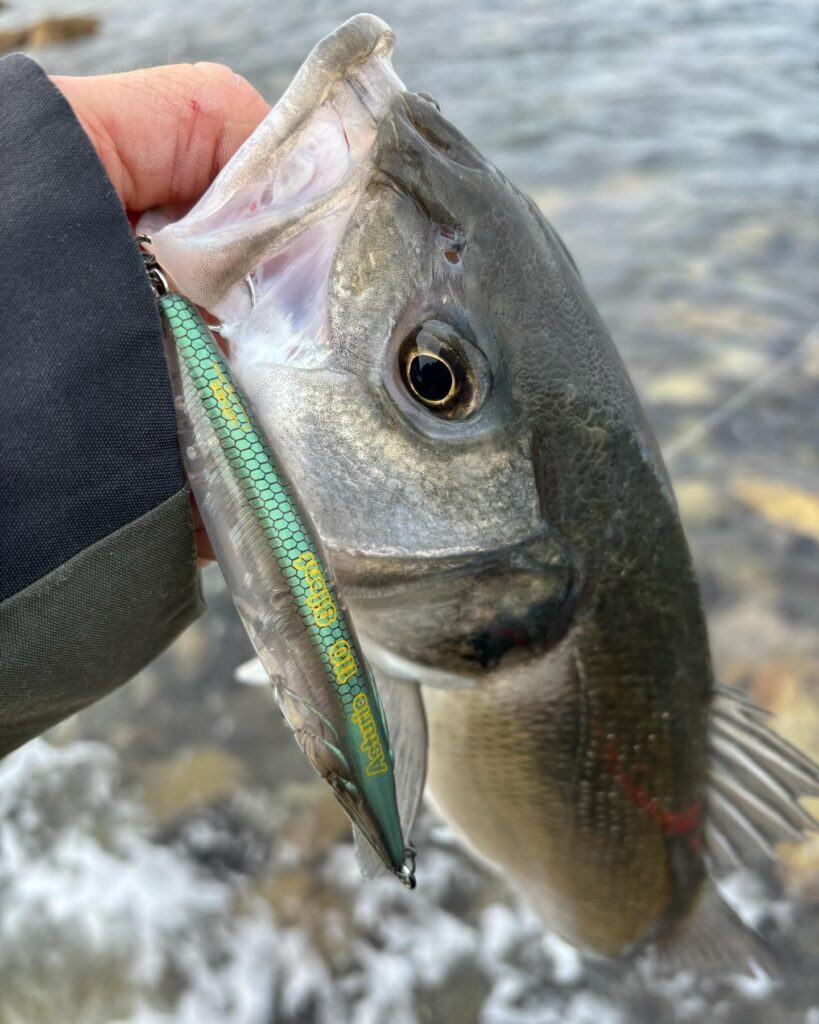
In our view, the Asturie 110 is the most versatile model in the range. We use it regularly to target bass in the Atlantic, but it also excels on other species such as perch, black bass or pike in freshwater. Its intermediate size appeals to aggressive fish and wary ones alike.
For extreme situations such as tuna fishing in the Mediterranean, we prefer the 150 and 170 models, fitted with specific hardware including Decoy JS1 hooks in sizes 4/0 to 5/0. On our last expedition to the Seychelles, these larger models allowed us to try our luck on feeding yellowfin tuna with remarkable success.
The choice of size should match the fishing conditions and target species. In clear water with less aggressive fish, the Asturie 110 is the ideal option, combining discretion and effectiveness. For heavy swell or big predators, the larger versions are more appropriate.
Practical guide to the best colours for the conditions
With around thirty colours available, choosing can seem complicated. Our experience has allowed us to identify the most effective colours for the conditions we encounter:
| Conditions | Recommended colours | Context of use |
|---|---|---|
| Low light (dawn, dusk) | White | Silhouette clearly visible to predators |
| Bright light, clear water | Ghost (transparent) | Maximum discretion for wary fish |
| Sand smelt/sand eels present | Green-backed ghost (e.g. Cabot) | Perfect imitation of the prey present |
| Sardines/mackerel present | Blue-backed ghost (e.g. Ghost Iwashi) | Mimics shoals of baitfish |
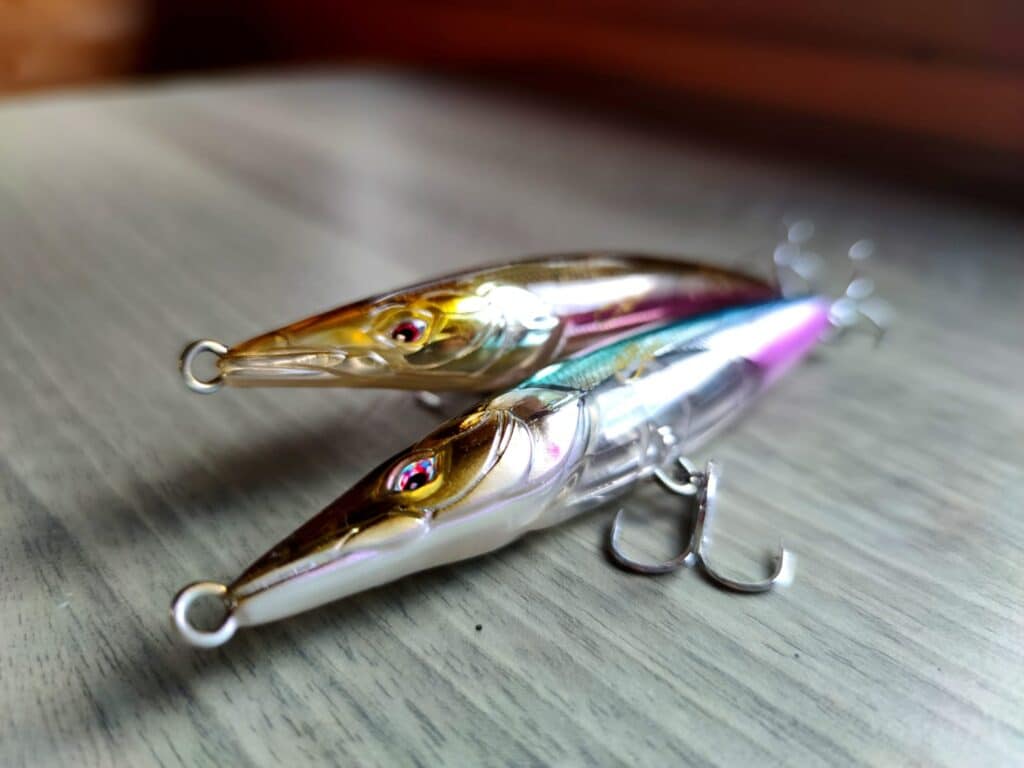
Our number one tip: always match the colour to the conditions rather than to your personal preferences. On a memorable outing in Cape Verde, we found that choosing the right colour could triple our effectiveness on trevally, even with an identical retrieve technique.
For fishing in estuaries or harbours, the “Black Mulet” colour has proved particularly effective. Its dark silhouette stands out perfectly in areas where freshwater inflows create characteristic turbidity.
Metallic colours such as “Mackerel” are our preferred option in changeable weather or rough seas. The flashes they produce attract predators’ attention even in difficult conditions, as we were able to confirm during our sessions in the North Sea.
How to work your Asturie 110 effectively
The Asturie 110 shines particularly with the “walking the dog” technique, a zigzag movement that predators find irresistible. To master this retrieve:
- Cast your lure and wait for it to settle on the surface
- Keep your rod parallel to the water or pointing slightly downwards
- Make short, sharp twitches with your wrist while keeping constant tension
- Take up the slack line between each twitch
- Vary the rhythm and speed to find the trigger of the day
One of the great advantages of the Asturie 110 is its ability to handle very fast retrieve speeds without losing its characteristic action. This quality allows you to cover large areas efficiently in a minimum of time.
We have found that even at long range, this lure keeps all its effectiveness, whether worked with the rod held high or low. This versatility proved invaluable during our sessions on the large Alpine lakes, where Nicolas and I were able to fish areas out of reach of other anglers.
For beginners, the Asturie 110 is an excellent introduction to the “walking the dog” technique thanks to how easy it is to work. It forgives technical mistakes while delivering immediate results, building the confidence needed to progress.


