
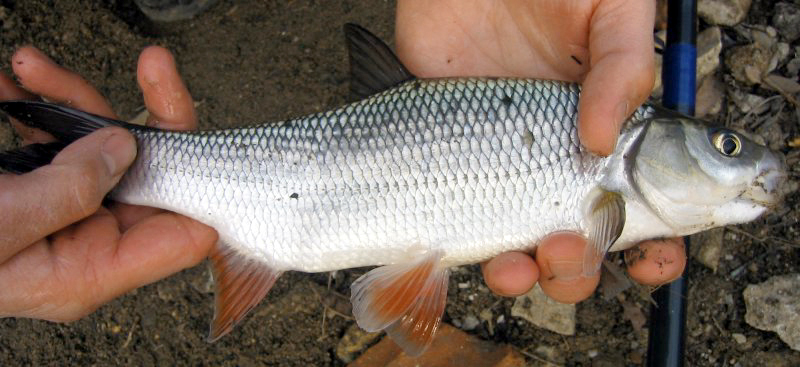
Discreet, silvery and built for sustained swimming, theide is one of those silver fish that few anglers really know. This gregarious cyprinid (Leuciscus idus), also known as the orfe, sits halfway between the stocky roach and the streamlined chub: a curious shoal fish that haunts large lowland rivers and can be fooled by natural baits as well as by small lures once it grows and becomes a fish-eater.
In this species profile, we go through everything you need to know about this little-known fish: its morphology, habitat, diet, breeding cycle, the regulations that apply to it and, of course, our favourite techniques and baits for targeting it. We also take care to distinguish the wild ide from its famous orange ornamental variety, the golden orfe of garden ponds.
Our article in brief
- Theide (Leuciscus idus) is a gregarious cyprinid with a stocky, silvery body, golden tints and lower fins often tinged with red.
- It commonly measures 25 to 50 cm; good fish reach 60 to 70 cm and rarely exceed 2 kg.
- A fairly localised species in France, found mainly in the east and in the major rivers (Rhine, Moselle, Somme, lower Seine and Loire).
- It is mainly caught on the pole and the feeder; big fish, which become fish-eaters, also take small lures and flies.
- Not to be confused with its orange ornamental form (golden orfe), bred for garden ponds.
Ide morphology and identification
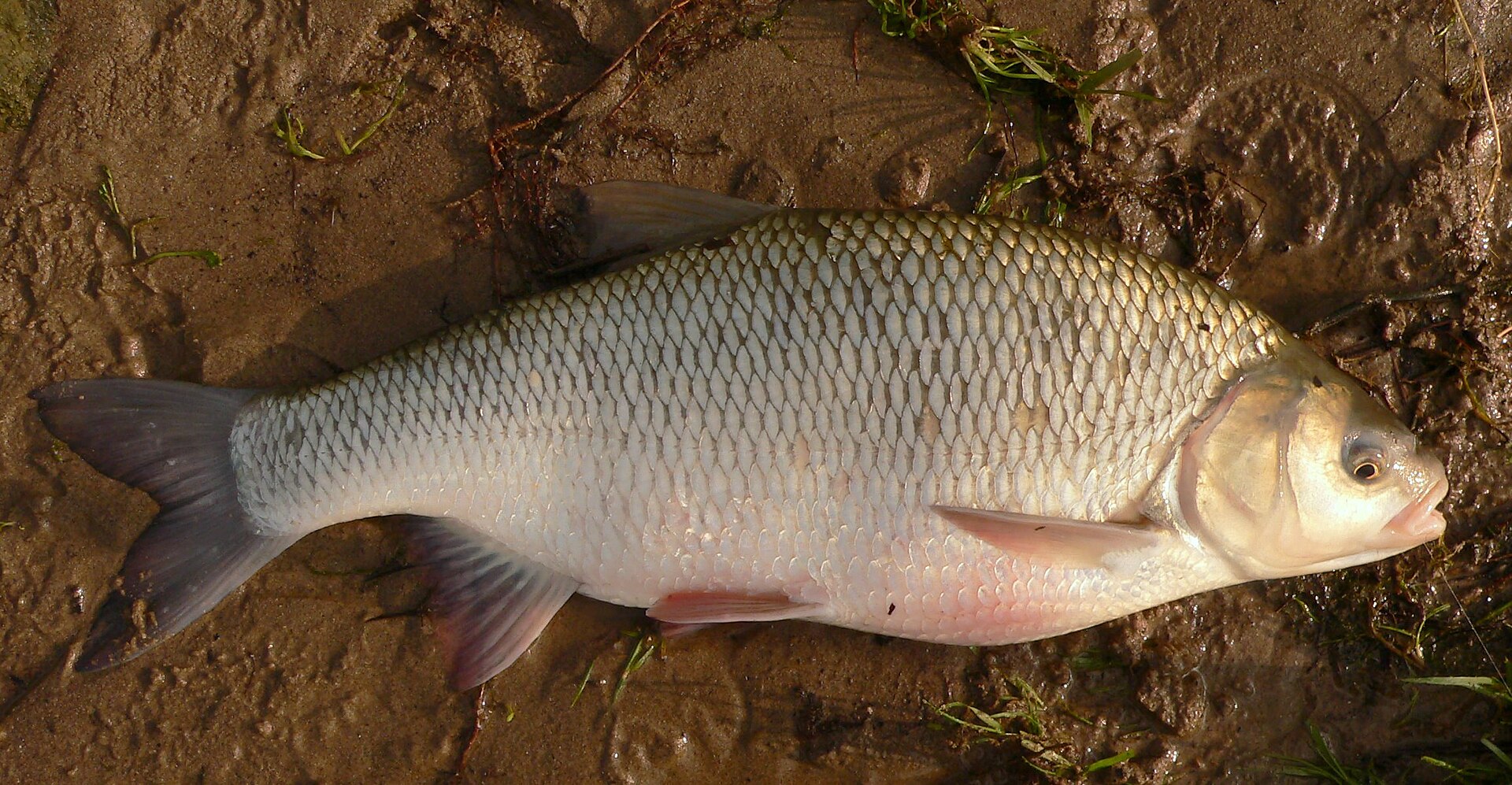
Theide has an elongated body, but one that is noticeably deeper and stockier than that of the roach or dace, and laterally compressed. Its head is strong, with a blunt snout, a small terminal mouth angled slightly upwards and distinctive yellow eyes. The back and top of the head are grey-green to brown, the silvery flanks take on superb golden tints depending on the light, and the belly is whitish. It is a fish often mistaken, at a glance, for a big roach or a chub.
The features that give the ide away
To settle any doubt, several details make the difference. The lower fins — anal, pelvic and sometimes caudal — are often washed with orange-red, brighter than in the roach. The anal fin is clearly convex (rounded edge), whereas the chub's is concave. Finally, the ide has numerous small scales and a more compact outline, with a sturdy caudal peduncle that betrays a current swimmer capable of long bursts of speed.
Size and lifespan
An adult ide most often measures between 25 and 50 cm. Good specimens reach 60 to 70 cm and rarely exceed 2 kg; the exceptional sizes and weights reported in the literature (up to a metre and several kilos) remain anecdotal. Here are the key biometric figures for the species:
| Features | Reference point |
|---|---|
| Medium size | 25 to 50 cm |
| Maximum size | up to 70 cm, exceptionally more |
| Typical weight | 0.5 to 1.5 kg |
| Maximum weight | rarely over 2 kg |
| Longevity | up to 15 years |
| Sexual maturity | 3 to 5 years |
The wild ide and the orange golden orfe
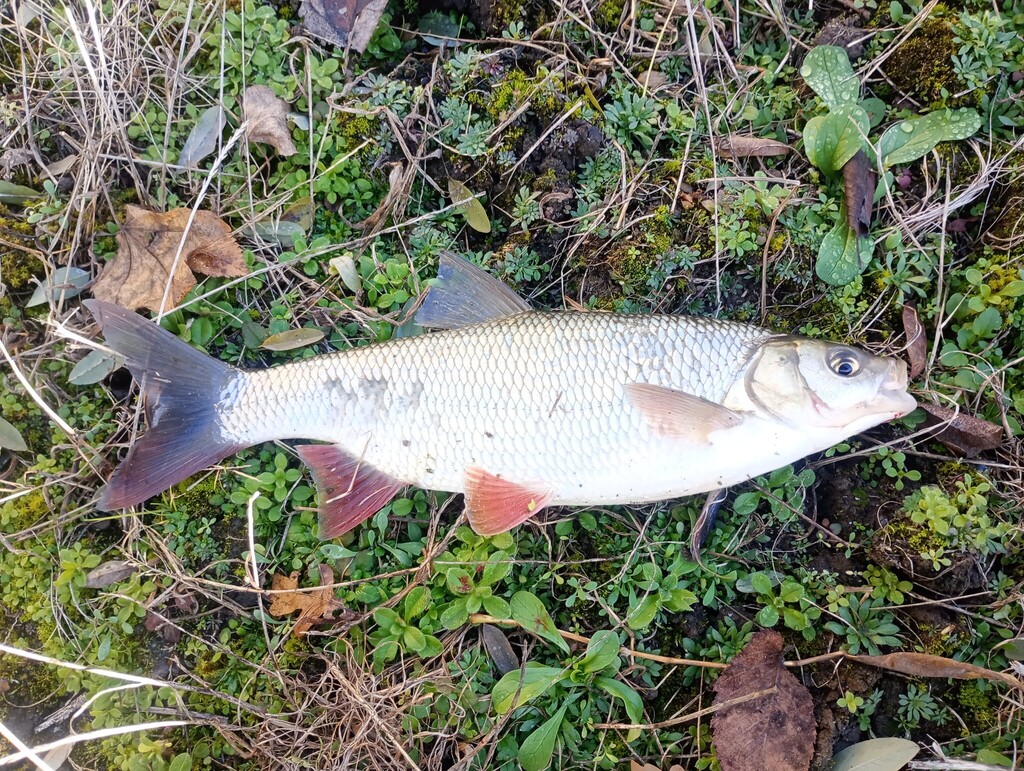
It is impossible to talk about the ide without mentioning its ornamental form, thegolden orfe ("ide orfe" or "ide orangé" in French). It is the same species, bred for its orange to golden colouring dotted with a few dark spots near the head. Raised to brighten up garden ponds, this colourful variety is in no way a separate fish: it is indeed a Leuciscus idus. Escaped individuals can sometimes end up in the wild, but the wild ide that anglers encounter in rivers keeps its discreet silvery livery.
Where does the ide live?
The ide is a fish of calm to gently flowing water. It frequents the middle and lower reaches of large lowland rivers — what naturalists call the bream zone — as well as lakes and large, food-rich stillwaters. It likes deep, slow areas, holes, the surroundings of bridges and confluences, where shoals move about in search of food. It is a gregarious fish: where you catch one, there are often others.
Its natural range covers northern Europe and western Asia, from the North Sea and Baltic basins to the Black Sea, the Caspian and the great Siberian rivers. The ide even tolerates the slightly brackish waters of the Baltic. In France, on the other hand, the species remains fairly localised : it is found mainly in the east and north — Rhine, Moselle, Somme — as well as in the lower Seine and Loire basins, and more sporadically in the Sarthe. So it is not a fish you come across everywhere, and catching one remains a small source of pride for the silver-fish angler.
What does the ide eat?
The ide is an omnivorous, opportunistic fish whose diet changes markedly with age. Young fish feed on small benthic prey, while large individuals become truly predatory and start hunting small fry:
- Invertebrates : larvae and adult insects, molluscs, small crustaceans, worms.
- Plants and debris : algae and organic matter, readily rounding out the menu.
- Small fish : in large fish-eating ide, fry, bleak and small roach.
This switch to a fish-eating diet in big fish is crucial for anglers: it explains why a good ide can be tempted by a small lure imitating a baitfish, even though most catches are made on bait. The ide works the whole water column, from the bottom, where it roots for invertebrates, to the surface, where it readily sips insects that have fallen into the water, just like a chub.
Ide life cycle and spawning
The ide spawns in spring, as the water warms. A potamodromous fish, it then moves upstream and heads for shallow areas to spawn in groups. Females lay their pale yellow eggs on aquatic vegetation and gravel beds. Spawning is prolific: a large female can release anywhere from several tens of thousands to over a hundred thousand eggs. Incubation lasts one to two weeks, and the fry, less than a centimetre long at hatching, quickly make for sheltered margins.
| Parameter | Data |
|---|---|
| Spawning period | March to May |
| Spawning temperature | around 12 to 18 °C |
| Number of eggs | several tens of thousands per female |
| Spawning substrate | vegetation and gravel beds |
| Hatching | 1 to 2 weeks |
It is not unusual for the ide to hybridise with other closely related cyprinids, such as the roach or the dace, which sometimes complicates identification in the field. This genetic closeness shows how much the ide remains a cousin of the most common silver fish in our rivers.
Ide regulations and status
The ide is a fishable silver fish, classed among the cyprinids. Unlike predators such as pike or zander, it is generally not subject to a specific legal catch size or a dedicated national closed season. Fishing for it therefore follows the common rules applying to silver fish in the fish category of the watercourse concerned.
That is no excuse for not remaining careful and responsible. Local rules — number of rods allowed, any quotas, special stretches — vary from one department to another and may be adjusted by prefectural order. As the species is localised and sensitive, we always recommend checking your department's prefectural order and your AAPPMA's rules before fishing, and favouring careful release of good fish.
How to catch ide
Ide fishing is first and foremost silver-fish fishing: the pole and the feeder very largely dominate. Gregarious and wary, the ide is targeted with groundbait, over deep, slow swims. A good sticky river groundbait laced with live baits holds the shoal and gets it feeding. Natural baits remain king: maggots, redworms for big fish, hemp, bread or pellets depending on the water.
Two main approaches stand out depending on the size targeted and the swim:
| Technical | Baits / lures | Ideal situation |
|---|---|---|
| Pole and float fishing (waggler, bolognese) | maggots, hemp, bread, worms | shoals on slow swims, regular baiting |
| Feeder / quiver tip | pellets, maggots, earthworms | big rivers, searching for big fish at range |
| Small lures / fly | micro lures, hard lures, dry flies | big fish-eating ide, surface rises in summer |
Let's be honest: lure fishing for ide remains a sideline and mainly concerns large individuals that have become fish-eaters. It is then done opportunistically, often while targeting other fish such as chub, with light tackle. A light rod, a 1000 to 2500 size reel and a discreet, fine fluorocarbon leader are all you need: the ide does not have the pike's teeth, so finesse matters more than strength here. We target slow holes, confluences and the surroundings of structures, staying mobile to find the shoals.
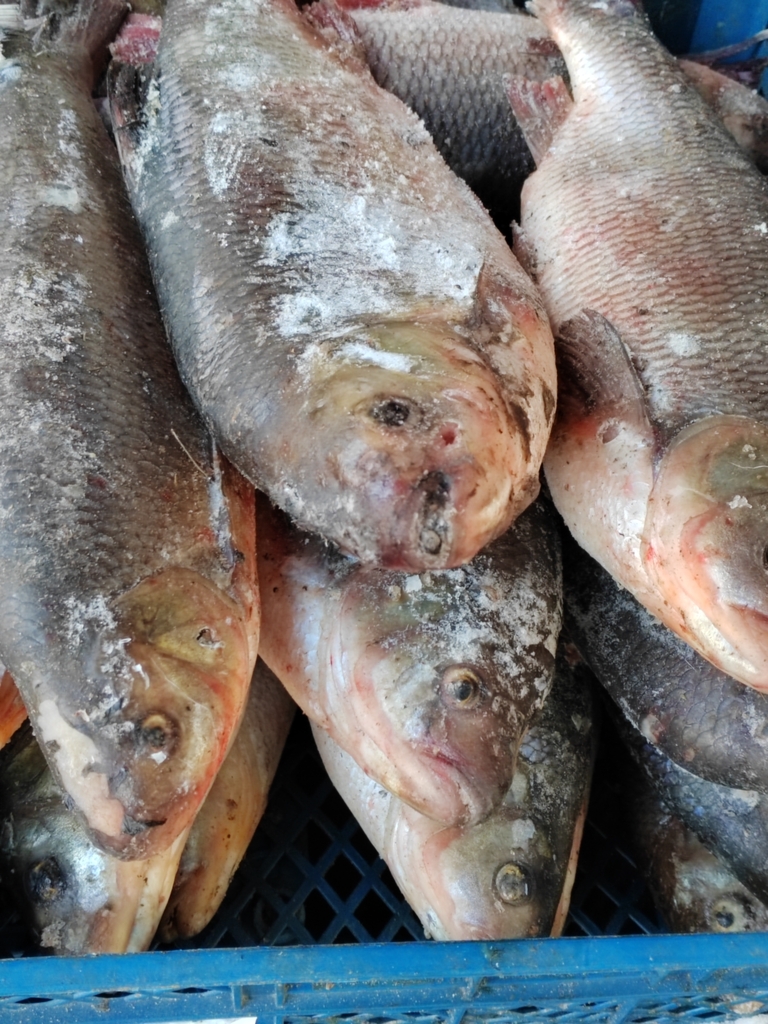
To discover this little-known sport fish and how to catch it in real conditions, here is a video entirely dedicated to the ide:
Baits, rigs and small lures for ide
For ide, the bait box comes before the lure box. On the pole as on the feeder, the trio of maggots, earthworms and hemp covers most situations, supplemented by bread and pellets on the big rivers. The key remains groundbait: a shoal of ide held in the swim and feeding confidently bites far more readily than a lone fish.
For big fish-eaters tempted with small lures, it is best to think small and discreet. In the absence of a guide specific to the ide, we draw on our selections dedicated to lively, curious fish such as trout, perch and chub:
- Small hard lures and sinking lures: our selection of trout lures (Duo Spearhead Ryuki, Smith D-Contact, Rapala Countdown).
- Micro soft lures and light jigheads: the perch micro jig and our perch lures.
- Mobile, versatile approach for river fish: the casting jig, deadly on curious cyprinids.
- Getting the right line: braid or nylon and our guide fluorocarbon for discreet leaders.
- Choosing the right colour: our lure colour chart.
Records and anecdotes about the ide
The ide is not a fish of headline-grabbing records, and the data should be treated with caution. European rod-caught record databases cite catches of around 5 kg and more for the biggest ratified fish, while the scientific literature mentions exceptional sizes approaching a metre. In France, there is no single official body for ratifying freshwater records, so no reliable national benchmark is authoritative for the species. Above all, bear in mind that a 60 cm ide is already a very fine fish in our waters.
Another curiosity: it is the only one of our silver fish whose coloured variety, the orange golden orfe, has become so popular in ornamental ponds that it almost overshadows the wild fish. Many people know the "orange pond fish" without realising that it is a river cyprinid, a cousin of the roach and the dace.
Ecological role and conservation of the ide
A gregarious fish of large rivers, the ide plays a useful role in the aquatic ecosystem: by feeding on invertebrates, plants and small fish, it contributes to the balance of fish communities, and its shoals in turn provide a resource for large predators such as pike and catfish. Its presence is a sign of a lowland habitat that still functions, with deep areas and accessible spawning grounds.
In France, the ide's localised distribution calls for vigilance. The destruction of side channels and backwaters, the artificialisation of banks and obstacles to free passage penalise this migratory fish, which needs to move upstream to spawn. As responsible anglers, we favour careful release, handle fish with wet hands and support habitat preservation: it is the best guarantee that we will keep coming across this discreet, golden-tinted cyprinid.
Ide FAQ
How big can an ide get?
The ide commonly measures 25 to 50 cm. Good specimens reach 60 to 70 cm and rarely exceed 2 kg. The near-metre sizes reported in the literature remain quite exceptional.
How do you tell the ide from the roach and the chub?
The ide has a stockier body than the roach, a convex (rounded) anal fin whereas the chub's is concave, yellow eyes and lower fins often tinged with orange-red. Its scales are smaller and more numerous than the chub's.
Is the orange pond ide the same fish?
Yes. The golden orfe ("ide orfe" or "ide orangé" in French) is an ornamental variety of the same species, Leuciscus idus, bred for its orange to golden colouring. It is raised for garden ponds; the wild river ide keeps its discreet silvery livery.
How to catch ide
Pole and feeder fishing very largely dominate, with groundbait and natural baits (maggots, hemp, worms, bread, pellets). Big fish, having become fish-eaters, can also be caught on small lures or flies, often opportunistically while fishing for chub.
Where is the ide found in France?
The species is fairly localised, mainly in the east and north and in the major rivers: Rhine, Moselle, Somme, as well as the lower Seine and Loire basins, and more sporadically the Sarthe. It frequents the calm, deep waters of lowland rivers and large lakes.
Is there a legal size or closed season for ide?
As a silver fish, the ide is generally not subject to a specific legal size or a dedicated national closed season. The rules (quotas, stretches, number of rods) do, however, vary from one department to another: always check the local prefectural order and your AAPPMA's rules.


