
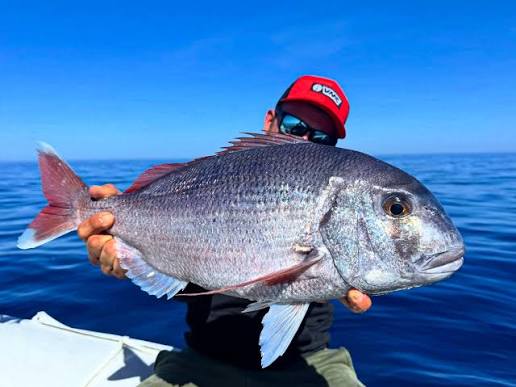
An oval silhouette with pinkish reflections, a bright eye and powerful jaws lurking near rocky drop-offs: the red porgy is one of the most sought-after sparids on our Mediterranean and Atlantic coasts. Timid, solitary and wary, this bottom-dwelling fish (Pagrus pagrus) is also a refined opponent, which has brought back into fashion finesse techniques from Japan such as tenya and inchiku.
In this species profile, we go over everything you need to know about this fish: its morphology, habitat, diet, breeding cycle, the regulations that apply to it and, of course, our favourite techniques and rigs for targeting it. Everything you need to understand the species better before setting out to meet it.
Our article in brief
- The red porgy common (Pagrus pagrus) is a bottom-dwelling sparid of Mediterranean and Atlantic waters, recognisable by its oval, silvery-pink body and its jaws armed with canines and molars.
- It commonly measures 20 to 50 cm, with good specimens exceeding 60 cm and weighing several kilos, exceptionally around ten kilos.
- A benthic predator, it crushes crustaceans, shellfish and cephalopods near rocky and sandy bottoms, from a few metres to more than 200 m deep.
- It is caught with bait (static or drifting) and with Japanese bottom rigs: tenya, madai and inchiku.
- Its capture is governed by a minimum landing size at sea and by catch marking: maritime regulations always take precedence.
Morphology and identification of the red porgy
The red porgy has an oval, deep body compressed laterally, typical of sparids. Its livery is a bright silvery pink, deeper on the back and paling on the flanks and belly. The head, slightly domed and convex above the eye, takes on a darker hue, and young fish often show fine bluish speckles as well as a dark spot at the base of the pectoral fins.
Teeth made for crushing
The red porgy's most telling feature remains its powerful jaws. At the front, four to six strong, sharp canines seize the prey; at the back, robust rounded molars crush the shells of molluscs and the carapaces of crustaceans. This versatile dentition reveals an opportunistic bottom predator, capable of overcoming well-protected prey that other fish ignore.
Size and lifespan
A typical red porgy measures between 20 and 50 cm and weighs from a few hundred grams to two or three kilos. Good specimens exceed 60 cm and then weigh several kilos, with exceptional fish approaching or even exceeding ten kilos. Here are the species' biometric benchmarks:
| Features | Reference point |
|---|---|
| Average size | 20 to 50 cm |
| Maximum size | up to around 90 cm |
| Average weight | 0.5 to 3 kg |
| Maximum weight | around 10 kg (exceptionally more) |
| Longevity | up to around 15 years |
| Sexual maturity | 2 to 3 years |
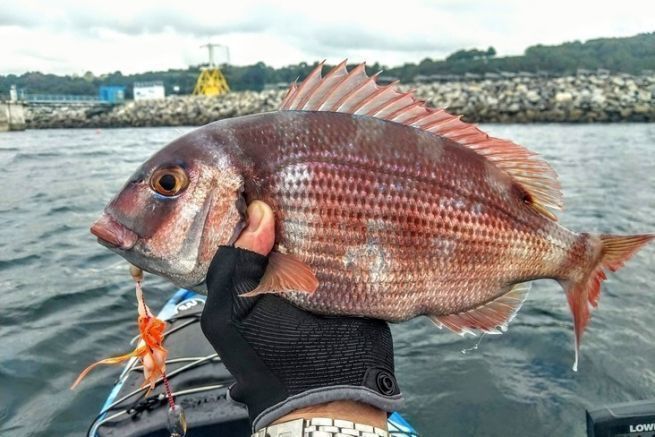
Where does the red porgy live?
The red porgy is strictly tied to the bottom. It frequents sandy and detrital substrates, rocky areas, drop-offs and the edges of vertical walls, where it finds both shelter and food. It can be found from a few metres below the surface down to more than 200 m deep: young fish readily stay in seagrass beds and shallow coastal waters, while the big, warier individuals head for deep areas and isolated structures.
Its distribution is wide. In the Mediterranean, it is present across almost the entire basin; in the eastern Atlantic, it is found from the Bay of Biscay to the African coast, and it also occurs along the western Atlantic. It is a rather timid and solitary fish, loyal to its holding spots, that moves little and has to be sought out where it lives rather than hoped for in open water.
What does the red porgy eat?
The red porgy is a benthic predator, meaning it feeds mainly on the bottom. Its diet, dictated by its crushing teeth, consists above all of invertebrates with a carapace or shell:
- Crustaceans : crabs, shrimps and small burrowing crustaceans, which make up most of the menu.
- Molluscs : bivalves and gastropods, whose shells it crushes with its molars.
- Cephalopods and fish : squid, octopus and small fish, taken opportunistically.
This diet directly explains the choice of baits and rigs: a wary porgy is all the more easily fooled by a prawn, a piece of squid or a razor clam presented naturally, right on the bottom, where it usually forages. Its cautious behaviour makes it a demanding fish, sensitive to the slightest suspicious resistance in the line.
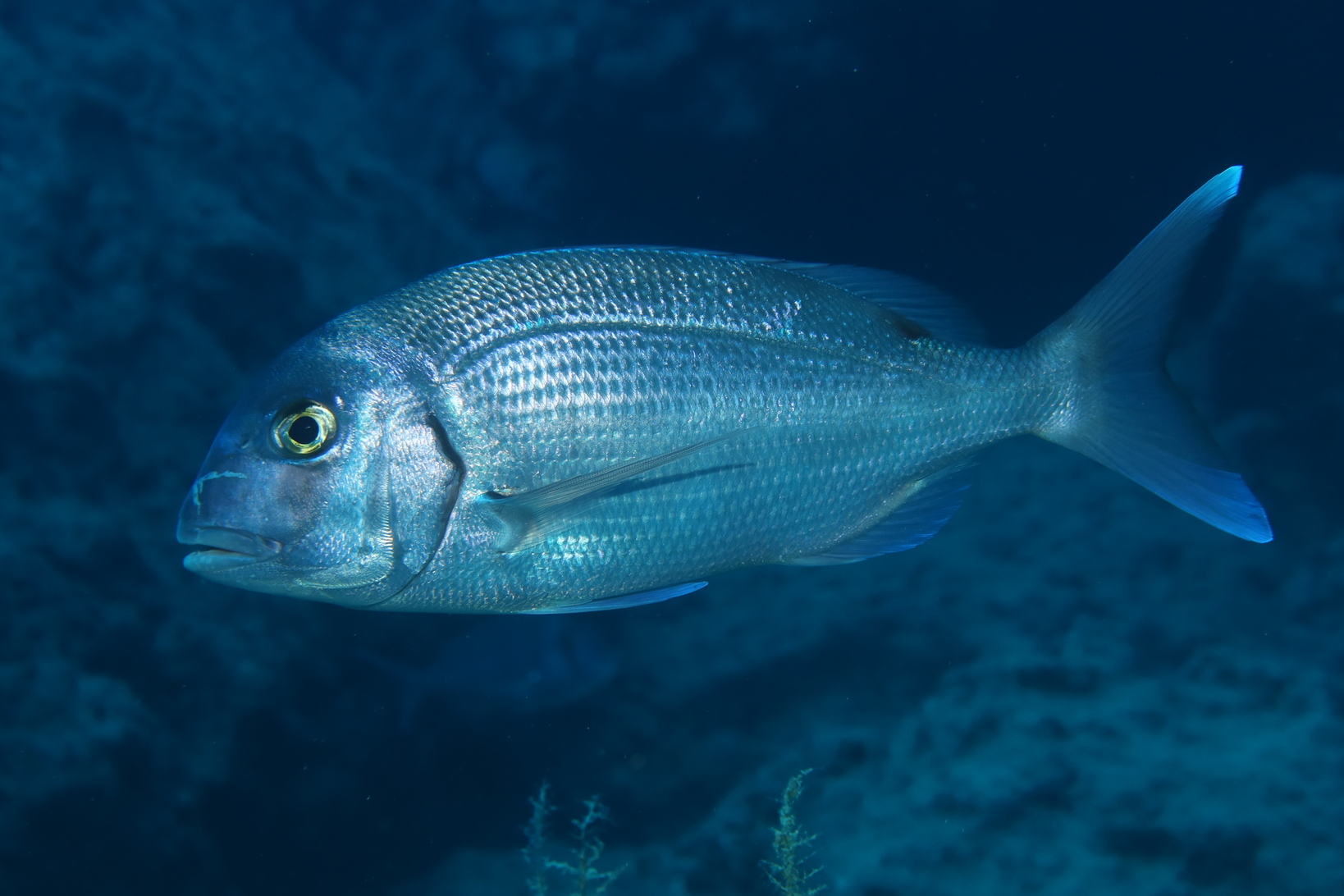
Life cycle and reproduction of the red porgy
The red porgy has a remarkable biological feature: it is a protogynous hermaphrodite. In other words, most individuals first function as females, then change sex to become males as they grow. This strategy, common among sparids, has direct consequences for the structure of populations, with the largest fish often being males.
Spawning takes place from late winter to spring, depending on the region and the water temperature. Females release pelagic, floating eggs that drift with the currents before the larvae hatch. Here are the main benchmarks of the breeding cycle:
| Parameter | Data |
|---|---|
| Sexual type | protogynous hermaphrodite |
| Spawning period | late winter to spring |
| Egg type | pelagic and buoyant |
| Sexual maturity | 2 to 3 years |
| Juvenile habitat | seagrass beds and shallow coastal waters |
Regulations and minimum size for red porgy
Recreational sea fishing is governed by a minimum landing size designed to protect juveniles. For the red porgy, this minimum size is set at 18 cm in the Mediterranean. The fish is measured with its mouth closed, from the tip of the snout to the end of the tail fin. As with many sea species, the red porgy is also subject to compulsory catch marking (removal of part of the tail fin at the time of capture).
Always check local regulations
Please note: these rules may vary by coastline and change from one year to the next. Special provisions may also apply in marine protected areas and national parks. We advise you to always check the orders in force with the Interregional Directorate of the Sea (DIRM) and the maritime prefecture for your area before fishing, as well as any higher minimum sizes recommended to protect the species.
How to catch red porgy?
The red porgy is fished above all in contact with the bottom, and anglers have two main families of techniques to choose from: natural bait fishing, tried and tested and deadly, and weighted rigs from Japan, which have won over Mediterranean anglers with their discretion. The common rule is always the same: stay right on the bottom, with a discreet rig and a natural presentation.
| Approach | Overview | Ideal conditions |
|---|---|---|
| Static / drifting bait | prawns, squid, razor clams, worms on a fine leader | anchored boat or slow drift over sand and rock |
| Tenya | jighead + bait (whole prawn), slow action | flat sandy bottoms |
| Madai / tai jig | jighead with skirts and soft filaments | drift prospecting, active sparids |
| Inchiku / slow jig | weighted skirted jig, worked close to the bottom | rocky, uneven bottoms |
The choice between tenya, madai and inchiku depends largely on the type of bottom: on regular sandy ground, a tenya baited with a prawn is often unbeatable; on broken rock where snags are a threat, the inchiku, which is less prone to snagging, takes the advantage. As for tackle, a fine, sensitive rod combined with a small-diameter braid and a long leader made of fluorocarbon makes all the difference with such a wary fish. We favour discretion and a slow action, keeping constant contact with the bottom to detect the often subtle bite.
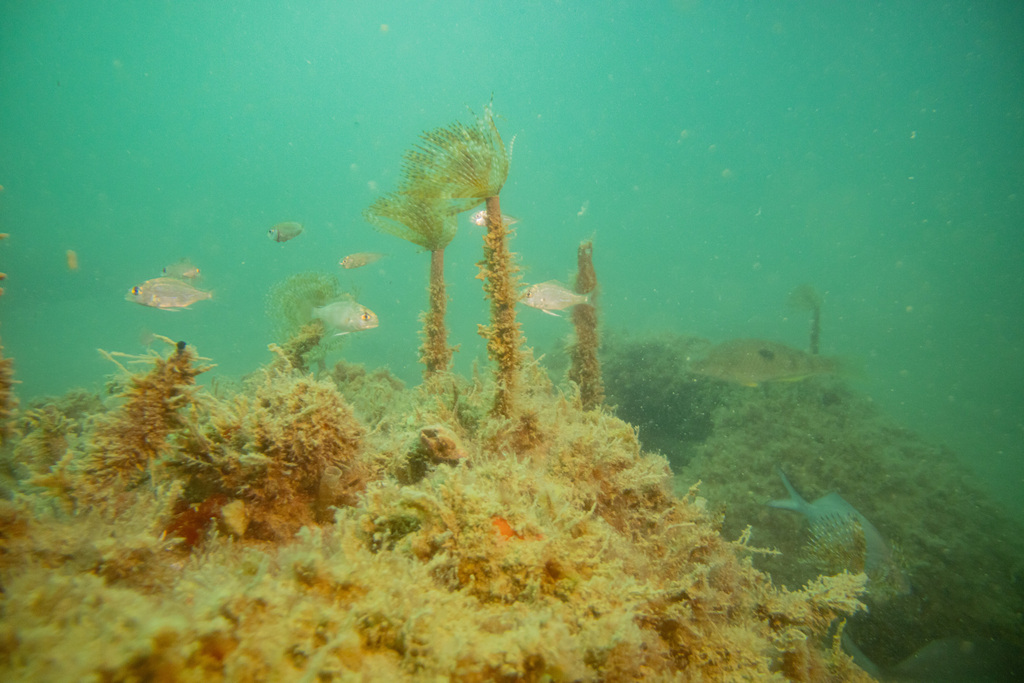
To see these techniques in action, here is a video about red porgy fishing in the Mediterranean:
Our selection of rigs for red porgy
Unlike freshwater predators, the red porgy is caught not so much on swimming lures as on weighted bottom rigs, most often combined with natural bait. Here are the families to know, along with our tackle guides to refine your approach:
- The tenya : a jighead fitted with a hook, onto which a whole prawn is threaded — the ultimate weapon for sparids and red porgy in particular.
- The madai (tai jig) : a jighead with skirts and soft filaments, worked slowly on the drift.
- Inchiku and slow jigs : weighted skirted jigs, perfect over rocky bottoms; to find out more, see our guide on jigs.
- Line : the key to discretion, with a good braid and a leader made of fluorocarbon to match.
Records and anecdotes about the red porgy
The red porgy is not the star of big-game record tables, and its all-tackle world record on rod and line is, to date, still to be confirmed with the IGFA. From a scientific point of view, the maximum documented size is around 90 cm, and an exceptional specimen from the northern Aegean Sea, measuring 74.5 cm and weighing around 8.5 kg, has been reported in the literature as a reference for maximum weight. 'Trophy' fish are generally in the range of several kilos, a fine catch for this cautious species. As always in such matters, caution is needed: these figures are based on one-off observations and not on a single official record list.
Ecological role and conservation of the red porgy
As a benthic predator, the red porgy helps regulate invertebrate populations on sandy and rocky bottoms. Its presence, like that of other sparids, is a sign of healthy coastal habitats and the shallow waters where juveniles take refuge. Globally, the species is classified as Least Concern by the IUCN, but some local populations have suffered in the past from heavy fishing pressure.
As responsible anglers, we have a role to play: strictly respecting the minimum size and catch marking, carefully releasing fish we do not keep and large breeders, and limiting what we take. Given the species' hermaphroditism, protecting large individuals means protecting the male breeders that are essential to stock renewal. That is the price of ensuring the red porgy continues to reward patient anglers who know how to approach it with finesse.
FAQ about the red porgy
How big can a red porgy get?
A typical red porgy measures 20 to 50 cm. Good specimens exceed 60 cm and weigh several kilos, and exceptional fish can approach 90 cm and around ten kilos in rare conditions.
Where does the red porgy live?
The red porgy is a bottom-dwelling fish of Mediterranean and Atlantic waters. It frequents sandy substrates, rocky areas and drop-offs, from a few metres to more than 200 m deep. Juveniles stay in seagrass beds and shallow coastal waters.
What does the red porgy eat?
It is a benthic predator. It feeds mainly on crustaceans and molluscs, whose shells it crushes with its molars, as well as on cephalopods and small fish taken opportunistically.
What is the minimum landing size for red porgy?
In the Mediterranean, the minimum landing size for red porgy in recreational fishing is 18 cm, measured mouth closed to the tip of the tail. Catch marking is compulsory. As these rules may vary by coastline and change over time, always check the orders issued by the DIRM and the maritime prefecture for your area.
Which techniques should you use to catch red porgy?
Two main approaches: natural bait fishing (prawns, squid, razor clams), static or drifting, and Japanese bottom rigs — tenya on sandy bottoms, inchiku on rock, madai for prospecting. In all cases, a discreet rig and contact with the bottom are decisive.
How can you tell the red porgy from its sparid cousins?
The red porgy (Pagrus pagrus) is sometimes confused with the redbanded seabream (Pagrus auriga), which is more heavily barred, and with the blackspot seabream (Pagellus bogaraveo), which has a more slender body and large eyes. The red porgy can be recognised by its oval silvery-pink body, domed head and pale-tipped tail fin. If in doubt, refer to a reliable identification key.


