
Whether you are a novice or an experienced angler, many anglers dream of catching the famous bluefin tuna (Thunnus Thynnus). There is an excellent population of bluefin tuna along the French coast, in the Atlantic Ocean and the Mediterranean Sea. It is prized for its power and fighting spirit, but also for the freshness of its flesh. But be careful: catching it is extremely regulated in French waters.
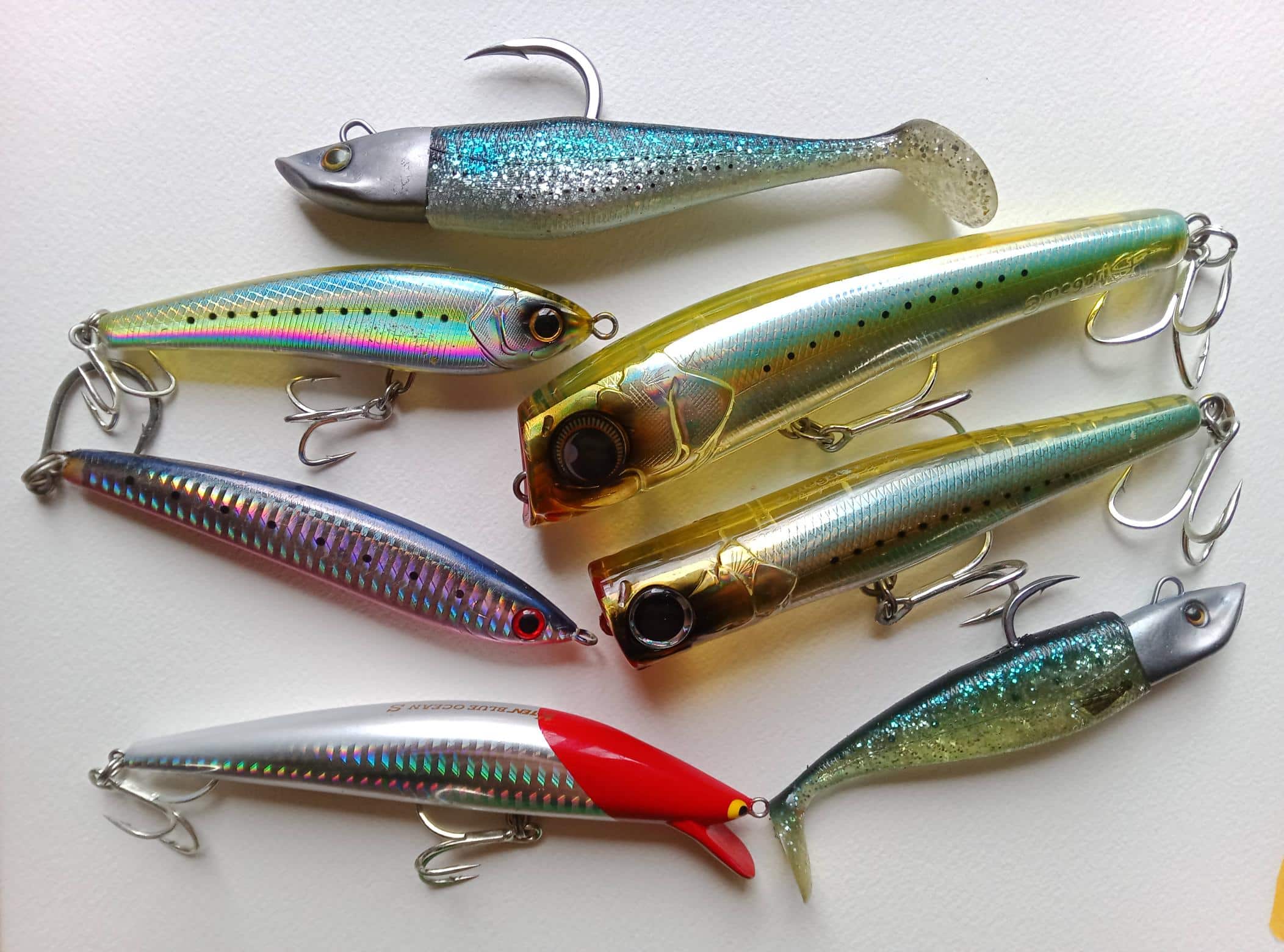
So we are going to review a selection of the best types of lures for tuna fishing, so that you can enjoy unforgettable moments on the water.
Lure no. 1 – the popper: the surface tuna lure
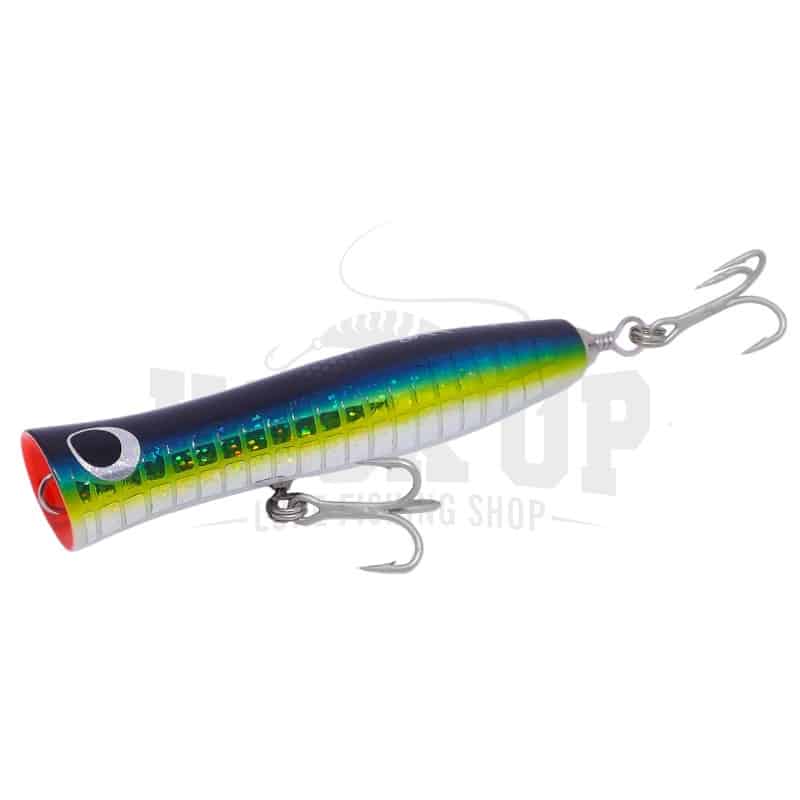
We start our selection of the best types of tuna lures with the popper category.
There are several ways to work a popper for tuna. The first is to create ‘POPS’ with the reel, which means keeping up a continuous rhythm on the surface, making it look as if the prey is trying to escape. The second is to make ‘POPS’ with the rod, which is much deeper and creates a trail of bubbles on the surface. There will therefore be a pause between each pull. But be warned: strikes very often come during the pause.
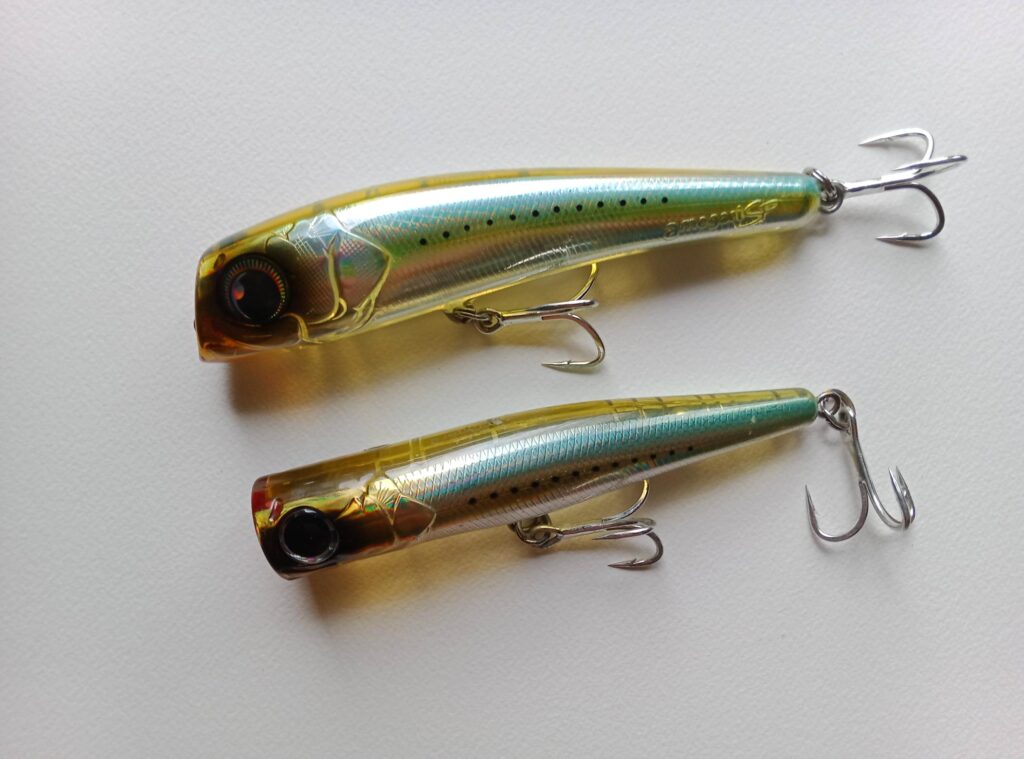
The best-known popper is the FEED POPPER from Tackle House. It is unquestionably the benchmark popper for surface fishing for bluefin tuna. It has all the qualities of a good popper: it casts a long way thanks to excellent aerodynamics and makes a great sound due to its very distinctive cup. Its original Owner hooks are very strong and sharp.
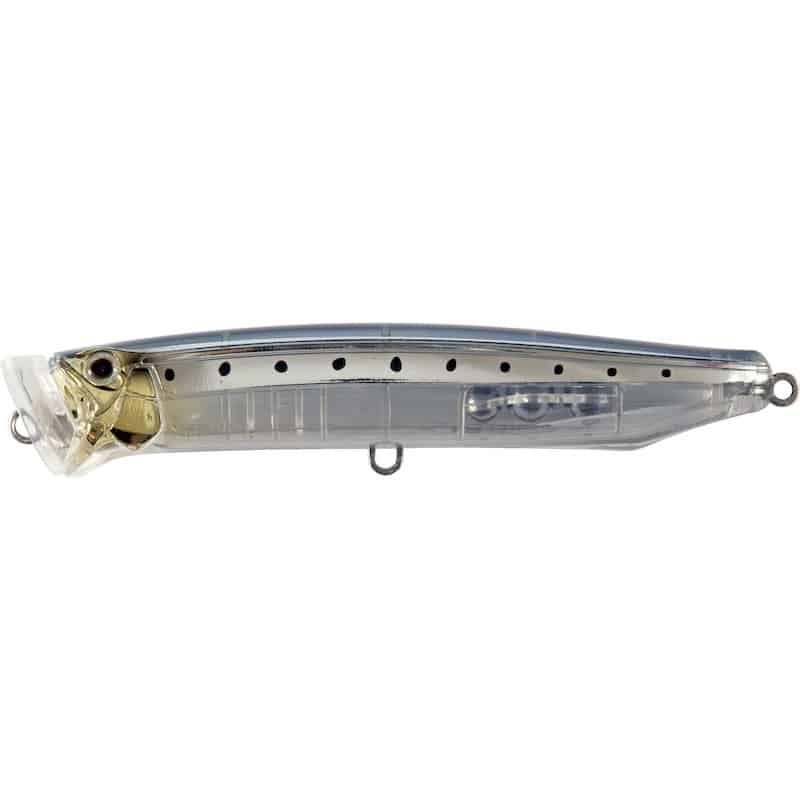
Another popper that combines all the qualities of the previous one is the 14 cm DZANGA from AMEGARI. A superb lure that casts well and attracts tuna from afar thanks to its perfect sound.
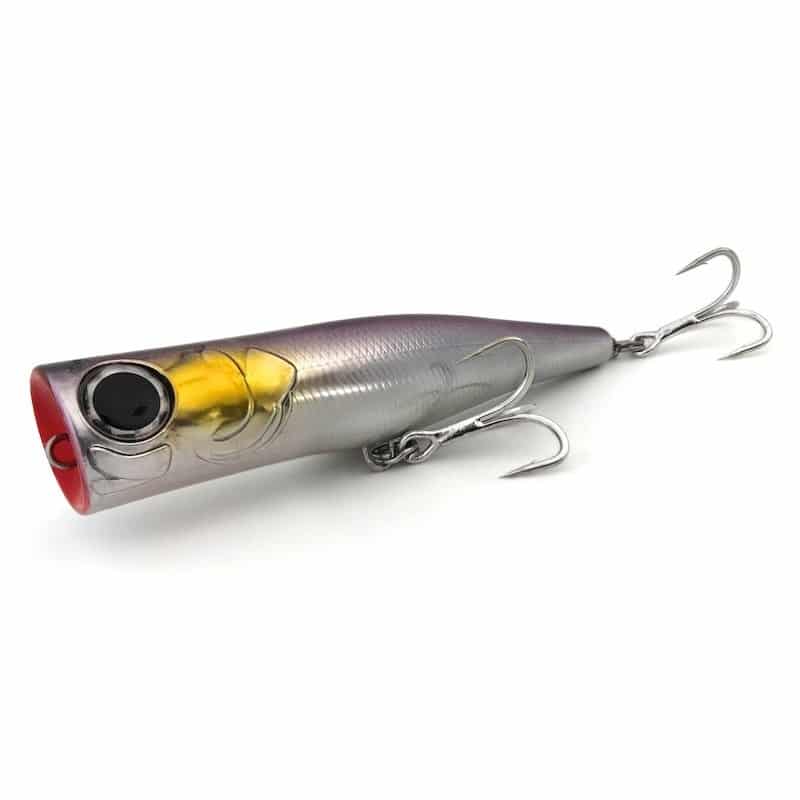
There is also another popper that beats all the others for casting distance: the HANNIBAL from BORBOLETA. Its weight distribution is not the same as on the lures mentioned above. Its weight is concentrated at the rear of the lure. With it, even shy surface feeding doesn’t escape you.
The stickbait: the tuna lure that complements the popper
This is a rather special category, as most of them are sinking models, which is not generally the case in freshwater. They are often very dense for their size, which also lets you cast a very long way. They are better suited than the first category when the fish are shyer at the surface. You can work them in two different ways. The first is a straight retrieve with the reel, which generally gives an ‘S’-shaped swim like a glidebait. The second is to walk the dog with the tip of your rod, which lets you be slightly more aggressive under the water.
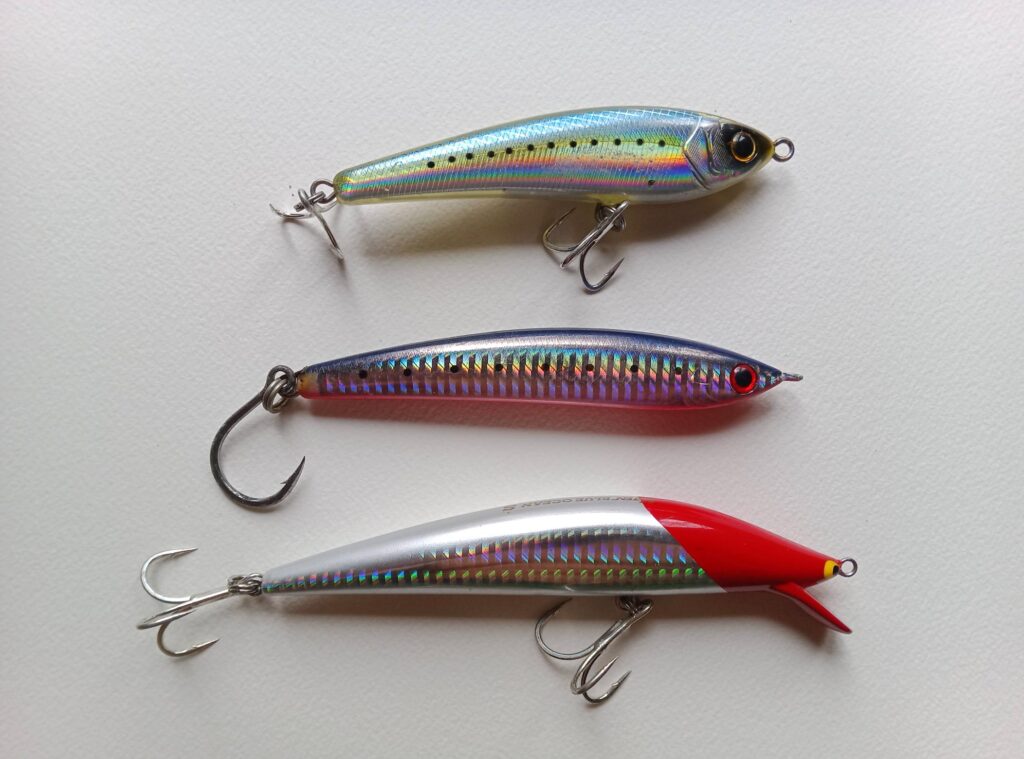
This category includes some legendary models. We start with the FLAVIE 110 FS from AMEGARI. It measures 11 cm for 48 g, which makes it extremely dense and gives it the ability to flutter as it sinks. So pay close attention on the drop, as tuna love this kind of action. It is fitted with BKK VIPER treble hooks, which tells you it means business. They really went to town on the hooks to minimise lost fish.
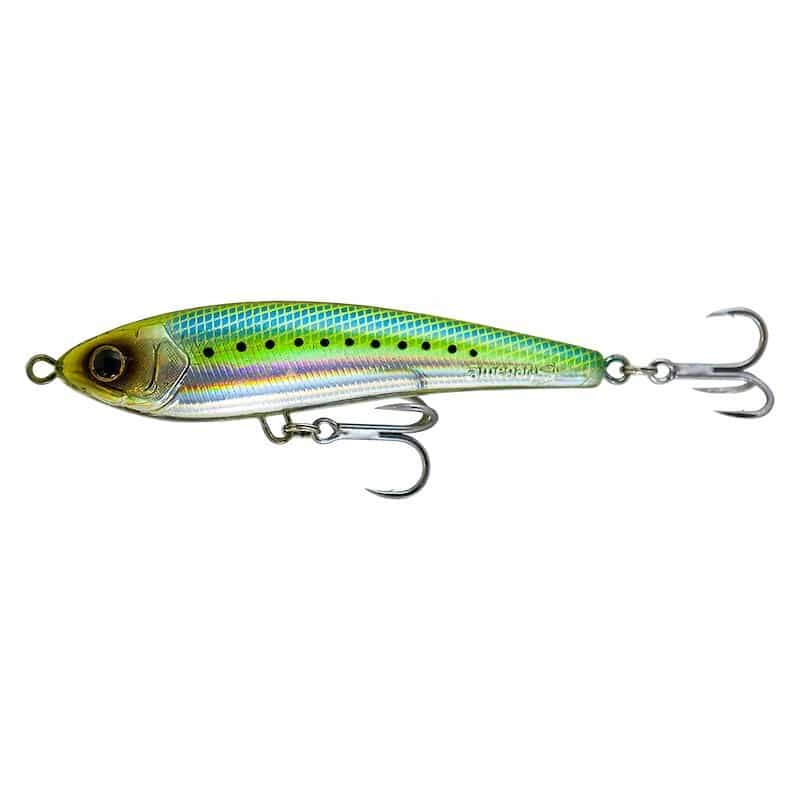
Another stickbait for tuna is the BRITT CBP, in 120 mm for 33 g and 145 mm for 98 g. It also casts a very long way and works very well with the reel. This lure is an all-rounder in French waters but also on exotic trips.
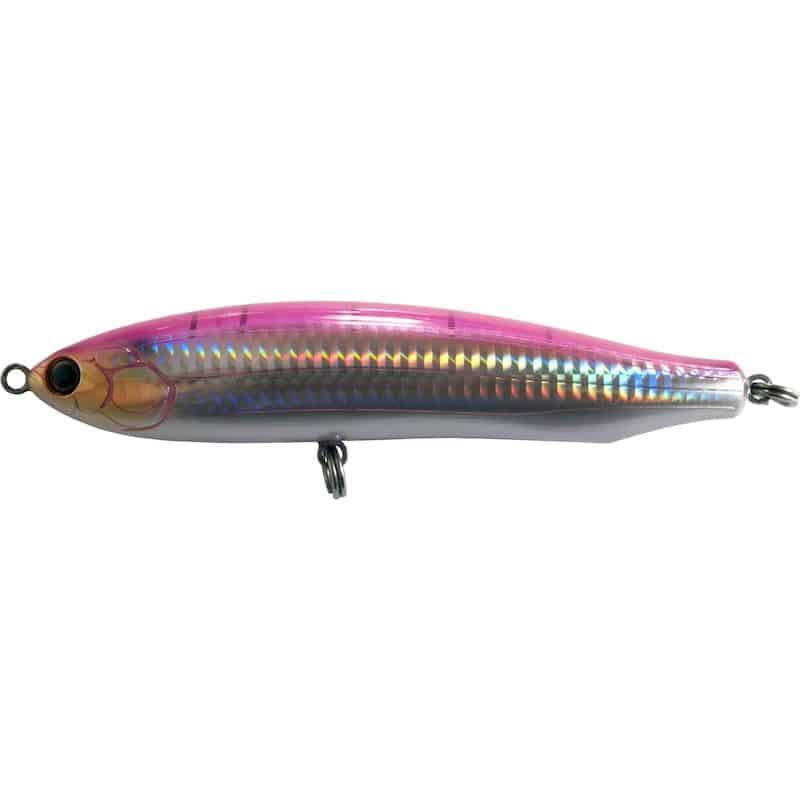
Soft lures and shads: the tuna lure for difficult conditions
This is the least used type of lure for tuna along our coasts, but it is deadly, especially in cold water and when conditions are difficult. It is also very useful when the feeding is done by isolated fish. They let you fish deeper and lower in the water column than the first two categories.
You can work your shad with a steady retrieve on the reel, which sets the tail of your shad in motion and sends a strong signal to the tuna.
The second method is the lift. The idea is to let your shad sink first, then make it rise by lifting the rod energetically. This gives it a ‘sawtooth’ action.
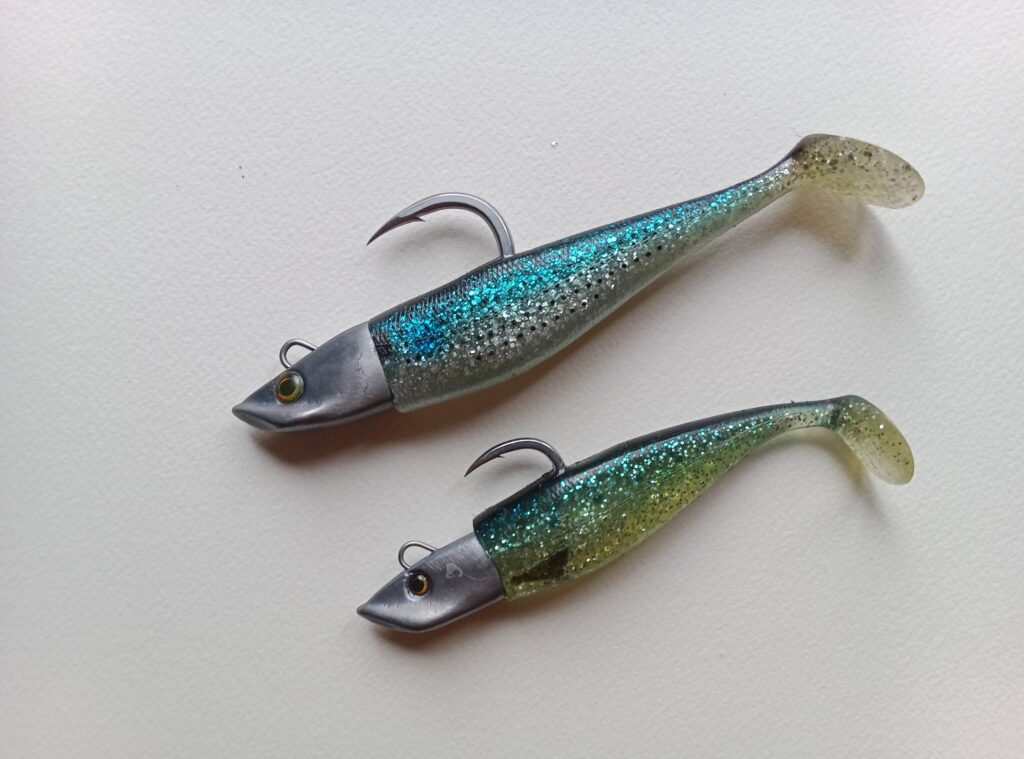
The unbeatable shad-type soft lure for tuna fishing is the NITROSHAD from ILLEX. It comes in several sizes: 90, 120, 150 and 180 mm. It is a soft lure made of very lively plastic that withstands the elements and fish teeth for a long time. But be careful: you will need a suitable jighead to fish for tuna. The original Nitroshad heads are not suited to tuna fishing but rather to bass and pollack.
We therefore recommend the Xorus Ultihead Matt Thon jighead. A weight of 40 grams will be versatile in most situations.
Bluefin tuna fishing is not something you master overnight. The most important thing is experience and the hours you spend on the water. Once again, observing and analysing the moment remain very important in the search for this magnificent sport fish.
The Rodmaps team does its best to steer you towards the best lures for bluefin tuna fishing. We hope this article helps you in your quest.
Now Let’s go fishing!


