
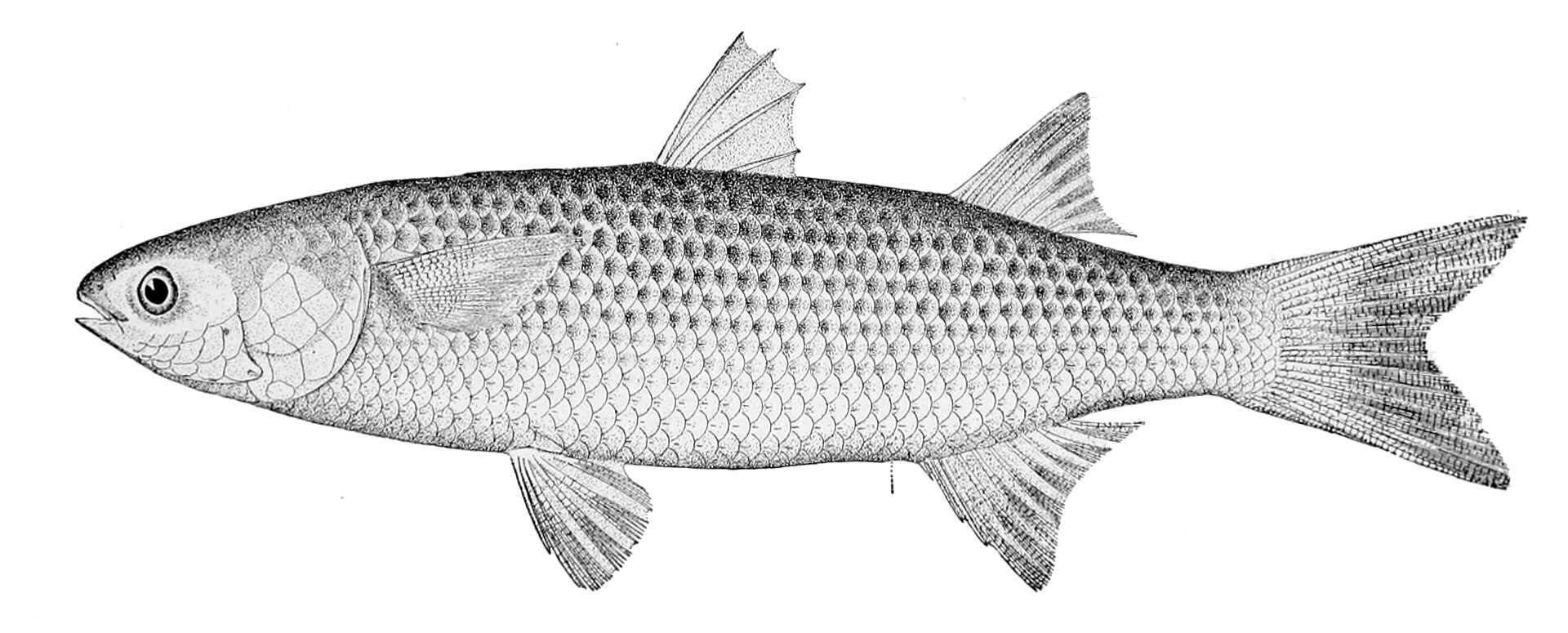
A silvery silhouette rippling beneath the surface of harbours, a hooked snout breaking the calm water: the grey mullet is one of the most familiar coastal fish and, paradoxically, one of the hardest to catch on a lure. Also known in French as muge, this gregarious fish of estuaries and shorelines (Mugil cephalus for the largest of its species) fascinates naturalists with its unusual detritus-feeding diet and challenges anglers with a wariness that has become legendary. Grazing on the biofilm of harbour walls does not stop it from flatly refusing a badly presented bait.
In this species profile, we run through everything you need to know about this fish: its morphology and the species to tell apart, its habitat, its diet, its breeding cycle, the maritime regulations that govern it and, of course, our favourite techniques and baits for outwitting it. Everything you need to understand the species better before setting out to find it along quaysides and river mouths.
Our article in brief
- The grey mullet (or muge) refers to several closely related coastal species, including Mugil cephalus, recognisable by their streamlined silvery bodies and small mouths.
- It is a fish of estuaries, harbours and lagoons, a detritus feeder that grazes on algae, micro-organisms and organic debris.
- Its wariness is legendary: a whole shoal can flee at the slightest noise or a suspicious shadow.
- It is mainly caught on bait — bread, paste, worms, fine baits — and on the fly in estuaries; lures remain marginal.
- At sea, a minimum catch size applies (30 cm in the Atlantic and Channel): always check local regulations.
Grey mullet morphology and identification
The grey mullet has an elongated, cylindrical, almost perfectly streamlined body, covered with large silvery scales that turn blue-grey on the back. The head is broad and slightly flattened, extended by a small, low-set mouth — a detail that gives away its feeding habits. Two clearly separate dorsal fins, the first reduced to a few spiny rays, complete a hydrodynamic silhouette built for life near the surface and in choppy coastal waters.
One name for several species
Talking about “the” mullet is a convenient shorthand: behind this name lie several closely related species, often mixed in the same shoal. Telling them apart takes a trained eye, the most reliable clues being the shape of the lips and the presence of spots on the gill covers:
- Flathead grey mullet (Mugil cephalus): the largest, with a massive head, very tolerant of fresh water.
- Thick-lipped grey mullet (Chelon labrosus): the most common on our coasts, recognisable by its thick upper lip, almost like a “moustache”.
- Thin-lipped grey mullet (Liza ramada): abundant, a great migrant that readily runs up estuaries and rivers.
- Golden grey mullet (Liza aurata): marked with a golden spot on the gill cover, it favours brackish water.
- Leaping mullet (Liza saliens): slender body, known for leaping out of the water.
Size and lifespan
A typical grey mullet commonly measures between 30 and 50 cm and weighs from a few hundred grams to 1 kg. Good specimens exceed 60 to 70 cm, and the flathead grey mullet (Mugil cephalus), the most imposing of the species, can reach a metre and weigh 8 kg in exceptional conditions. Here are the species' key biometric figures:
| Features | Reference point |
|---|---|
| Medium size | 30 to 50 cm |
| Maximum size | about 1 m (Mugil cephalus) |
| Average weight | 0.3 to 1 kg |
| Maximum weight | up to 8 kg |
| Longevity | 10 to 15 years |
| Sexual maturity | 3 to 4 years |
Where do grey mullet live?
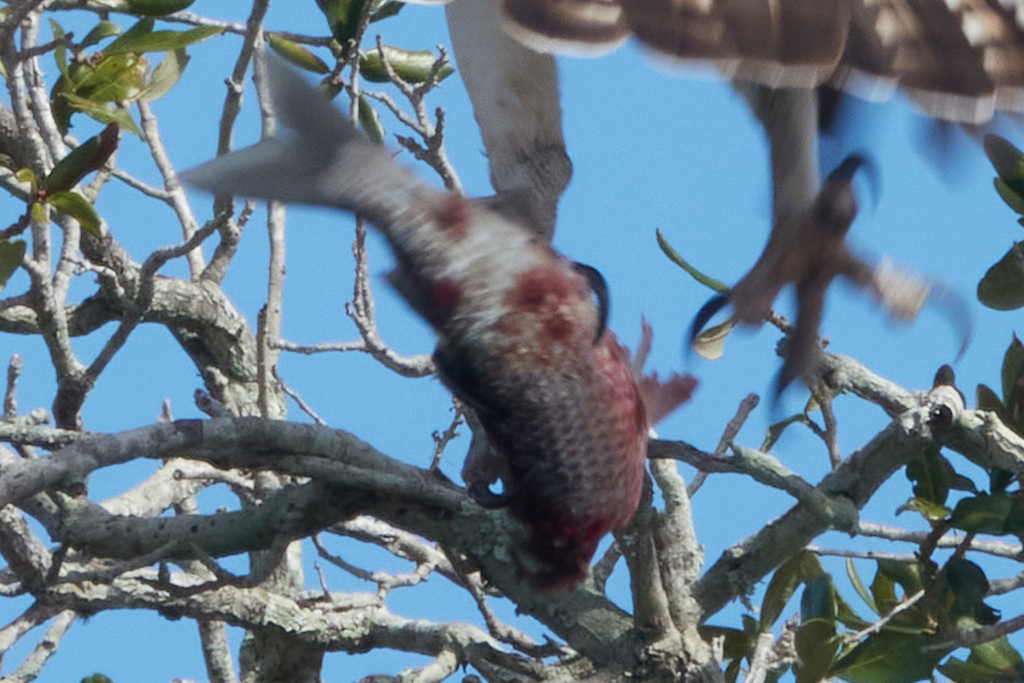
The grey mullet is above all a fish of the transition zones between sea and land. It frequents harbours, docks, lagoons, estuaries, brackish channels and sheltered beaches, where fresh and salt water mix. Highly euryhaline, it copes remarkably well with changes in salinity: thin-lipped and flathead grey mullet readily run far up rivers, into almost fresh water, especially in summer during feeding migrations.
Its range is almost cosmopolitan: it is found in all temperate and tropical coastal waters around the globe. In France, it is present along the entire coastline, from the North Sea to the Channel, from the Atlantic to the Mediterranean. It moves from the surface down to around a hundred metres deep, but it is most often seen close to shore, in calm waters rich in organic matter, forming tight shoals that patrol along quays and harbour walls.
What do grey mullet eat?
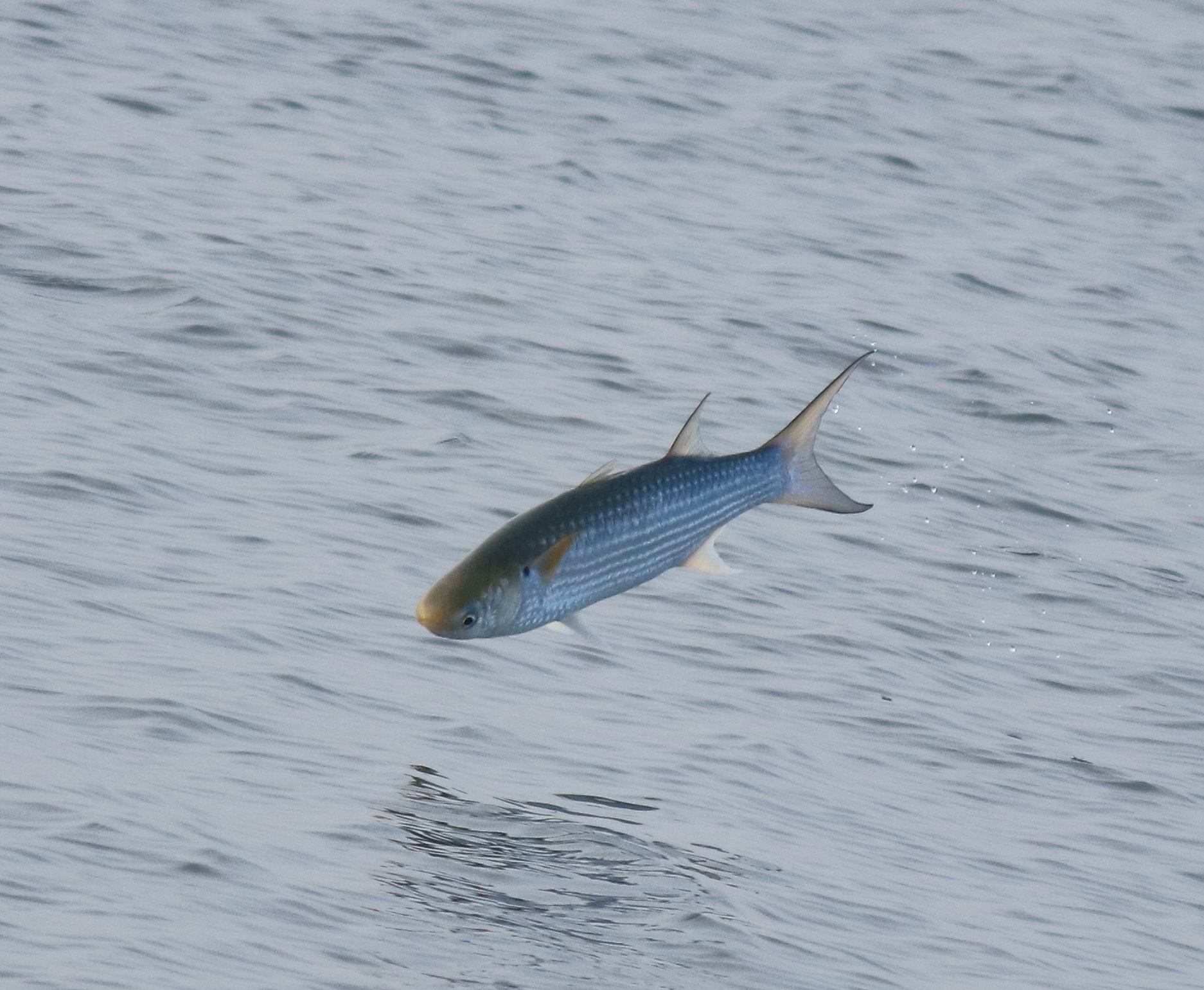
Unlike predatory fish, the grey mullet is essentially a detritus feeder and grazer. It is this atypical diet that largely explains its wariness of meat-based baits and the difficulty of catching it. Its diet is based on discreet items:
- Organic debris and detritus : it sucks up mud and sediment rich in organic matter, filtering out what is edible.
- Micro-organisms and microalgae : diatoms, zooplankton and biofilm grazed from hulls, pontoons and harbour walls.
- Plants : algae and plant debris, the staple diet of adults in low-salinity water.
This feeding ecology makes the grey mullet a cautious fish, often busy scraping submerged surfaces rather than hunting. However, it does not turn its nose up at a windfall: a piece of bread dropped in the water, fishing scraps or a strong-smelling paste trigger intense feeding activity. It is precisely on this opportunism that all mullet fishing relies, provided you know how to lull its vigilance.
Grey mullet life cycle and breeding
Grey mullet breeding involves a migration: as the season approaches, adults leave estuaries and coastal areas for the open sea, where spawning takes place in open water. The eggs and larvae are pelagic and drift with the currents before the fry return to sheltered brackish waters, which act as true nurseries. This strategy explains the vital role of estuaries in renewing populations.
| Parameter | Data |
|---|---|
| Spawning period | late summer to winter depending on the region |
| Spawning grounds | at sea, offshore |
| Egg type | pelagic, drifting in open water |
| Nurseries | brackish estuaries and lagoons |
| Sexual maturity | 3 to 4 years |
Grey mullet regulations and catch size
Grey mullet fishing falls under maritime regulations, which are separate from those for fresh water. For recreational sea fishing, a minimum catch size applies: 30 cm for mullet (Mugil spp.) in the North Sea, Channel and Atlantic. The measurement is taken from the tip of the snout to the end of the tail fin. There is no national closed season for this species, as protection relies on the legal size and compulsory catch marking.
Rules that vary from coast to coast
Note: regulations in the Mediterranean may differ from those on the Atlantic coast, and local prefectoral orders or measures specific to certain areas (reserves, no-take zones, harbours) may impose additional sizes or restrictions. These rules change regularly. We therefore advise you always to check the regulations in force with the interregional directorate of the sea (DIRM) or the maritime prefecture for your area before keeping a catch.
How to fish for grey mullet
Fishing for grey mullet is above all an exercise in stealth and patience. A gregarious and ultra-wary fish, it flees at the slightest sound of footsteps on the quay or at the sight of a shadow cast on the water. The key to success comes down to one word: groundbait. By regularly scattering small pieces of bread or vegetable paste, you get the shoal feeding confidently, until its wariness fades. Here is how we adapt our approach depending on the spot:
| Situation | Technical | Overview |
|---|---|---|
| Harbour, calm dock | float fishing (light waggler) | bread or paste fished shallow, after groundbaiting |
| Beach, seashore | light surfcasting | fine baits, floating beads, discreet line |
| Estuary, clear water | fly fishing | shrimp and biofilm imitations, 6-weight line |
When it comes to tackle, finesse is everything. A long, sensitive rod — a 4 to 6 m match rod or a light surfcasting rod — lets you detect sometimes imperceptible bites without getting close to the fish. A light reel loaded with 0.20 to 0.25 mm line, a leader in fluorocarbon for discretion in clear water, and fine-wire hooks in sizes 8 to 10 complete an effective set-up. The mullet's bite is delicate and quick: it is best to strike gently so as not to tear its fragile lips.
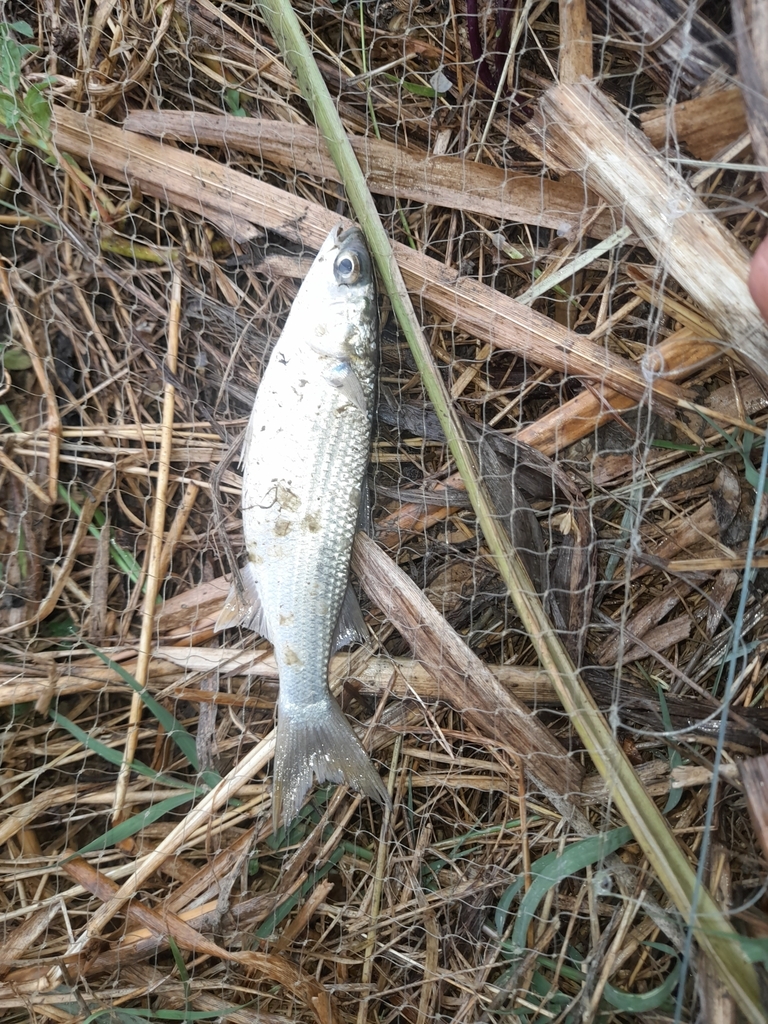
To see the bread technique in action and better understand the approach to take with this wary fish, here is a video dedicated to grey mullet fishing:
Baits and small lures for grey mullet
Let's be honest: the grey mullet is a bait fish, not a lure fish. Its detritus-feeding diet means natural bait dominates by far, and it is the wise choice of bait, as much as its presentation, that triggers the bite. Here are the safe bets:
- Bread : the king of baits, as a kneaded ball or crust, unbeatable after good groundbaiting.
- Paste : mixes based on flour, stale bread and sometimes plant flavourings, very popular in harbours.
- Sea baits : ragworm, lugworm, a small piece of sardine or maggots for beach spots.
- Floating beads : white or yellow, added in front of the hook when surfcasting to catch the fish's eye.
And lures? They remain marginal, but not entirely absent. On the fly, small shrimp or biofilm imitations (tied on size 10 to 12 hooks) sometimes take fine mullet in estuaries, offering real sporting pleasure against a hard-fighting fish. A few anglers also try micro soft lures, without much consistency. To fine-tune your rig, our guides on choosing line will come in handy: braid or nylon and best fluorocarbon, as line discretion is crucial here.
Grey mullet records and anecdotes
The IGFA-ratified all-tackle world record for flathead grey mullet (Mugil cephalus) is often quoted at around 8.5 kg, for a fish caught in 1986 in the Moruya River, Australia, by Ewen Shearer — a mark to be taken with the usual caution, as benchmarks can vary between sources. In France, there is no single official body ratifying recreational sea fishing records, and record mullet are counted in local anecdotes rather than in official books. Another curiosity: the mullet's wariness is such that some harbour anglers spend hours “training” a shoal with groundbait before hoping for a single bite — a fishery of observation as much as technique.
Ecological role and conservation of grey mullet
As a detritus feeder and grazer, the grey mullet plays a valuable ecological role: by consuming organic debris, microalgae and biofilm, it helps recycle matter and clean the muddy bottoms of estuaries and lagoons. Its presence in large numbers is often a sign of a productive coastal environment, rich in food. It is also an important link in the food chain, serving as prey for large predators such as bass and meagre.
The species is not threatened on a global scale, but it remains dependent on the quality of estuaries and coastal wetlands, its nurseries. Pollution, artificial banks and the degradation of lagoons weaken populations locally. As responsible anglers, we have a part to play: respecting the legal size, taking only what we need, and helping keep clean the harbours and beaches where this fish lives. That is the price of mullet continuing to bring our shorelines to life.
Grey mullet FAQ
How big can grey mullet grow?
A grey mullet commonly measures 30 to 50 cm and weighs from a few hundred grams to 1 kg. Good specimens exceed 60 to 70 cm, and the flathead grey mullet (Mugil cephalus), the largest species, can approach a metre and weigh up to 8 kg in exceptional cases.
Which bait should you use for grey mullet?
Bread is the most effective bait, as a ball or crust, preceded by regular groundbaiting. Paste, ragworm, lugworm or a small piece of sardine also work. Finesse of presentation and line discretion are crucial with this wary fish.
Why is grey mullet so hard to catch?
The grey mullet is a detritus feeder, not a predator, which makes it indifferent to most standard baits, and it is extremely wary: a noise or a shadow is enough to scare off the shoal. Only patient groundbaiting that gets the fish feeding confidently allows you to catch it consistently.
Can you catch grey mullet on the fly?
Yes, especially in estuaries. Small shrimp or biofilm imitations tied on size 10 to 12 hooks, presented on a 6-weight line with a stealthy approach, can take fine mullet. It is a sporting and technical fishery, much enjoyed by saltwater fly anglers.
What is the legal size for grey mullet at sea?
For recreational fishing, the minimum catch size is 30 cm for mullet in the North Sea, Channel and Atlantic. The Mediterranean and some areas may apply different rules. Always check the regulations of the maritime prefecture or DIRM for your area before keeping a catch.
How many species of grey mullet are there in France?
Several closely related species live side by side on our coasts, often in the same shoal: the flathead grey mullet (Mugil cephalus), the thick-lipped grey mullet (Chelon labrosus), the most common, the thin-lipped grey mullet (Liza ramada), the golden grey mullet (Liza aurata) and the leaping mullet (Liza saliens). They are mainly told apart by the shape of their lips and the spots on their gill covers.


