
A massive silhouette lurking at the bottom of deep holes, a huge mouth bristling with long barbels: the catfish is today the largest freshwater fish in our rivers and the undisputed giant of predator fishing. Also known as the wels, sheatfish or, colloquially, ‘the moustache’, this predator of central European origin (Silurus glanis) fascinates naturalists and anglers alike, who see it as the most powerful opponent in our fresh waters.
In this species guide, we cover everything you need to know about this fish: its morphology, habitat, diet, breeding cycle, the regulations that apply to it and, of course, our favourite techniques and lures for targeting it. Everything you need to understand the species better before heading out to meet it.
Our article in brief
- The catfish (Silurus glanis) is the largest freshwater fish in Europe, recognisable by its massive scaleless body and its six barbels.
- It commonly measures 1 to 2 m, with large specimens exceeding 2.50 m and weighing over 100 kg.
- An opportunistic predator, active mainly at night, it is caught on lures, live bait and with the clonk.
- An introduced, unprotected species: no national legal size, but rules have been tightening in certain river basins since 2026.
- An adaptable apex predator and a subject of debate, it calls for responsible fishing and scrupulous respect for local regulations.
Morphology and identification of the wels catfish
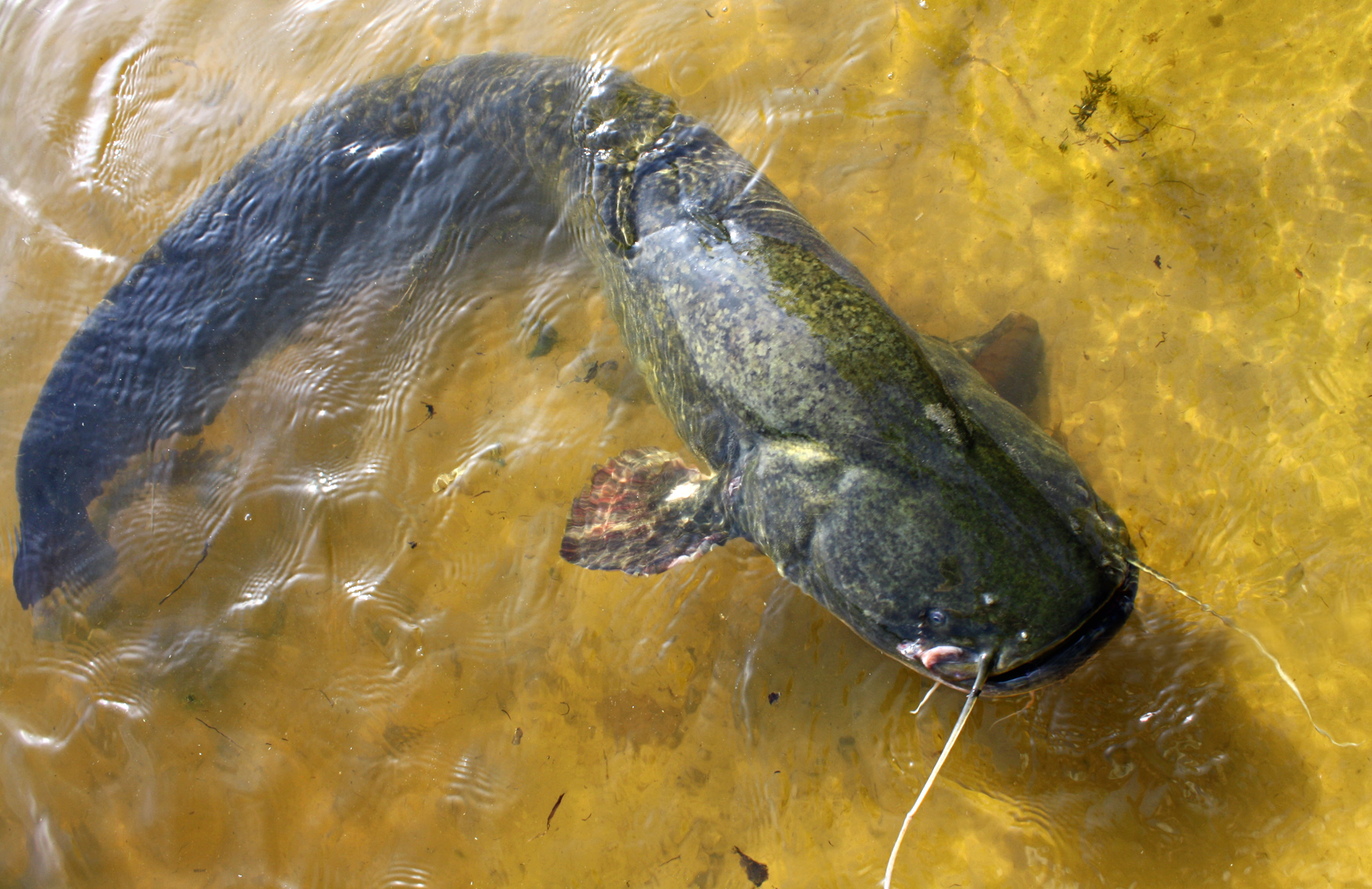
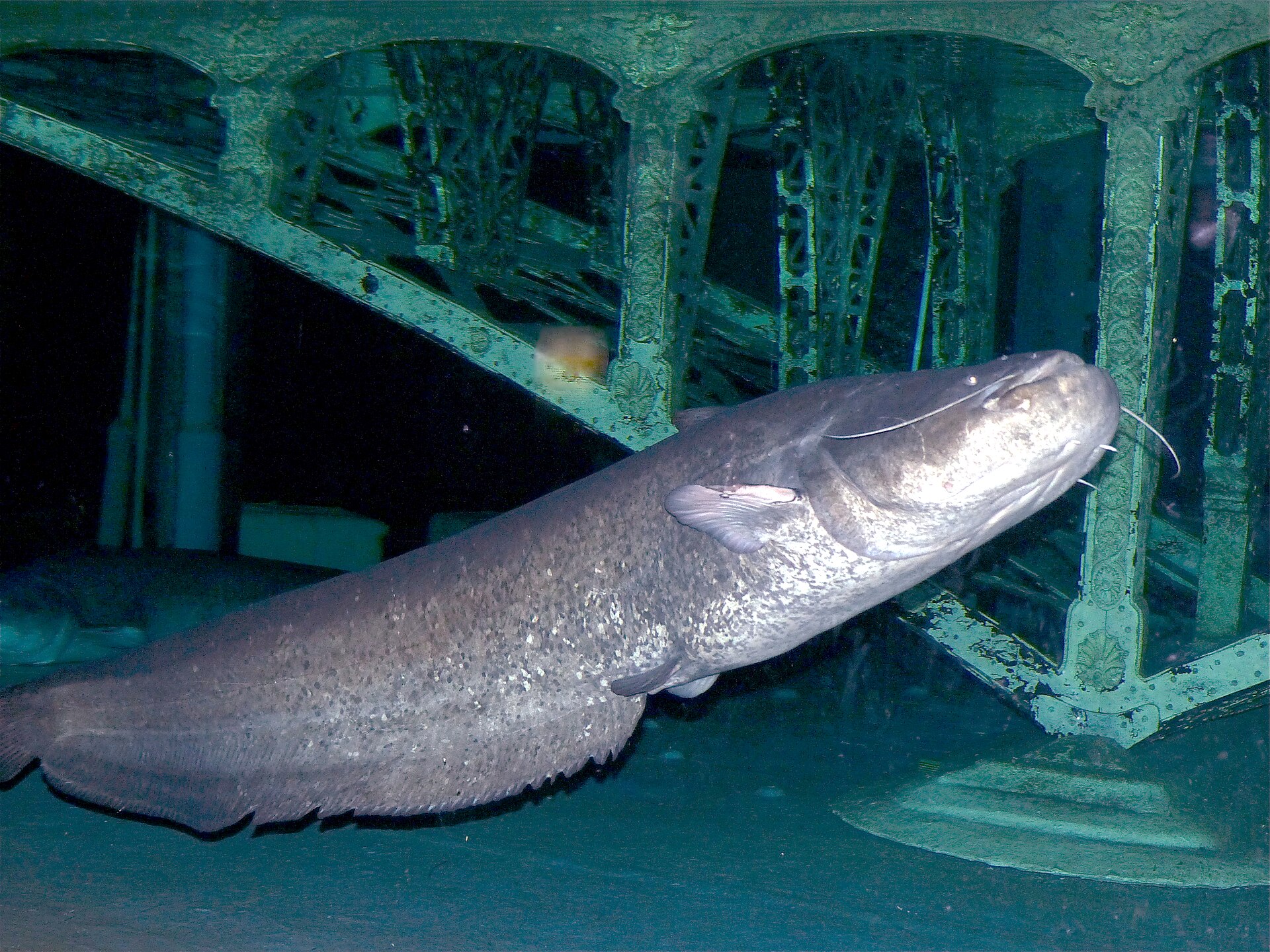
The wels catfish has a massive, elongated body with no scales, covered in smooth, slimy skin with marbled brownish-green tints, while its belly turns creamy white. Its broad, flattened head opens onto an enormous mouth capable of sucking in bulky prey. Its small eyes betray a fish that relies more on its other senses than on its sight.
Barbels and extraordinary senses
Its most characteristic feature remains its six barbels : two long, highly mobile ones set on the upper jaw, and four shorter ones under the lower jaw. Acting as true chemical and tactile sensors, they allow it to locate prey in darkness and murky water. Its mouth has no sharp teeth like a pike’s, but rows of fine, velvety teeth arranged like sandpaper to lock onto its catch.
Size and lifespan
An adult wels catfish commonly measures between 1 and 2 m and weighs 10 to 40 kg. Large specimens exceed 2.50 m and can approach 2.80 m and more than 100 kg, making it the largest freshwater fish in Europe. Here are the species’ key measurements:
| Features | Reference point |
|---|---|
| Average size | 1 to 2 m |
| Maximum size | more than 2.70 m |
| Average weight | 10 to 40 kg |
| Maximum weight | more than 100 kg (up to 130 kg) |
| Longevity | 20 to 30 years, sometimes more |
| Sexual maturity | 3 to 5 years |
Where does the wels catfish live?
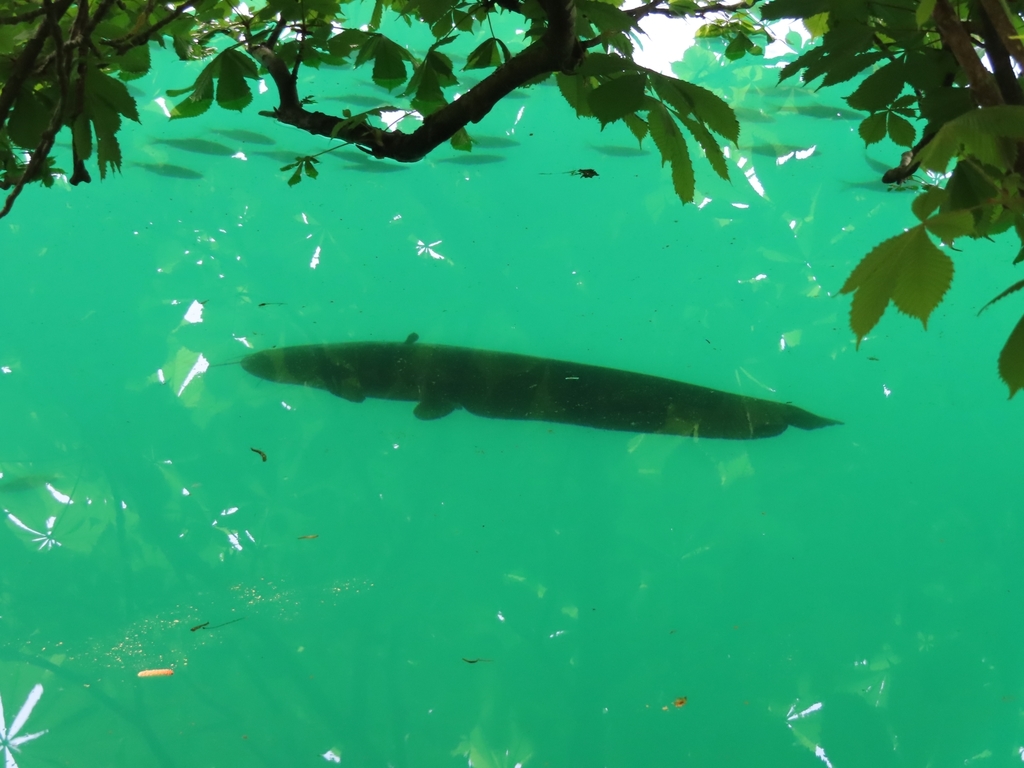
The wels catfish likes calm, warm, deep water: large rivers, slow lowland rivers and canals, but also reservoirs and large dam lakes. It seeks out deep holes, scour pools at the foot of banks, transition zones and river mouths, where it lies in wait during the day before heading out to hunt at nightfall. It is a fish of deep structures, faithful to its lies, which anglers often locate with a fish finder.
Native to central and eastern Europe, notably the Danube basin, the species was introduced and then spread widely in France from the 1970s onwards. Today it is found in almost all the major river basins, from the Rhône to the Saône, from the Seine to the Loire, and from the Garonne to the Tarn. Many large dam lakes, such as Lake Vassivière, are also home to fine populations of predators, where the wels catfish finds both abundant food and deep holes to hold in.
What does the wels catfish eat?
The wels catfish is a carnivorous and deeply opportunistic predator. Its diet is based mainly on fish, but its size and suction-feeding method open up a very wide menu:
- Fish : roach, bream, carp, bullhead catfish, and even young wels catfish, as the species can be cannibalistic.
- Crayfish and crustaceans : a significant part of its diet in many waters.
- Miscellaneous : amphibians, small mammals and waterbirds, with some individuals even beaching themselves at the water’s edge to surprise pigeons and ducklings.
Its hunting technique is spectacular: lying in ambush, it suddenly opens its enormous mouth and creates a vacuum that sucks in the prey in a fraction of a second. This fish hunts mainly at night and at dusk, guided by its barbels and lateral line rather than by sight, which explains its marked activity in murky water and in overcast weather.
Life cycle and reproduction of the wels catfish
The wels catfish spawns late in the season, in the height of summer, once the water has warmed up well. The male builds a rough nest in the vegetation of shallow areas, where the female lays her eggs. Remarkably, the male then guards the spawn and oxygenates the eggs until they hatch, a parental care behaviour that is rare among our freshwater fish. The fry hatch within a few days and grow quickly.
| Parameter | Data |
|---|---|
| Spawning period | May to July |
| Spawning temperature | 20 to 24 °C |
| Number of eggs | around 30,000 per kg of female |
| Spawning substrate | plant nest in shallow water, guarded by the male |
| Hatching | 3 to 10 days depending on temperature |
Regulations and legal size for wels catfish
Unlike pike, the wels catfish is subject to no national minimum legal size or quota, and fishing for it is not subject to a specific closed season: in second-category waters, you can target it all year round. As an introduced, unprotected species, it is nevertheless governed by the general fishing rules and by local provisions that can vary greatly from one département to another.
What changes for wels catfish fishing in 2026
Decree no. 2026-464 of 8 June 2026 added the wels catfish to the list of species likely to cause biological imbalances in the river basins of Loire-Bretagne and Adour-Garonne. In practice, in these basins, any wels catfish that is to be released must be released immediately after capture, without being kept in a keepnet, live well or retention sack, and it is forbidden to transport a live wels catfish in order to introduce it elsewhere, on pain of a fine of up to €9,000. Please note: these rules are changing and are subject to change by prefectural order. We encourage you to always check your département’s order and your AAPPMA’s rules before fishing.
How to fish for wels catfish?
Wels catfish fishing comes in several complementary approaches: lure fishing to cover water actively, live bait on the bottom or under a float, and clonking while drifting over deep holes. The golden rule is to think big, because a large wels catfish will not move for a mouthful. Here is how we organise our approach according to the water layer:
| Water layer | Favourite lures and rigs | Best season |
|---|---|---|
| Surface | large propeller popper (River2Sea Whopper Plopper 190) | summer, night |
| Midwater | large shad on a jighead (Fox Rage Pro Grub 23 cm, Illex Dexter Shad 175) | all seasons |
| Deep / holes | clonk teaser (Madcat), heavily weighted soft lure, live bait fished off the bottom | spring, summer |
As for tackle, you need something sturdy: a casting rod rated 100 to 200 g, a robust casting reel able to withstand the runs, a thick braid of 50 to 130 lb and a leader made of heavy-diameter fluorocarbon. We focus on deep holes, scour pools along the banks and suction zones located with the fish finder, varying the retrieve until we find the trigger of the day.
To discover an emblematic wels catfish technique, here is a video on fishing with the clonk teaser:
Our selection of wels catfish lures
Lure fishing for wels catfish calls for bulky, vibrating models that displace a lot of water so the fish can detect them with its lateral line. To find out more, see our detailed selections:
- Our dedicated selection: 5 lures for wels catfish fishing
- The big profiles: everything you need to know about swimbaits and glide baits
- For spectacular strikes: topwater lures
- The bottom and deep holes: casting jigs
- All-round predator fishing: our predator selection
Records and anecdotes about the wels catfish
Among the most frequently cited catches, a wels catfish measuring 2.85 m caught by Alessandro Biancardi in the Po, Italy, in 2023, ranks among the largest specimens of Silurus glanis ever measured in public waters. In France, there is no single official body for ratifying freshwater records; catches regularly mentioned include a 2.73 m wels catfish caught in the Rhône in 2015 and a fish of around 2.79 m reported in the Tarn in 2025. These figures, often estimated on the bank, should be treated with caution. Another curiosity: wels catfish in some rivers have taken to deliberately beaching themselves on the banks to catch pigeons, a hunting behaviour studied by scientists.
Ecological role and conservation of the wels catfish
As an apex predator at the top of the food chain, the wels catfish acts as a regulator by removing weakened or sick fish and overabundant species. As an introduced and naturalised fish, however, its presence is debated: long accused of upsetting ecosystems, it is not classed as an invasive alien species in the European sense, but since 2026 it has been listed among the species likely to cause biological imbalances in two major river basins.
As responsible anglers, we have a role to play: respecting local regulations, never transporting or introducing a live wels catfish into another watercourse, and handling released fish with care. Whether you champion catch and release on big specimens or keep fish within the authorised framework, it is informed practice that will safeguard the balance of our waters for future generations.
FAQ about the wels catfish
How big can a wels catfish grow?
An adult wels catfish commonly measures 1 to 2 m. Large specimens exceed 2.50 m and can approach 2.80 m, weighing over 100 kg, making it the largest freshwater fish in Europe.
Which lures and techniques should you use for wels catfish?
Large soft lures on jigheads, bulky swimbaits and propeller topwater lures are among the most effective lures. Live bait fishing and clonking while drifting over deep holes complete the arsenal. Always opt for robust rigs.
When does the wels catfish spawn?
Spawning takes place in summer, from May to July, when the water reaches 20 to 24 °C. The male builds a nest in shallow water and guards the eggs until they hatch, which happens within a few days.
Is the wels catfish subject to a legal size and a closed season?
There is no national minimum legal size or quota, and no specific closed season. Local provisions do apply, however, notably the 2026 decree covering the Loire-Bretagne and Adour-Garonne basins. Always check the prefectural order for your département.
Is the wels catfish dangerous or harmful?
The wels catfish is not dangerous to humans: its mouth has only fine, velvety teeth. Ecologically, its impact is debated; it is not classed as an invasive alien species in the European sense, but it has been regulated in certain basins since 2026. Transporting and introducing live fish is prohibited.
When is the best time to fish for wels catfish?
The warmer months, from spring to the end of summer, offer the best conditions: the wels catfish is then very active, especially at nightfall and in warm water. Stormy days and slightly coloured water often trigger good feeding spells.