
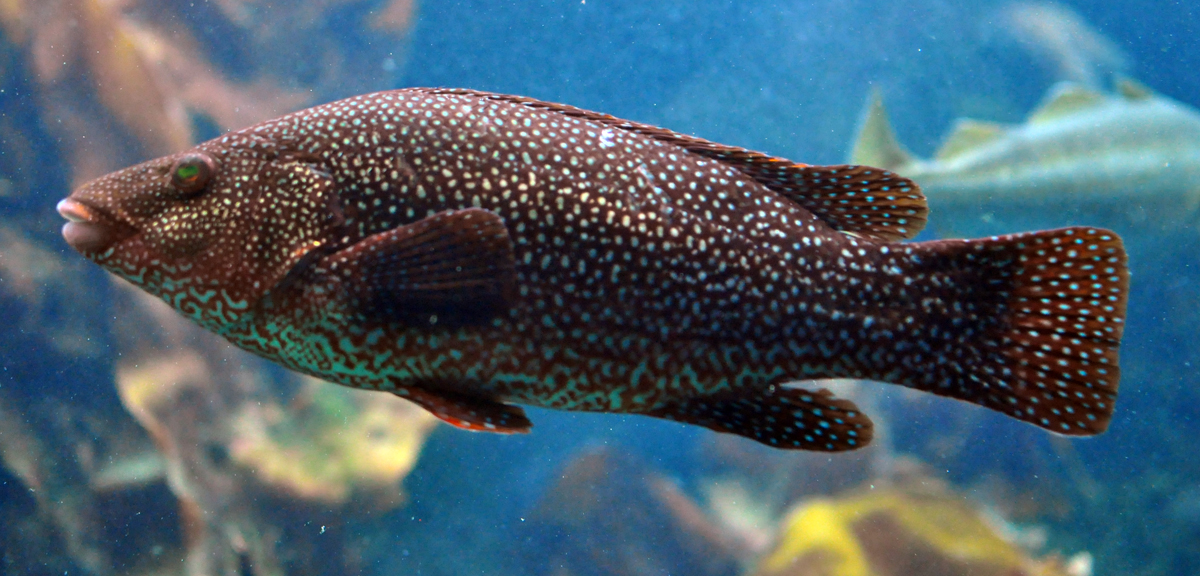
A heavy body tucked away among the kelp, fleshy lips and a mottled, ever-changing livery: the ballan wrasse is one of the most iconic rock fish of our Atlantic coasts. A large, brilliantly coloured member of the wrasse family (Labrus bergylta), this shellfish crusher fascinates naturalists, intrigued by its remarkable sex change, as much as rockfishing anglers, who love its no-nonsense strikes right against the rocks.
In this species guide, we cover everything you need to know about this fish: its morphology, habitat, diet, breeding cycle, the regulations that apply to it and, of course, our favourite techniques and lures for targeting it. Everything you need to understand the species better before heading out to meet it.
Our article in brief
- The ballan wrasse (Labrus bergylta) is a large wrasse of the rocky Atlantic shores, recognisable by its stocky body, thick lips and marbled, changeable colouring.
- It commonly measures 30 to 40 cm, with the best specimens approaching 60 cm and over 4 kg.
- A crusher of crustaceans and molluscs, it lives hidden in crevices and kelp beds and is caught by rockfishing with soft lures or with bait (crab).
- A protogynous hermaphrodite: every individual is born female before becoming male, which makes populations vulnerable to excessive fishing pressure.
- A fragile, slow-growing and long-lived fish, it deserves responsible fishing and, whenever possible, catch and release.
Ballan wrasse morphology and identification
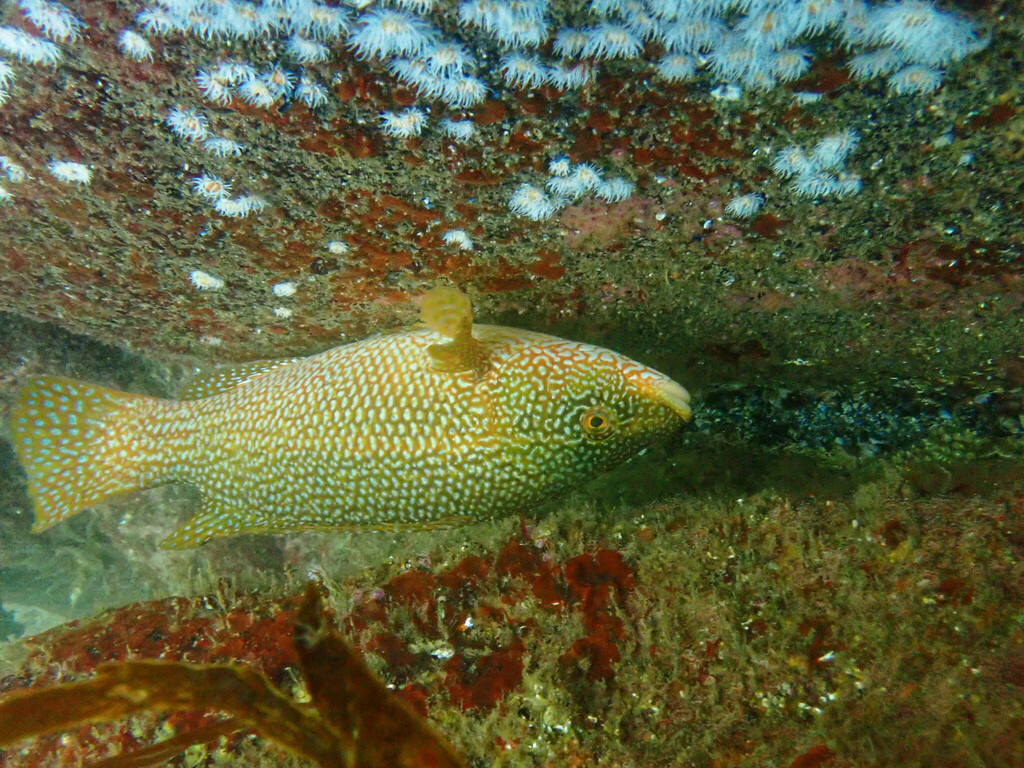
The ballan wrasse has a deep, thickset and powerfully built body, quite unlike the streamlined shapes of open-water predators. Its single long dorsal fin runs along almost the whole back, while its large pectoral fins give it remarkable manoeuvrability among the rocks. Its colouring is extremely variable, ranging from greenish brown to orange-red, often marbled with a fine network of pale spots that gives it perfect camouflage in the weed beds.
A mouth built for crushing
Its most distinctive feature remains its massive head, finished off with thick fleshy lips and crushing teeth. Behind clearly visible conical teeth lie powerful pharyngeal teeth, veritable millstones that grind shells and carapaces with ease. This equipment allows the ballan wrasse to eat prey that most inshore fish cannot tackle, and explains the surprisingly solid way it takes a lure.
Size and lifespan
An adult ballan wrasse commonly measures 30 to 40 cm and weighs a few hundred grams to just over a kilo. Large specimens exceed 50 cm and can approach 60 cm and over 4 kg. It is a slow-growing fish with remarkable longevity, able to live for several decades. Here are the key biometric figures for the species:
| Features | Reference point |
|---|---|
| Medium size | 30 to 40 cm |
| Maximum size | about 60 cm |
| Average weight | 0.5 to 1.5 kg |
| Maximum weight | about 4.4 kg |
| Longevity | up to 20 years and more |
| Sexual maturity | 2 to 6 years (female phase) |
Where does the ballan wrasse live?
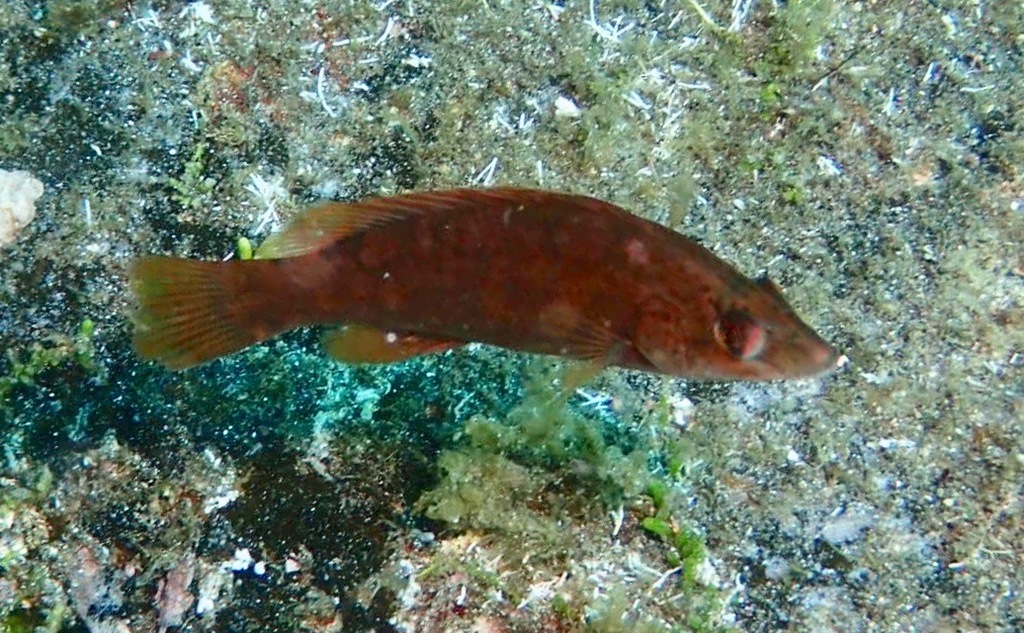
The ballan wrasse is a resident of shallow rocky ground. It favours indented coastlines, cluttered drop-offs, kelp forests and wrecks, where it finds both shelter and a well-stocked larder. It is most often found between 1 and 25 metres, each fish staying loyal to a small area it knows by heart; when the cold sets in, individuals move back to deeper, more stable ground.
Its range extends along the eastern Atlantic, from Norway to Morocco, including the British Isles, the English Channel and the North Sea. In France, it is particularly abundant in Brittany and along the whole Atlantic seaboard, wherever rock and weed beds dominate. Unlike other wrasses, however, the ballan wrasse is very rare in the Mediterranean, making it above all a fish of the temperate Atlantic coasts.
What does the ballan wrasse eat?
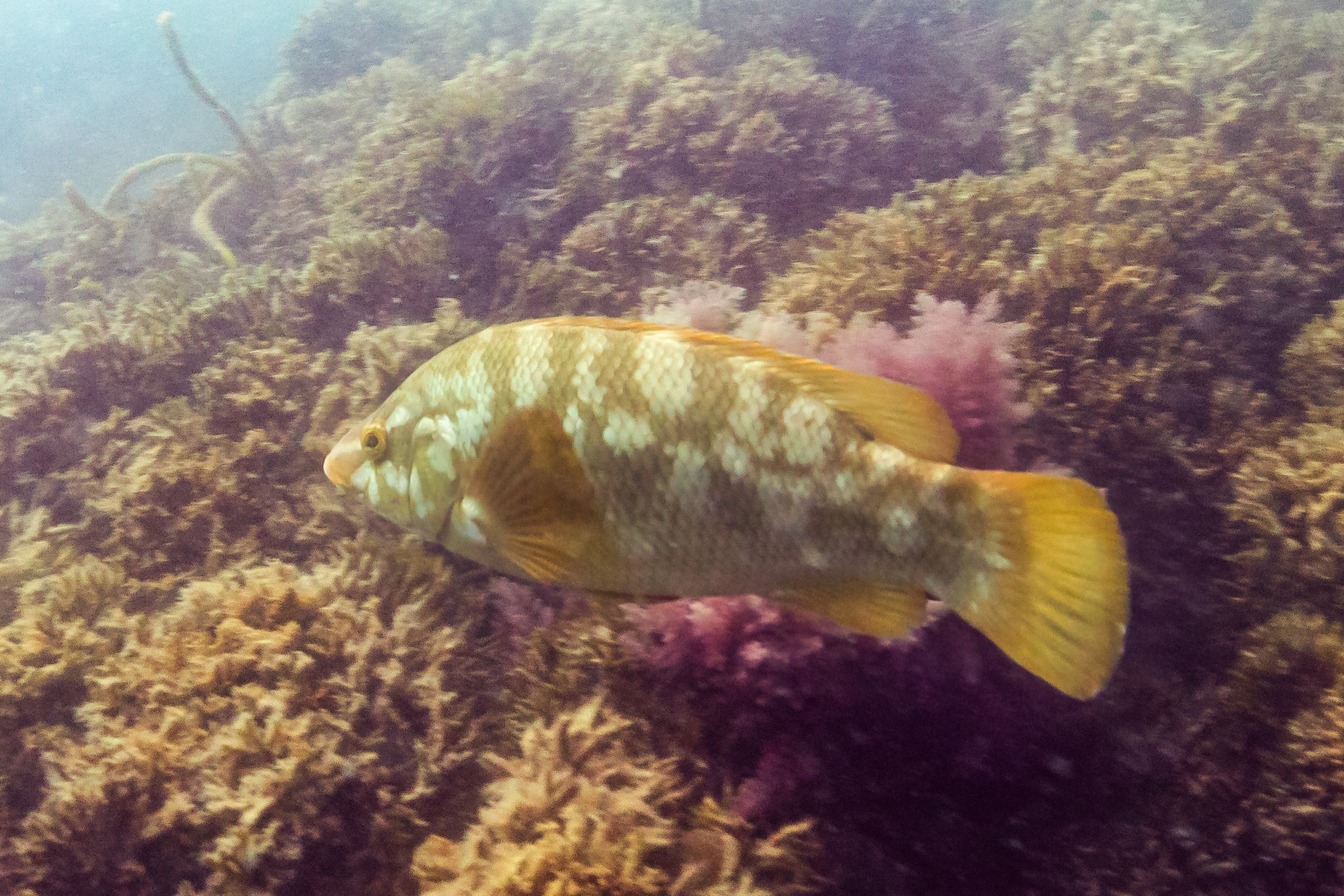
The ballan wrasse is a bottom-dwelling predator specialising in hard-shelled prey, which it flushes out by methodically searching crevices and clumps of seaweed. Its diet is based mainly on bottom invertebrates:
- Crustaceans : crabs, prawns and small lobsters, cracked open with its pharyngeal teeth.
- Molluscs : mussels, limpets, winkles and other shellfish torn from the rock.
- Miscellaneous : sea urchins, marine worms and small organisms picked off the rocks.
Its technique is nothing spectacular: the ballan wrasse slowly patrols its territory, inspects every crack and calmly crushes whatever it finds there. Its activity increases at daybreak and on the flooding tide, when the rising water sets crabs and shellfish moving again. It is a diurnal, curious and opportunistic fish that will not hesitate to grab a lure passing within reach of its hideout.
Ballan wrasse life cycle and reproduction
The ballan wrasse has one of the most fascinating biological quirks of any of our inshore fish: it is a protogynous hermaphrodite. Every individual is born and first breeds as a female, then changes sex to become male, usually between the ages of 4 and 14. That is why the largest specimens are almost always males, which become territorial in the breeding season.
Spawning takes place in spring and early summer, from May to July. The male builds a nest of seaweed at the bottom of a crevice, where the females lay their eggs, which he then guards. This mode of reproduction, combined with slow growth, makes populations vulnerable: taking too many large individuals means removing the breeding males, with a lasting impact on the renewal of the species.
| Parameter | Data |
|---|---|
| Breeding season | May to July |
| Sexual system | protogynous hermaphrodite (female, then male) |
| Sex change | between 4 and 14 years |
| Spawning substrate | seaweed nest built by the male |
| Behaviour | territorial male guarding the nest |
Ballan wrasse regulations and minimum size
Unlike tightly regulated species such as bass, the ballan wrasse is not subject to a specific national minimum landing size for recreational sea fishing in France. It is not named in the order setting minimum sizes, which does not mean, however, that no rules apply.
Caution and good practice
Recreational sea fishing regulations change regularly and may be supplemented locally by prefectural orders or management measures specific to certain areas. We therefore advise you to always check the rules in force in your area before keeping a fish, in particular with the relevant interregional maritime directorate. Given the slow growth and particular biology of the ballan wrasse, we encourage a deliberately high keep size and, wherever possible, careful release.
How to catch ballan wrasse by rockfishing?
The ballan wrasse is a prime rockfishing target – this finesse, roving style of fishing that involves working the rocky shoreline with small lures. The golden rule: keep your lure as close to the bottom as possible, where the fish hunt, even if it means snagging now and then. Two main approaches complement each other depending on conditions:
| Approach | Lures and baits | Best time |
|---|---|---|
| Scratching the rocks (lure) | creature bait or crab imitation on a light jighead (Fiiish Crazy Crab) | flooding tide, daybreak |
| Working holes and crevices | small shad on a jighead (Keitech Easy Shiner, Megabass Dark Sleeper) | daytime, clear water |
| Bait fishing | green crab, mussel or lugworm on a hand line | all season |
On the tackle side, a rod of 1.90 to 2.25 m rated 5 to 50 g, with a sensitive tip, makes a reliable base for feeling subtle bites and stopping a fish that immediately tries to bolt back into its hole. We focus first on the edges of weed beds, drop-offs and boulder fields, working the lure slowly with gentle lifts interspersed with pauses on the bottom. The same spots and the same lures often cross paths with bass: our guides to the best lures for bass and to soft lures for bass offer excellent ideas that carry over to ballan wrasse.
To see these techniques in action, here is a video dedicated to catching ballan wrasse from the shore with soft lures:
Our selection of lures for ballan wrasse
The wrasse hunter's lure box is deliberately simple: a few crustacean and small baitfish imitations rigged on jigheads suited to fishing hard on the bottom. To dig deeper into choosing soft lures and shore tackle, see our detailed selections:
- The crab imitation, a must for scratching the rocks: the Fiiish Crazy Crab, worked slowly in contact with the bottom.
- The versatile small shad, such as the Keitech Easy Shiner, deadly in crevices.
- The goby-style weighted lure, like the Megabass Dark Sleeper, to stay glued to the bottom.
- Our guides that carry over: soft lures for bass and our selection of 10 essential lures for bass.
Ballan wrasse records and anecdotes
There is no single body ratifying records for this species, and record data should be treated with caution. The maximum weight generally reported for the ballan wrasse is around 4.4 kg. As for rod-caught fish, Ireland, renowned for its trophy wrasse, sets the benchmark with a fish of around 4.3 kg caught at Clogher Head in 1983, while British records also sit at around 4 kg. Another curiosity that says a lot about its biology: because it is born female before becoming male, a very large ballan wrasse is almost certainly an old male several decades old, a precious breeder best released.
Ecological role and conservation of the ballan wrasse
On rocky ground, the ballan wrasse plays a discreet but useful role: by eating crustaceans, molluscs and sea urchins, it helps keep bottom communities in balance and kelp beds healthy. Its presence, like that of other wrasses, is a sign of a living and diverse rocky coastline.
The species nonetheless remains vulnerable. Its slow growth, strong loyalty to a small area and hermaphroditism make it sensitive to localised fishing pressure, while the degradation of shallow inshore grounds threatens its habitats. As responsible anglers, we have a part to play: limiting what we take, carefully releasing large fish and respecting local regulations. That is the price for future generations to still enjoy the thrill of feeling a ballan wrasse clinging on at the end of the line.
Ballan wrasse FAQ
How big can a ballan wrasse get?
An adult ballan wrasse commonly measures 30 to 40 cm. The best specimens exceed 50 cm and can approach 60 cm and a weight of around 4 kg, reached only after many years of slow growth.
Which lures should you use for ballan wrasse?
Crab and prawn imitations and small shads rigged on light jigheads are the most effective in rockfishing. The key is to keep the lure as close to the bottom as possible, with slow lifts interspersed with pauses. Bait fishing with crab also works very well.
Why is the ballan wrasse said to change sex?
The ballan wrasse is a protogynous hermaphrodite: every individual is born and first breeds as a female, then turns into a male, usually between the ages of 4 and 14. That is why the biggest specimens are almost always old males.
Is there a minimum size for ballan wrasse?
There is no specific national minimum landing size for ballan wrasse in recreational sea fishing. Regulations may, however, be supplemented locally by prefectural order: always check the rules in force in your area before keeping a fish.
When is the best time to fish for ballan wrasse?
The warmer months, from spring to autumn, offer the best conditions, when the fish are active in shallow water. Bites are often more frequent at daybreak and on the flooding tide, when the water sets crabs and shellfish moving again.
How do you release a ballan wrasse properly (catch and release)?
Handle the fish with wet hands, remove the hook with pliers, having flattened the barbs beforehand, and return it to the water without delay above its rocky lie. Given its slow growth, releasing large fish contributes directly to the conservation of the species.


