

When you start fishing for predators, one question always comes up: which lure should I choose? Between hard lures, soft lures, spinnerbaits, blade baits and all their variations, it is easy to feel lost among the hundreds of models available. Yet there is no universal lure capable of tempting every pike, zander or perch in all circumstances. The best choice depends above all on the water, the season, the activity of the fish and your fishing technique. Here, in our view, are the main criteria to know in order to select the right lure. The aim, then, is not to find the best lure, but to understand why a lure works in a given situation.
Contents
Why is choosing the right lure so important?
Unlike coarse fish, predators hunt mainly by sight or through the vibrations they detect in the water. A lure must therefore reproduce the behaviour of a prey fish as closely as possible.
Its size, action, colour, running depth and retrieve speed all directly influence the number of bites.
The most common mistake is buying a whole host of lures before even mastering the basics. It is better to start with a few complementary models that you really learn to use. Before heading to the waterside, it is indeed better for everyone to stock up on dedicated predator lures according to the target species, the season and the waters they fish. A few soft lures, a hard lure, a spinnerbait and a selection of jigheads are enough to cover most situations. This is what we will detail below.
The main families of lures
Soft lures
The soft lure is probably the one every angler should always have in the box. Highly versatile, soft plastics perfectly imitate a baitfish. Rigged on a jighead or Texas-style, they let you search the bottom effectively for zander, pike or big perch. They excel particularly when fish are inactive or heavily pressured. They are also an excellent choice for learning to read the bottom and feel bites.

The Rodmaps tip: there is no need to own twenty different colours. A few natural shades (roach, perch, pearl white) and one or two brighter colours are enough in most situations.
Hard lures
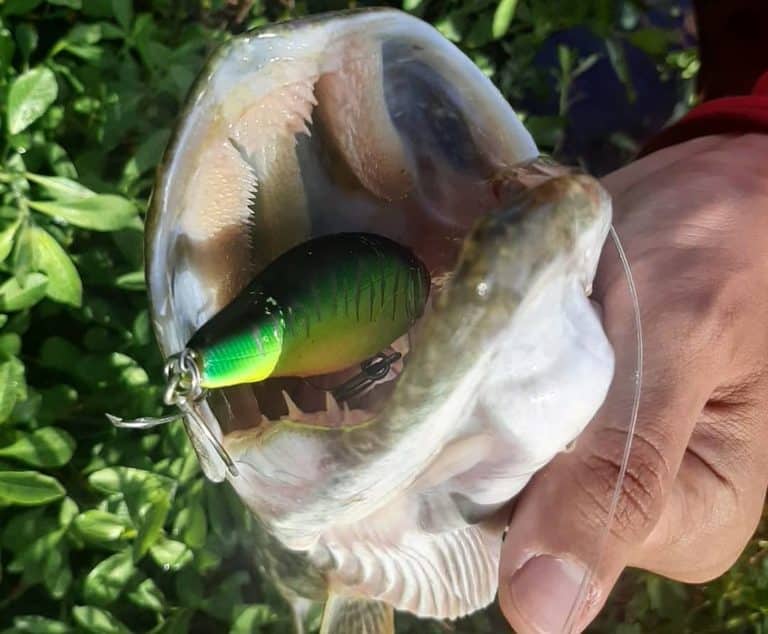
Minnows, crankbaits or jerkbaits offer a very realistic swimming action. They are particularly effective for covering a large area quickly and triggering strikes from active fish. They excel when predators are hunting and you need to provoke a reaction strike. Pike are probably the species most responsive to this family of lures.
Spinnerbaits and chatterbaits
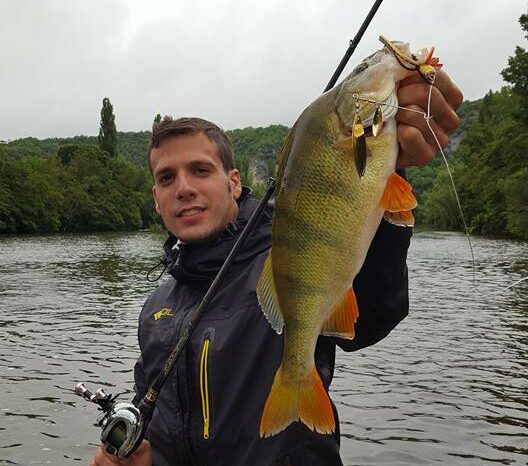
Their main asset lies in the strong vibrations they produce.
They become deadly in coloured water, weed beds or snaggy areas where other lures easily get hung up. They are particularly effective in spring and early summer.
Topwater lures
Poppers, stickbaits and frogs produce spectacular strikes, mainly from spring to early autumn.
They are particularly useful when fish are feeding at the surface, early in the morning or in the evening.

Which lure for which target species?
| Species | Recommended lures |
|---|---|
| Pike | Jerkbait, spinnerbait, 12 to 18 cm shad |
| Zander | Soft lure, blade bait, finesse |
| Perch | Small crankbait, 5 to 8 cm shad, micro jig |
| Black bass | Stickbait, rubber jig, soft creature bait |
Of course, these choices are only a starting point. Behaviour can vary from one water to another and from season to season. Here is what we would say:
- In spring, predators gradually become active again after the winter. Soft lures and slowly retrieved hard lures often give very good results.
- In summer, fish become more active early in the morning and in the evening. This is the ideal time to use topwater lures or look for fish in the weed beds.
- In autumn, many consider this the best period for predator fishing. Predators are indeed looking to build up their reserves before winter and readily attack larger prey.
- In winter, slow retrieves become essential. Soft lures worked close to the bottom often remain the most effective.
Which colour is best?
Colour is often hotly debated.
In reality, it generally comes after depth, size and retrieve speed.
A few simple guidelines will nonetheless help you make the right choices:
- clear water: natural colours;
- coloured water: white, chartreuse, fire tiger;
- low light: contrasting colours;
- heavy fishing pressure: subtle shades.
The best reflex remains to observe the baitfish present in the area.
Matching your lure to the conditions
The best lure also depends on many parameters:
- the season
- the water temperature
- the depth you are targeting
- the current
- the fishing pressure
- the target species.
For example, a zander holding at eight metres deep will not react in the same way as a pike patrolling a shallow weed bed.
Observing the water is therefore just as important a skill as choosing the lure itself.

Don’t neglect the retrieve
An excellent lure poorly worked will rarely catch fish.
Conversely, the right retrieve can often trigger bites with a very ordinary model.
Varying your speed, alternating pauses and accelerations, changing the angle of approach or the depth are all reflexes that often make the difference.
With experience, every angler gradually develops their own instincts.
Advice for lure fishing beginners
Choosing a predator lure is not about looking for a ‘miracle’ model, but about understanding how fish react to their environment. Having several types of lures, learning to read fishing conditions and adapting your retrieves are the best ways to improve.
Moreover, even with excellent tackle, certain habits limit results. The most common mistakes are:
- always retrieving at the same speed
- using lures that are too big or too small for the conditions
- changing lures every five minutes
- neglecting promising swims such as drop-offs, sunken trees or weed beds
- forgetting that the retrieve often matters more than the colour.
Over time, you realise that reading the water and understanding fish behaviour become far more important than owning the latest fashionable lure.

If you want to go further, the website of the French National Fishing Federation (Fédération Nationale de la Pêche en France) also offers plenty of advice on species, aquatic habitats and good sport fishing practice.
Over the course of our outings, we have learned one thing: the anglers who regularly catch fish are not necessarily those with the biggest lure boxes. Above all, they are the ones who know how to read a water, adapt their strategy and persist on the most promising swims.
Before changing lures, always ask yourself why you are using the one on the end of your line. That thought process often makes the difference.


