
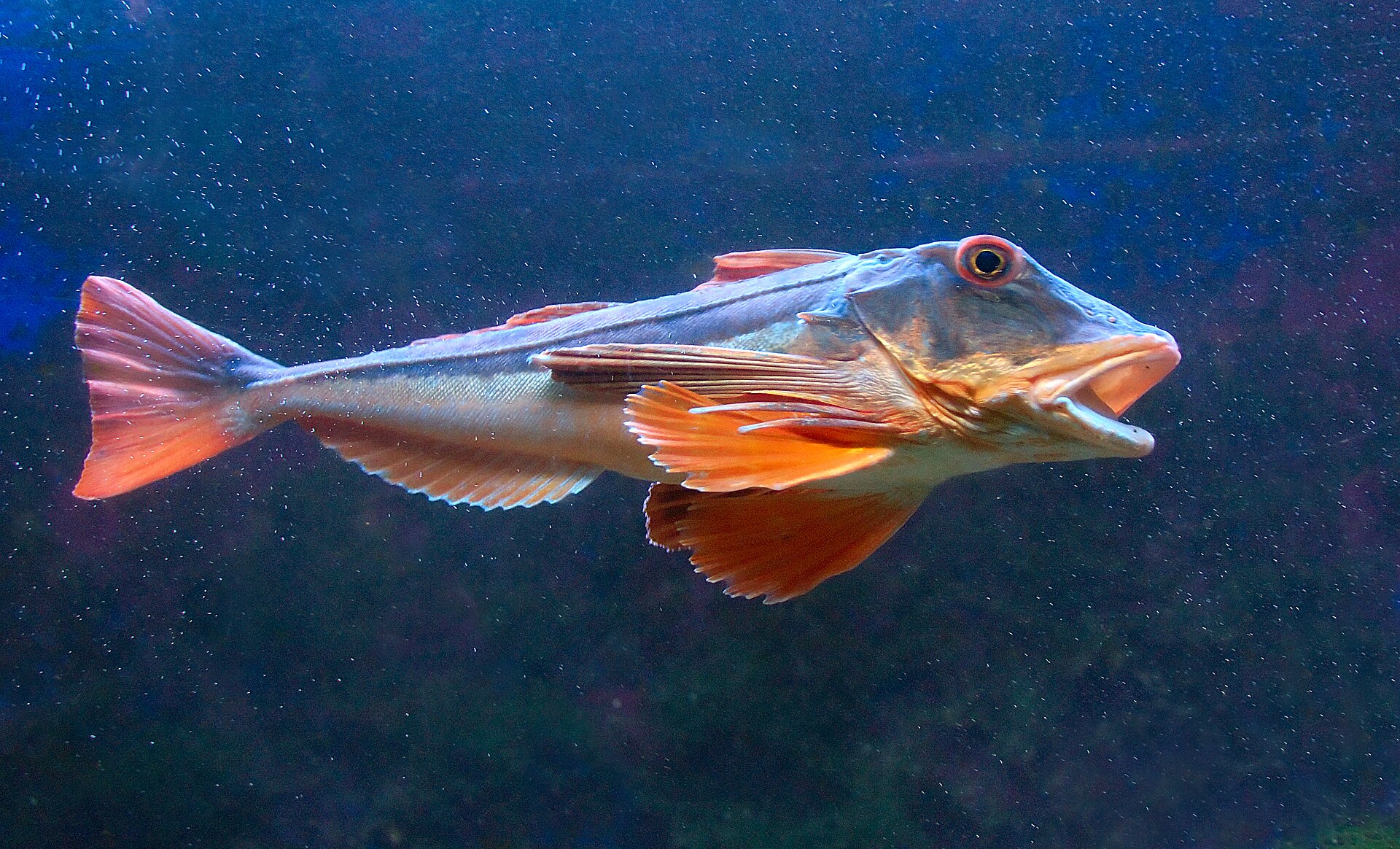
A conical body armoured with bony plates, broad pectoral fins with electric-blue highlights and curious “fingers” that probe the sand: the gurnard looks like no other fish on our coasts. This soft-bottom specialist (Chelidonichthys lucerna), also known as the tub gurnard, intrigues naturalists and sea anglers alike, especially as it lets out a grunt all of its own when lifted out of the water.
In this species profile, we cover everything you need to know about this fish: its unique morphology, habitat, diet, reproduction, the regulations that apply to it, and our favourite techniques for targeting it with bait or with a tenya.
Our article in brief
- The gurnard , or tub gurnard (Chelidonichthys lucerna) is the largest of the gurnards, recognisable by its big armoured head and spectacular bluish pectoral fins.
- It commonly measures 30 to 50 cm, with the largest specimens reaching 75 to 80 cm and almost 6 kg.
- A coastal bottom-dweller, it “walks” on the sand using three free, sensory pectoral rays, and is caught mainly on bait.
- Recreational fishing for it is not subject to any national minimum size in France, but common sense and local maritime regulations apply.
- A little-known but tasty species, it deserves responsible fishing: only take what you will eat and release the small ones.
Gurnard morphology and identification
The gurnard has an instantly recognisable silhouette: a conical, stocky body, broad and deep at the front, tapering sharply towards the tail. Its massive head is protected by genuine bony plates and extends into a prominent snout. This armoured build betrays a bottom fish, designed to crawl over sediment rather than swim fast in open water.
Colourful pectoral fins and sensory “fingers”
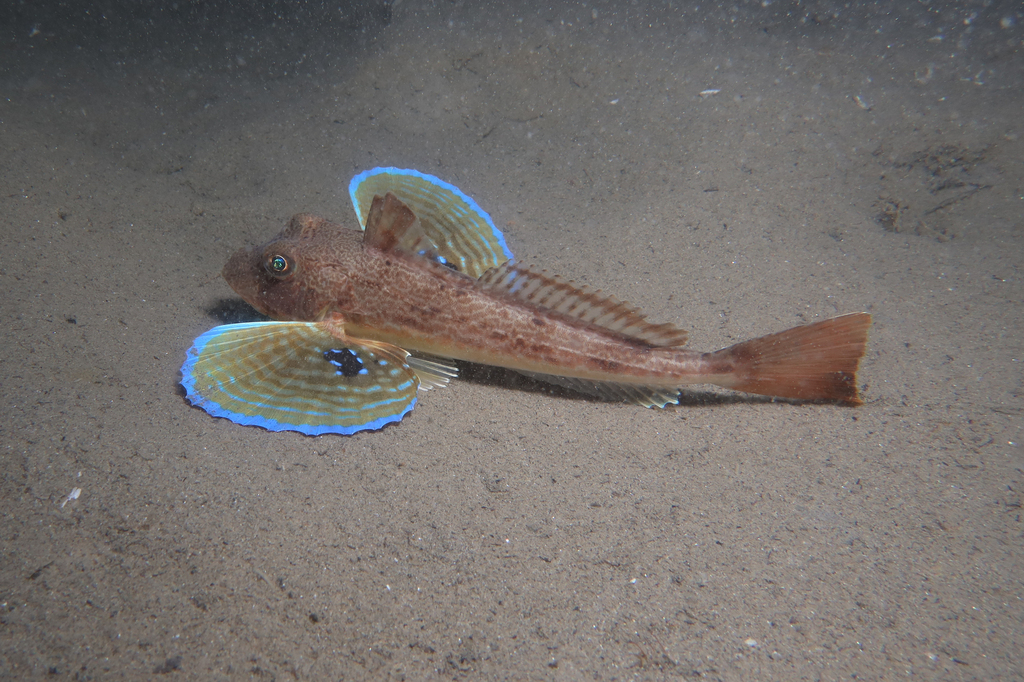
Its most spectacular feature is its huge pectoral fins: when spread, they look like wings whose inner surface is a brilliant bright blue edged with red or pink, often dotted with iridescent green and blue spots. This colouring fades with age. More surprising still, the first three pectoral rays are free and jointed : the fish uses these “fingers” to walk on the bottom, and they are equipped with sensory receptors that flush out prey buried in the sand.
A fish that grunts
The French name “grondin” (from “gronder”, to growl) is no accident. By rapidly contracting specialised muscles acting on its swim bladder, the fish produces a loud grunt, particularly audible when it is handled out of the water. This sound is thought to intimidate predators and help it communicate with others of its kind — a curiosity shared by few species on our coasts.
Size and lifespan
The largest member of its family, the tub gurnard commonly measures 30 to 50 cm. Fine specimens reach 75 to 80 cm and weigh close to 6 kg, and the species can live for up to fifteen years or so. Here are the biometric benchmarks for the species:
| Features | Reference point |
|---|---|
| Medium size | 30 to 50 cm |
| Maximum size | 75 to 80 cm |
| Average weight | 0.5 to 1.5 kg |
| Maximum weight | about 6 kg |
| Longevity | up to 15 years |
| Depth range | 20 to 300 m |
Where does the gurnard live?
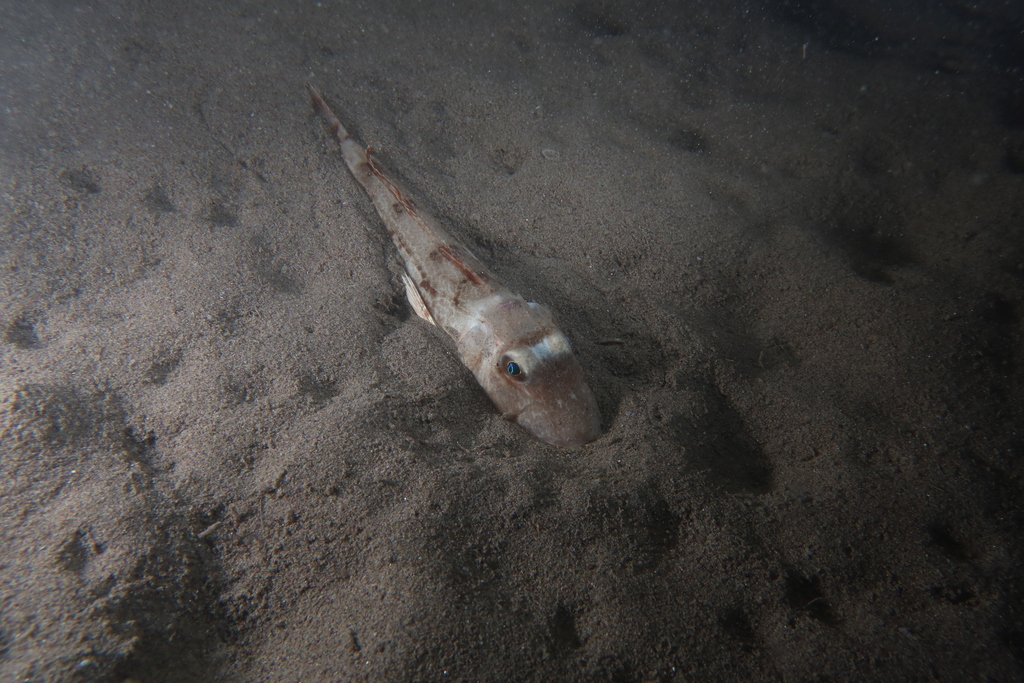
The gurnard is a strictly demersal fish: it lives on soft bottoms — sand, mud or gravel — where its sensory fingers work wonders. It is found from the shoreline down to more than 300 m, but mostly frequents the 50 to 150 m depth band. Its behaviour follows the seasons: it moves closer to the coast and into shallow water in the warmer months, then returns to deeper water, beyond 80 m, during the winter.
Its range is wide: it is found in the Eastern Atlantic, from Norway to Cap Blanc, throughout the Mediterranean and in the Black Sea. In France, it is common along the coasts of the Channel, the Atlantic and the Mediterranean, where beaches, estuaries and sandy bottoms on the continental shelf are its favourite grounds.
What does the gurnard eat?
The gurnard is an opportunistic bottom predator whose diet changes with age and season. Its sensory fingers allow it to detect buried prey before digging it out:
- Crustaceans : shrimps, small crabs and gammarids, the staple diet of young fish.
- Worms and invertebrates : marine worms and small benthic organisms dug out of the sediment.
- Fish and cephalopods : small bottom fish, sand eels and cuttlefish, increasingly common in the diet of large fish.
At around 30 cm, the gurnard switches to crabs and then, as an adult, to fish — bottom prey and cephalopods in winter, more coastal fish in summer. This predation right on the sediment explains why it responds so well to baits presented on the bottom.
Gurnard life cycle and reproduction
The spawning season varies by area: it runs from December to February, sometimes April, in the Mediterranean, and from May to June off Brittany. Females can release up to 150,000 spherical pelagic eggs, which drift freely in the water column. The larvae then settle on shallow coastal bottoms, true nurseries where the juveniles grow before moving offshore.
| Parameter | Data |
|---|---|
| Spawning period | Dec.-Apr. (Mediterranean), May-June (Atlantic) |
| Egg type | pelagic and spherical |
| Number of eggs | up to 150,000 |
| Spawning area | offshore waters, in open water |
| Nurseries | shallow coastal bottoms |
Gurnard regulations and minimum size
Gurnard fishing falls under the regulations for recreational sea fishing. As things stand, no national minimum landing size is set for gurnards (tub, red or grey) in France. The absence of a legal size does not, however, excuse a lack of common sense: we recommend releasing small fish and keeping only those intended for the table.
The rules to know before you fish
Catches from recreational sea fishing are intended for consumption by the angler and their family, and selling them is prohibited. Certain obligations may apply (tail marking, declaration of gear depending on the type of fishing). Note: maritime regulations change and may be adjusted locally by prefectoral order. We encourage you to always check the rules in force with the Affaires maritimes office for your area before heading out to fish.
How to catch gurnard
Gurnard is caught first and foremost on bait, presented on the bottom where it patrols. From the shore, surfcasting is the technique of choice: a natural bait is presented on a running ledger rig, at a good distance, on sandy beaches and estuaries. From a boat, drift fishing over soft bottoms opens up other possibilities, notably with baited tenya and inchiku, Japanese rigs that combine a jighead, bait and lure. Here is how we organise our approach:
| Technical | Rig & bait | Ideal conditions |
|---|---|---|
| Surfcasting / static bottom fishing | running ledger rig, marine worms (lugworm, American ragworm), strip of sardine or mackerel | from the shore, sandy beaches and estuaries |
| Drift fishing | baited tenya or inchiku, jigged on the bottom | boat, sandy and gravelly bottoms |
| Jigging / jig | casting jig, madai head, slow retrieve right on the sediment | vertical, when the fish are active |
As for tackle, a surfcasting rod and a reel spooled with braid are all you need from the shore; on a boat, a tenya rod or a sensitive casting jig rod, paired with a leader made of fluorocarbon, will do the job. The key is constant contact with the bottom: the gurnard follows the scent of the bait and engulfs prey scraping along the sand.
To see these techniques in action, here is a video on fishing for tub gurnard with tenya and jig — you can even hear the fish’s famous grunt:
Our selection of gurnard rigs and lures
Let’s be honest: the gurnard is not a lure fish in the classic sense. It is caught first and foremost on natural bait, and the “lures” that work are in fact baited rigs or metal lures fished right on the bottom. Here is what goes into our kit:
- Natural baits : marine worms (lugworm, American ragworm), strips of sardine or mackerel, shrimp — the essential basics.
- Baited tenya : a hooked jighead onto which the bait is threaded, deadly on a slow drift.
- Inchiku and madai heads : skirted and octopus lures that add a visual touch to the bait.
- Casting jig : a small metal lure jigged on the bottom when the fish are actively hunting. To find out more, see our guide casting jig.
Whatever the presentation, the watchwords are contact with the bottom and a slow retrieve: the gurnard does not like prey that darts away, but prey that drags and crawls within reach of its fingers.
Gurnard records and anecdotes
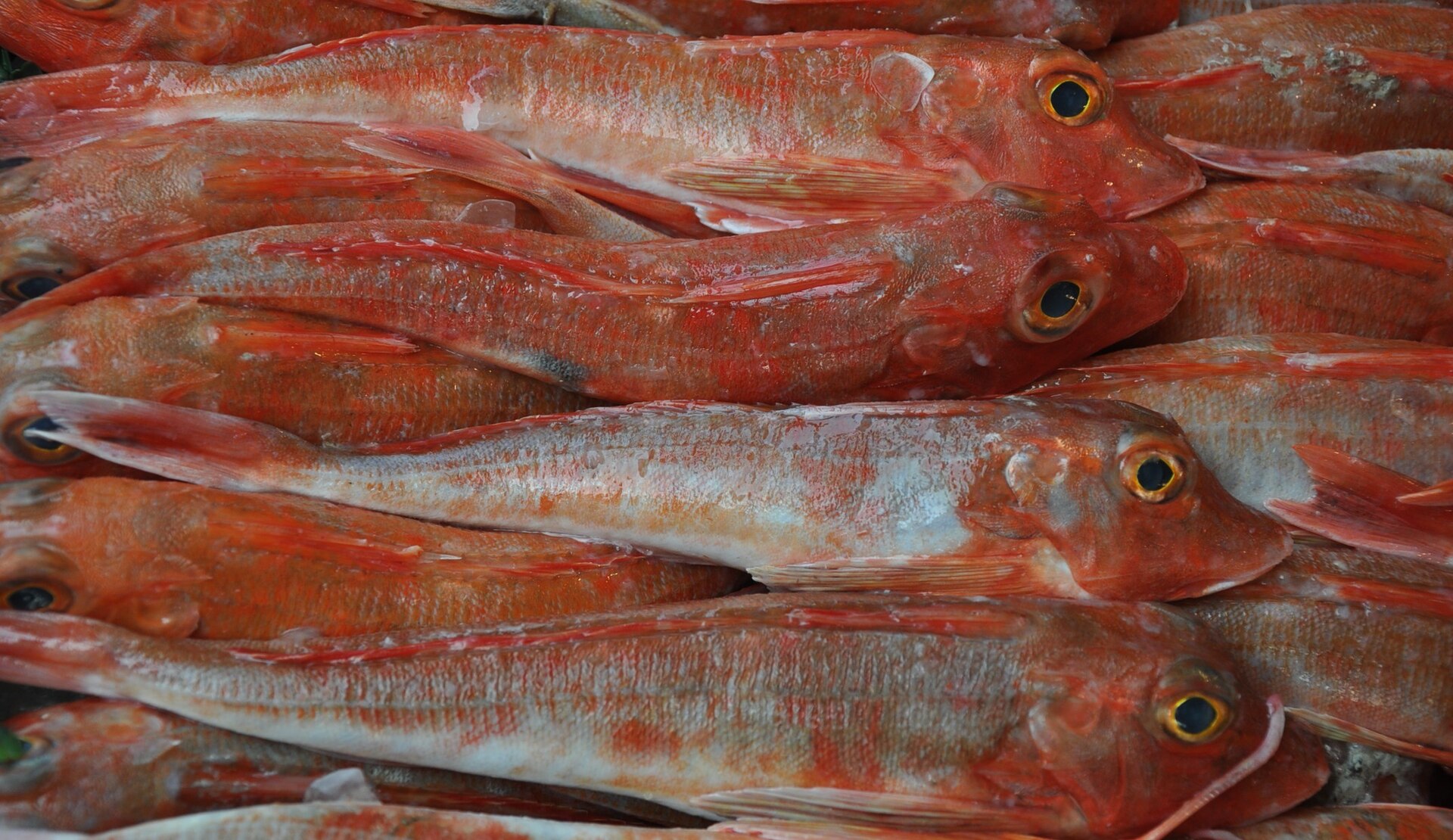
The French tub gurnard record ratified by the FFPM (Fédération française des pêcheurs en mer) is a specimen of 3.06 kg, caught on 22 November 2011 by Guillaume Fourrier. Across the species, the largest individuals exceed 75 cm and weigh almost 6 kg, but such sizes remain exceptional. Another curiosity: the tub gurnard should not be confused with its cousins. The red gurnard (Chelidonichthys cuculus) has clearly visible scales, a shorter snout and pectoral fins without a blue edge, while the grey gurnard (Eutrigla gurnardus) is smaller and has a characteristic black spot on its first dorsal fin.
Ecological role and conservation of the gurnard
As a predator of soft bottoms, the gurnard contributes to the balance of benthic communities by regulating populations of crustaceans, worms and small fish. By rummaging through the sediment with its sensory fingers, it also helps to stir up the sandy bottoms it occupies.
Long regarded as a second-rate fish, the gurnard is now growing in popularity with consumers, which is increasing the pressure on the species. As responsible anglers, we have a role to play: only taking what we eat, releasing small fish and gravid females, and respecting coastal nursery areas. That is the price of this unique fish continuing to bring our sandy bottoms to life.
Gurnard FAQ
How big can the gurnard grow?
The tub gurnard commonly measures 30 to 50 cm. It is the largest of the gurnards: exceptional specimens reach 75 to 80 cm and weigh close to 6 kg, and the fish can live for up to fifteen years or so.
Why does the gurnard make a grunting noise?
The gurnard has specialised muscles which, when they contract, make its swim bladder vibrate and produce a characteristic grunt. This sound, clearly audible when the fish is handled out of the water, is thought to intimidate predators and allow communication between fish. It is this noise that gave the species its French name.
How to catch gurnard
Gurnard is mainly caught on natural bait presented on the bottom: marine worms, strips of sardine or shrimp. From the shore, surfcasting is ideal; from a boat, drift fishing with a baited tenya, inchiku or casting jig, worked slowly right on the sediment, gives excellent results.
What is the minimum size for gurnard at sea?
To date, no national minimum landing size is set for gurnards (tub, red or grey) for recreational sea fishing in France. The absence of a legal size is no excuse for a lack of common sense: release small fish. Always check local regulations with the Affaires maritimes, as they may change.
How do you tell the tub gurnard from the red gurnard and the grey gurnard?
The tub gurnard stands out with its large pectoral fins whose inner surface is bright blue edged with red. The red gurnard has clearly visible scales, a shorter snout and pectoral fins without a blue edge. The grey gurnard, which is smaller, has a characteristic black spot on its first dorsal fin.
Is gurnard good to eat?
Yes, gurnard flesh is firm, white and tasty, much appreciated in fish soup, bouillabaisse or pan-fried as fillets. Long underrated, it is now growing in popularity. We recommend only taking what you will eat and releasing small fish.


