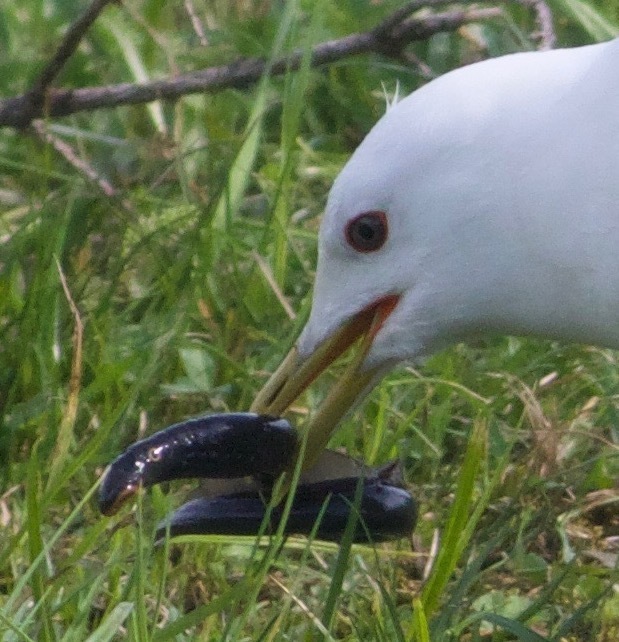
A snake-like body, bare slimy skin and, above all, that round sucker-shaped mouth bristling with horny teeth: the lamprey is unlike any other inhabitant of our rivers. This primitive vertebrate, which appeared more than 350 million years ago, belongs to the agnathans, animals without jaws. Contrary to popular belief, it is therefore not a fish in the strict sense, but one of the oldest vertebrates still alive, a true migratory living fossil moving between sea and fresh water.
In this species profile, we take a naturalist’s angle: we detail the animal’s very particular morphology, its habitat, its astonishing life cycle of filter-feeding larvae and long migrations, and its status as a protected species in steep decline. We also cover the traditional fishery it supports in the Gironde, now threatened with collapse. Our aim is not to encourage catching it, but to help people better understand and protect this extraordinary lineage.
Our article in brief
- The lamprey is a primitive agnathan, a jawless vertebrate with a sucker-like oral disc, and not a fish in the strict sense.
- Three species are found in France: the sea lamprey (Petromyzon marinus), the river lamprey (Lampetra fluviatilis) and the brook lamprey (Lampetra planeri).
- Its life cycle includes blind larvae buried in the sediment, the ammocoetes, which filter-feed for several years before metamorphosis and migration.
- All lampreys are protected; the brook lamprey is fully protected throughout France.
- In steep decline because of dams and river degradation, it supports a tightly regulated traditional fishery, currently suspended in the Gironde.
Lamprey morphology and identification
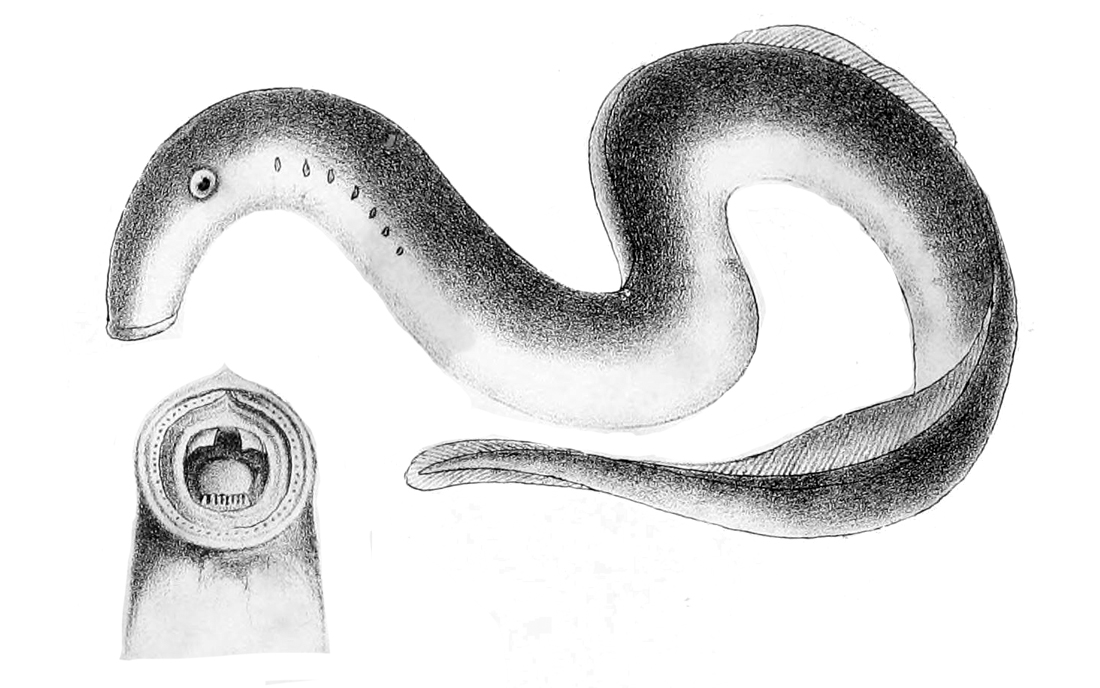
The lamprey has an instantly recognisable eel-like silhouette: a cylindrical, elongated, scaleless body covered in smooth, mucus-coated skin. It has no paired fins at all — neither pectoral nor pelvic — only unpaired fins extending along the rear of the body. This absence of lateral fins, combined with seven pairs of gill openings lined up behind the eye, is enough to distinguish it from an eel or any other elongated fish.
A jawless, sucker-like mouth
Its most spectacular feature is its mouth. The lamprey has no jaws: it is an agnathan. Instead, it has a circular oral disc, a true sucker lined with concentric rows of sharp, horny teeth, with a rasping tongue that is also toothed. In parasitic species, this apparatus is used to attach to a host fish, pierce its skin and suck out its blood and fluids. This impressive appearance feeds its reputation, but the animal does not attack humans: it is not a dangerous species for swimmers or anglers.
Three species of very different sizes
Size depends heavily on the species. The sea lamprey is by far the largest, with its brown and yellow marbled livery, while the sedentary brook lamprey remains tiny. Here are the biometric benchmarks for the three French species:
| Species | Adult size | Adult lifestyle |
|---|---|---|
| Sea lamprey (Petromyzon marinus) | 70 to 90 cm, up to 1 m | parasitic, migratory (sea and rivers) |
| River lamprey (Lampetra fluviatilis) | 30 to 50 cm | parasitic, migratory |
| Brook lamprey (Lampetra planeri) | 9 to 18 cm | non-parasitic, freshwater resident |
Where does the lamprey live?
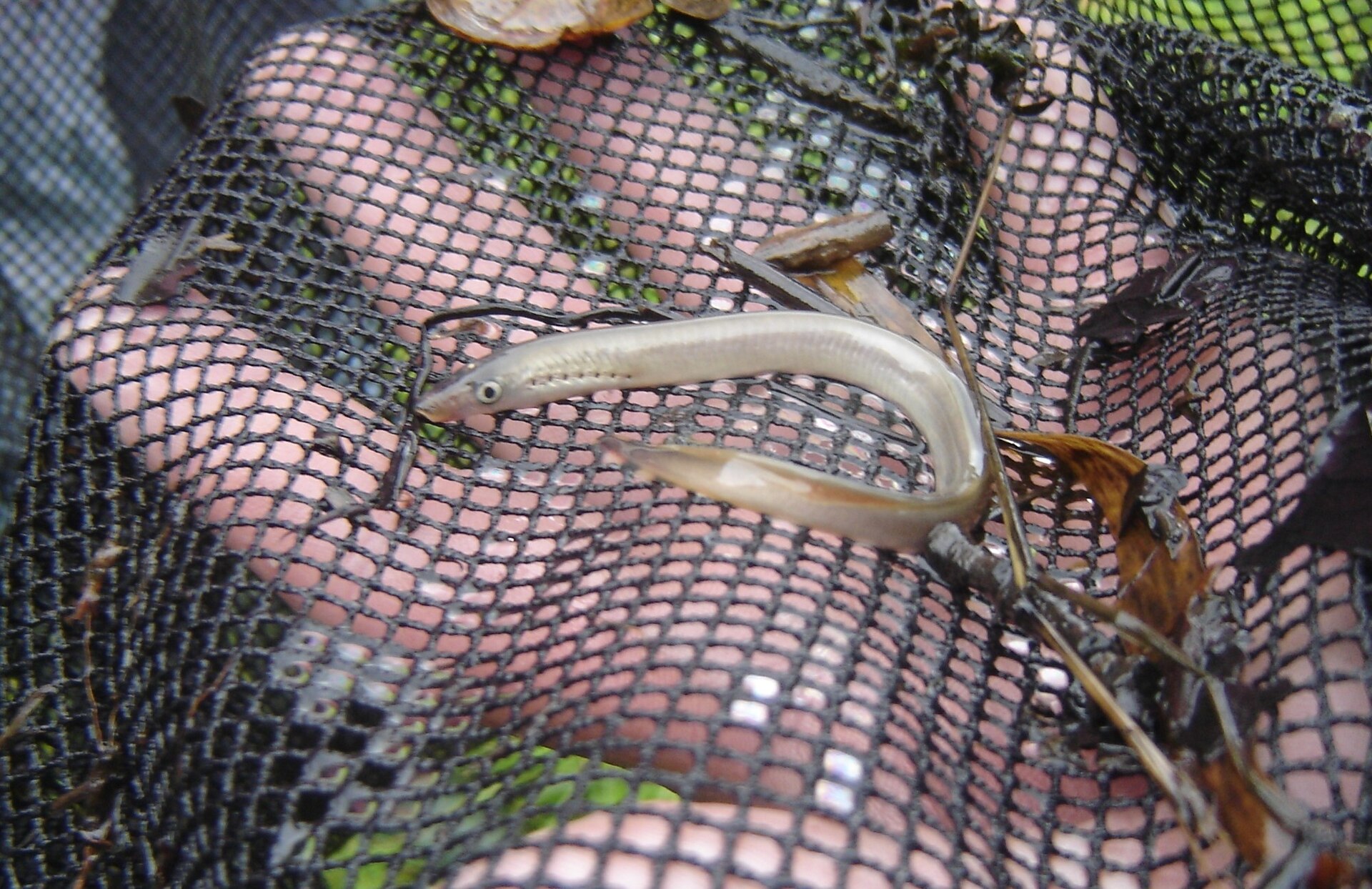
The lamprey’s habitat changes radically over its lifetime, making it both a marine and a freshwater species. The larvae, the ammocoetes, spend several years buried in soft sediments — sand and silt — in the calm backwaters of well-oxygenated rivers and streams. There they absolutely need good-quality substrate and clean water, which makes the species very sensitive to any change in its environment.
As adults, the two migratory species move into very different habitats. The sea lamprey and the river lamprey spend their growth phase at sea, on the continental shelf, before running up rivers to breed. Historically they are found in France’s major migratory routes: the Gironde and its basin (Garonne, Dordogne), the Loire, the Rhône, the Adour and some small coastal rivers in Brittany and Normandy. The brook lamprey, for its part, never leaves fresh water and lives in headwaters and small cool streams, where it completes its entire cycle. Today, the passability of dams determines whether migratory lampreys can reach these upstream spawning grounds.
How does the lamprey feed?
The lamprey’s diet also changes dramatically over the course of its life. Each major phase corresponds to a completely different feeding strategy:
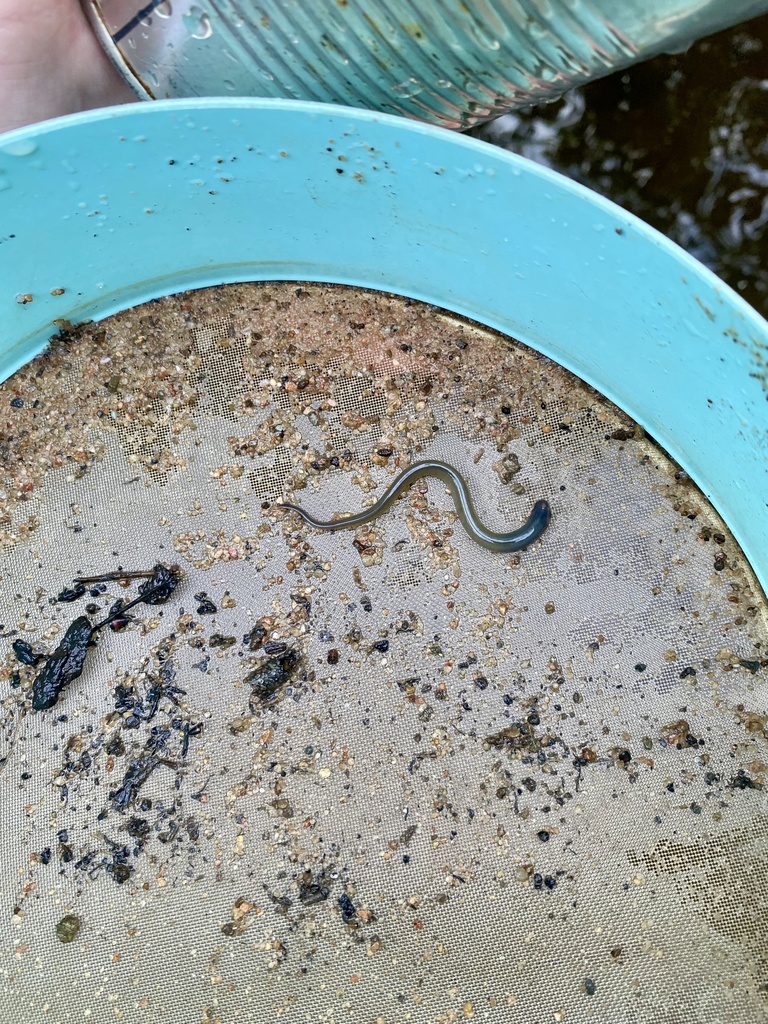
- Larval stage (ammocoete) : a filter feeder, the buried larva feeds passively on micro-organisms, organic debris and microscopic algae present in the sediment and pore water.
- Parasitic adults : after metamorphosis, the sea lamprey and the river lamprey attach themselves with their sucker to fish (and even marine mammals) to feed on their blood and tissue.
- Brook lamprey : the adult stops feeding altogether. Its digestive tract degenerates at metamorphosis: it lives only to reproduce, then dies.
This parasitic phase, specific to the migratory species, takes place at sea and remains largely unknown to scientists. There the lamprey behaves as an ectoparasite: it does not systematically kill its host, but leaves characteristic circular scars. Once the feeding phase is over, the animal stops eating as soon as it begins its journey upstream to the spawning grounds.
Lamprey life cycle and reproduction
The lamprey’s life cycle is one of the most fascinating in the aquatic world. Migratory lampreys run up rivers from late winter into spring, often at night, as far as the gravel and pebble areas of the middle reaches. There, the adults build a bowl-shaped nest: using their sucker, they move the stones one by one, while the finest particles are carried away by the current thanks to the undulations of their body.
After spawning and fertilisation, the adults invariably die: the lamprey is a semelparous species, whose senescence is programmed to begin just after reproduction. The eggs hatch within a few weeks and give rise to ammocoetes, blind larvae that immediately bury themselves in the sediment for several years. Finally comes metamorphosis, which gives the animal functional eyes and a working oral disc, before the great migration.
| Parameter | Data |
|---|---|
| Migration period | January to May (upstream run) |
| Breeding season | March to June depending on species |
| Spawning temperature | 10 to 14 °C |
| Spawning substrate | nest dug in pebbles and gravel |
| Length of larval stage | 3 to 7 years buried in the sediment |
| Fate of adults | death after reproduction |
Lamprey protected status
Far from being an ordinary quarry species, the lamprey enjoys a high level of protection. All three French species are listed inAnnex II of the European Habitats Directive, which requires the designation of special areas of conservation, as well as in Appendix III of the Bern Convention. This regulatory framework aims to preserve both the animals and their breeding and nursery habitats.
Stronger protection for the brook lamprey
The brook lamprey enjoys the strictest regime: it is fully protected throughout France under the order of 8 December 1988 setting the list of protected fish species. Catching or destroying it and degrading its habitats are therefore prohibited. The sea and river lampreys, for their part, are in steep decline and monitored under the red lists. None of these species is fished with float tackle or lures like an ordinary fish: any action concerning them is regulated, and we encourage everyone to refer to prefectoral orders and local measures before doing anything on a river.
Traditional fishing and the decline of the lamprey
The sea lamprey holds a special place in the culinary heritage of south-west France. In the Gironde, on the Garonne and the Dordogne, an age-old commercial fishery catches it with drift nets and fish traps during the upstream run. The emblematic dish is “lamproie à la bordelaise”, simmered in its own blood and red wine. This practice, long handed down by some forty professional fishermen, accounted for a major share of their annual income.
But the species is collapsing. Counts show declines of around 90% in recent years : at the Tuilières station on the Dordogne, numbers have fallen from more than 50,000 individuals a year to fewer than 5,000. The causes: dams and weirs that block migration to the spawning grounds, degradation of larval habitats, pollution and increased predation, notably by wels catfish during the upstream run. In response, fishing was banned in the Gironde in May 2022, briefly reopened in 2023, then suspended again by the Bordeaux administrative court. We describe this traditional fishery here for its cultural and historical value, without encouraging the practice while stocks are so severely threatened.
To observe the species’ behaviour without disturbing it, nothing beats video. Here is a film about sea lamprey reproduction on a French migratory river:
Lampreys and lure fishing: a non-target species
Unlike the predators we usually go after, the lamprey cannot be caught on lures. Its biology fully explains why: the parasitic adult feeds while attached to a host and even stops eating as soon as it begins its spawning migration. It therefore shows no active predatory behaviour likely to trigger a strike on a soft lure, a hard lure or a spoon.
The living animal should also be distinguished from the bait of the same name. In fishing, people sometimes talk about “lamprey” or marine worms used as bait, but these are other organisms or pieces, unrelated to the protection of our native lampreys. In short: no lure angler targets this species, and that is just as it should be. The best interaction we can have with it remains naturalist observation, especially on the spawning grounds in spring, with strict respect for its peace and quiet.
Remarkable sizes and lifespan of the lamprey
The lamprey features in no angling league table: it is not a trophy fish and no records are ratified for it. On the other hand, a few figures testify to its biological uniqueness. The sea lamprey can approach a metre in length, making it the largest of our agnathans, while the brook lamprey rarely exceeds 18 cm. Most astonishing of all is the length of the larvae’s underground life: ammocoetes stay buried in the sediment for three to seven years, a larval phase far longer than adult life, which sometimes lasts only a few months until reproduction.
Another curiosity: the lamprey is among the oldest vertebrates on the planet, with fossil forms more than 350 million years old, predating the dinosaurs. Watching a lamprey spawning ground means contemplating behaviour almost unchanged since geological times — a privilege that only the preservation of our rivers still makes possible.
Ecological role and conservation of the lamprey
The lamprey plays a valuable and often overlooked ecological role. By digging their nests, adults rework and oxygenate river substrates, benefiting other species. The filter-feeding larvae help purify the water and form a link in the food chain, while the adults that die after spawning bring nutrients of marine origin into rivers. The presence of lampreys, which are very demanding in terms of water and sediment quality, is therefore an excellent indicator of a healthy environment.
Its preservation depends above all on restoring ecological continuity: removing dams and weirs or fitting them with fish passes, protecting spawning areas and fighting sediment pollution. As observers and lovers of rivers, we have a role to play: reporting spawning grounds, respecting larval habitats and supporting the monitoring and translocation programmes carried out on the major migratory routes. That is the price of this lineage, several hundred million years old, carrying on into future generations.
Lamprey FAQ
Is the lamprey dangerous to humans?
No. Despite its impressive toothed oral disc, the lamprey does not attack humans. Its parasitic lifestyle targets other fish at sea, and as breeding approaches it even stops feeding. It poses no danger to swimmers or anglers.
Is the lamprey really a fish?
Not in the strict sense. The lamprey is an agnathan, that is, a vertebrate without jaws, which has a sucker-like oral disc instead. It is one of the oldest groups of vertebrates, distinct from bony and cartilaginous fish.
Which lamprey species are found in France?
There are three: the sea lamprey (Petromyzon marinus), the largest and parasitic; the river lamprey (Lampetra fluviatilis), migratory and parasitic; and the brook lamprey (Lampetra planeri), small, a freshwater resident and non-parasitic.
What is an ammocoete?
The ammocoete is the lamprey’s larva. Blind and lacking a functional oral disc, it lives buried in freshwater sediments for three to seven years, feeding by filtration before metamorphosing into an adult.
Why is the lamprey in decline?
The main causes are dams and weirs that block migration to the spawning grounds, degradation of larval habitats, sediment pollution and increased predation. On some rivers, such as the Dordogne, numbers have fallen by almost 90% in just a few years.
Can you fish for lamprey?
Lampreys are protected species and the brook lamprey is fully protected in France. A traditional commercial fishery for sea lamprey exists in the Gironde, but it is tightly regulated and currently suspended because stocks have collapsed. It is never caught on lures.