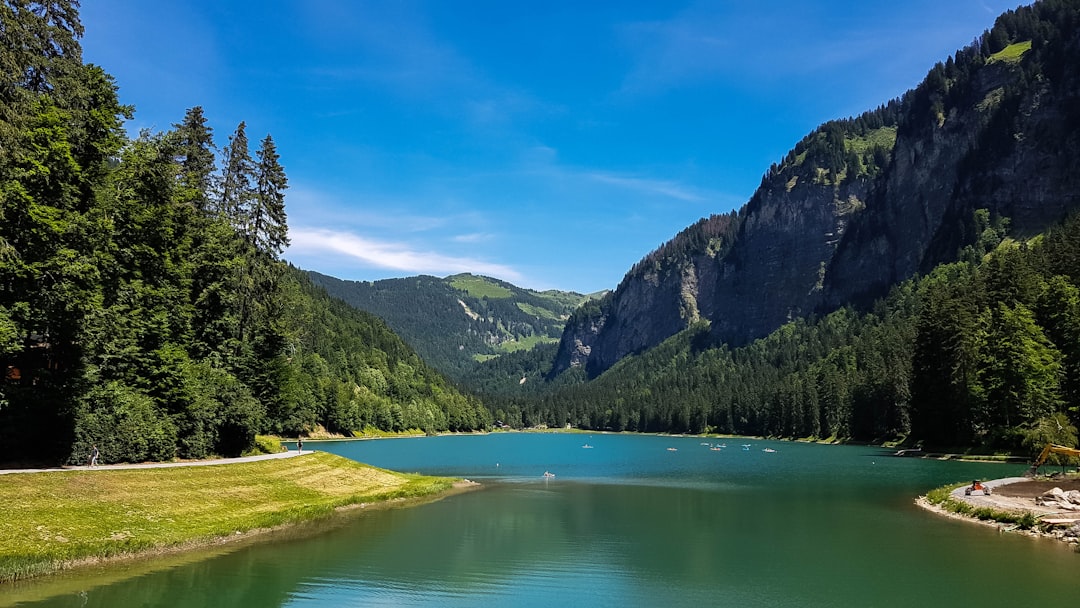
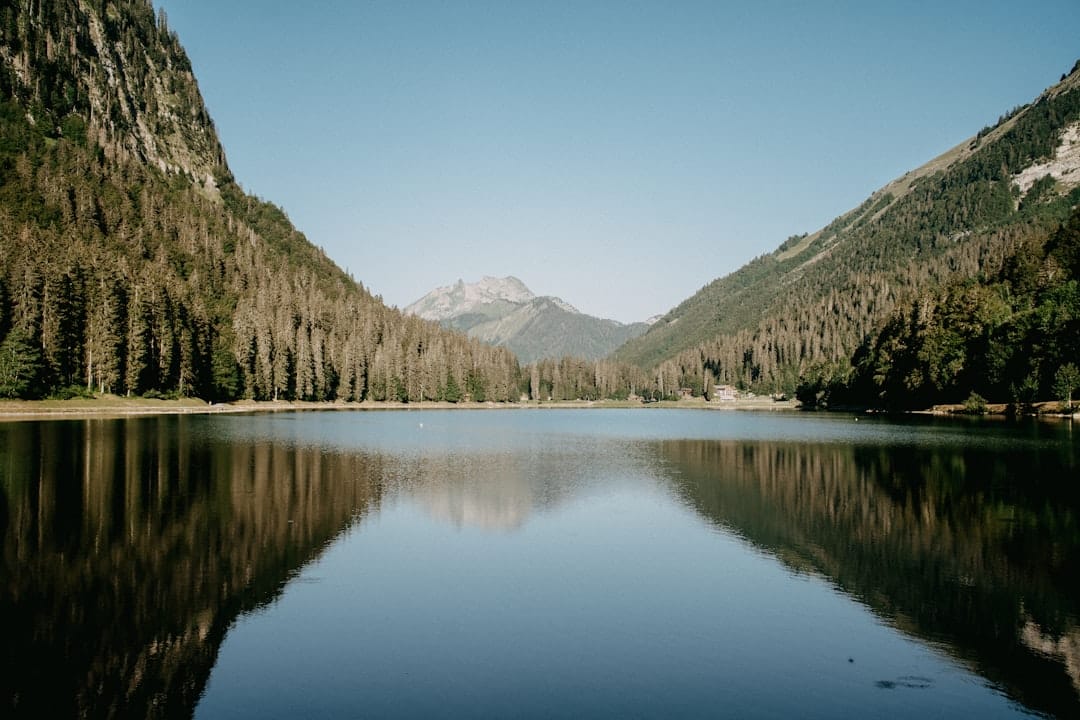
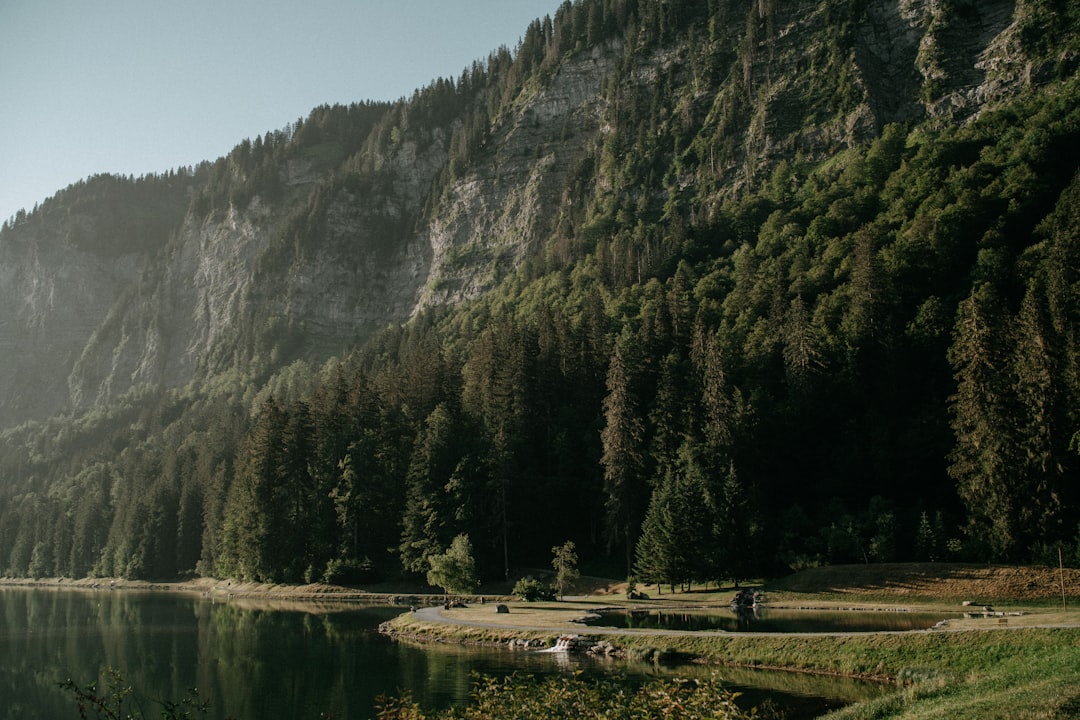
Nestled in the heart of the Aulps valley, in Haute-Savoie, Lake Montriond is one of the largest natural lakes in the department. Overlooked by the cliffs of the Nantaux and surrounded by spruce forests, this Alpine gem a few kilometres from Morzine offers a spectacular setting… and a remarkable playground for us lure anglers. Clear, cold water, hard-fighting salmonids, opportunistic perch: everything is in place for technical and memorable sessions.
In this article, we take you to discover this upland lake from the angle we are passionate about: lure fishing. The lake’s history, the species present, techniques to favour, access, weather, spots to scout, accommodation… We give you everything you need to know to prepare your next session here, rod in hand and lure box well stocked.
History and features of Lake Montriond
Lake Montriond is a lake of natural origin, formed several centuries ago by a gigantic landslide from Mont Nantaux that blocked the course of the Albertans torrent. This natural dam gave birth to the third-largest natural lake in Haute-Savoie. Sitting at around 1,060 metres above sea level, it covers nearly 32 hectares and is about 1.3 kilometres long, with a maximum depth of around 19 metres. For us, these features are valuable: a deep upland lake fed by meltwater means cold, oxygenated water all year round, an ideal habitat for salmonids. The topography left by the landslide has also created a chaotic bottom, with submerged boulders and pronounced breaks, all spots we systematically target with lures. Fishery management is handled locally with regular restocking, which ensures a good density of fish.
Which fish to target at Lake Montriond?
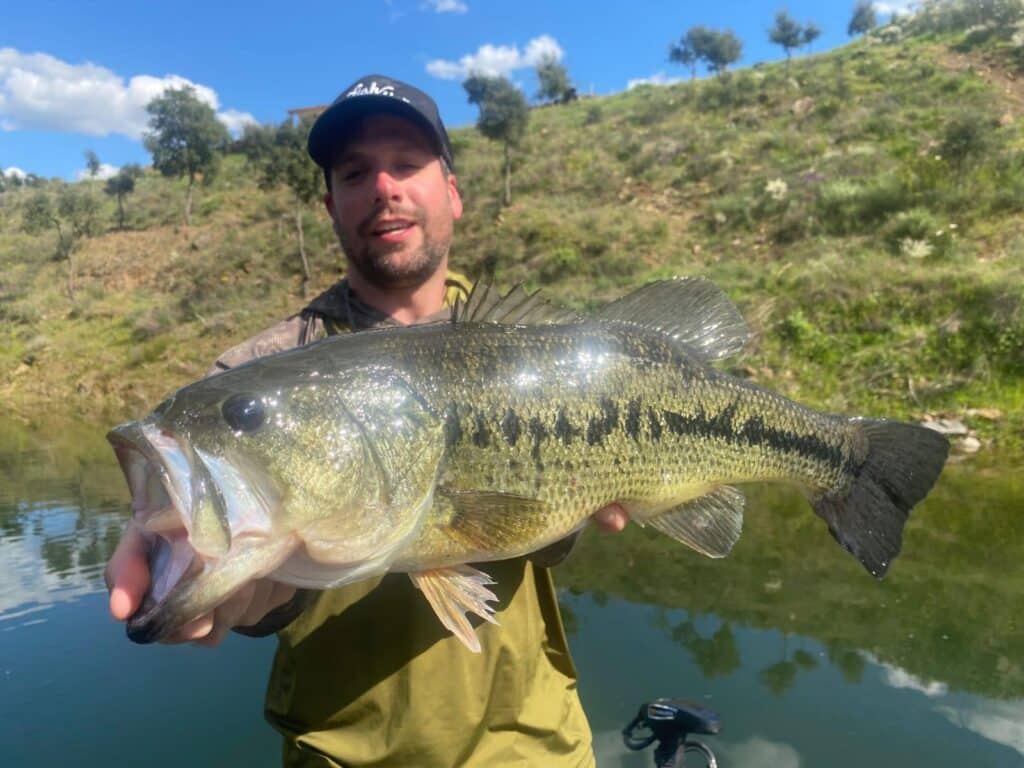
Here, salmonids reign supreme. Rainbow trout and brown trout make up most of the catches, with a few fine specimens cruising the cold layers of water. Arctic char are also reported in the deep areas, a rare and demanding fish that every lure angler dreams of. As for the classic predators, perch are well represented and provide great fun, particularly in summer along the rocky margins. Pike, more discreet, are sometimes caught near the weed beds at the head of the lake, where the water warms up slightly. Finally, a few coarse fish (roach, chub) complete the picture and serve as forage for the predators.
For trout, we favour ultralight tackle: small wobbling spoons, micro jerkbaits and soft lures of 5 cm rigged on light jigheads, worked on a slow straight retrieve or in a sawtooth pattern along the drop-offs. An ultralight trout reel in size 1000 or 2000 is perfect for this kind of finesse fishing in clear water. Spring, just after the trout season opening, is the prime period: the fish hunt close to the margins and the inflows. For perch, drop-shot and small soft lures fished vertically work wonders on the rock piles between 4 and 8 metres. If you are targeting pike, a jerkbait in a suspending version, worked slowly along the edge of the weed beds, remains our weapon of choice in this kind of cold, translucent water, ideally with a thick fluorocarbon leader for stealth.
Also watch the life around the lake: herons and goosanders are excellent indicators of areas rich in baitfish. The reed beds and weed beds at the head of the lake, fed by the torrent, concentrate fry and insects, and therefore predators. The fallen trees along the wooded bank are also prime hideouts, which we search methodically with weightless soft lures or shallow-diving crankbaits.
How to get to the lake
Access is very easy: from Morzine, allow about ten minutes by car on the D228 towards the village of Montriond, then follow the lake road. Several free car parks are laid out at both ends of the lake, so you can start your session without a long walk in. In the peak summer season, arrive early in the morning: it is both the best time for lures and the only time when parking is easy. A seasonal shuttle bus also links Montriond to the lake in summer. As for boating, petrol-engined craft are banned: float tubes and rowing boats or boats with electric motors (subject to current regulations, check with the local AAPPMA) are the options to favour for searching the drop-offs out of reach from the bank. Launching a float tube is easy from the flat banks on the north shore.
Map of the lake
Weather and fishing conditions
The mountain climate sets the pace on this lake. In winter, the lake regularly freezes over and fishing for salmonids is closed anyway. In spring, snowmelt keeps the water between 6 and 10 °C: the trout are active all day, and it is the best period for lures. In summer, the surface water rises to around 16-18 °C and the fish drop down to the breaks; we then fish early in the morning, late in the evening, or deeper with vertical techniques. Autumn offers one last superb window before the close season. As for conditions, a light breeze rippling the surface is our ally on these crystal-clear waters: it breaks up the light and makes the trout less wary. Stable or slightly falling atmospheric pressure, a hazy sky after a sunny day: that is the winning combination here.
What to do at Lake Montriond?
Lure fishing is obviously our number one activity here, but the site lends itself to plenty of other pleasures. A leisure centre with a lifeguarded beach allows swimming in summer, and the hire of paddleboards, kayaks and pedalos attracts families. Walking or mountain biking around the lake is very popular, as are the via ferrata and the nearby Ardent waterfall. For us, these summer activities have a direct consequence: in July and August, it is best to fish at first light or in the evening, when the lake regains its calm and the fish come back up to hunt.
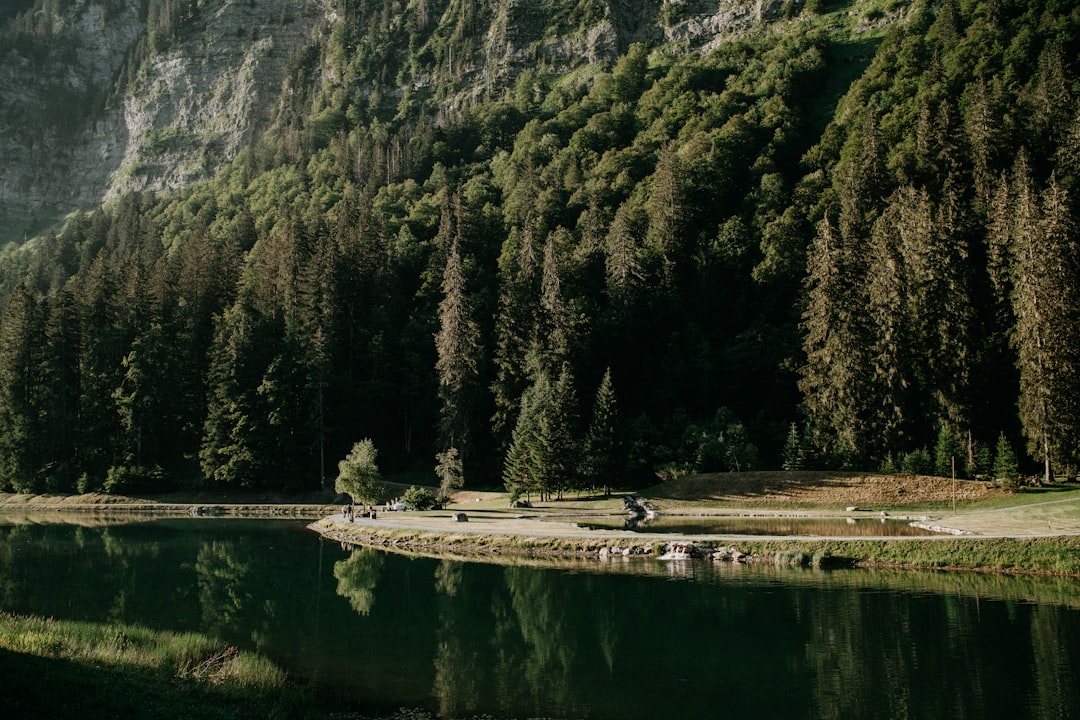
From the bank, focus first on the torrent’s inflow area at the head of the lake (oxygenated water, baitfish), the rock scree at the foot of the Nantaux cliffs (perch and trout holding there) and the natural dam at the outflow end, where the depth drops quickly. From a boat or float tube, the fish finder reveals the submerged boulders left by the landslide: these are golden spots for vertical fishing with soft lures or on the drop-shot, especially for char and big perch.
Hiking and scouting swims around the lake
Before even wetting a lure, we advise you to lace up your walking boots. The walk around the lake (about 3 km, 45 minutes, easy) is the ideal scouting trip: with polarised glasses, you will spot the breaks, submerged trees and weed beds from the path. The loop to the Ardent waterfall (5 km there and back, 1h30, easy) follows the torrent that feeds the lake and lets you spot the veins of cold water where the trout hold in summer. Finally, the climb to Les Lindarets (8 km, 3h, moderate) offers a bird’s-eye view over the whole lake: in clear water, you can clearly make out the shallows and drop-offs, valuable information to mark on your map before the next day’s session.
Where to stay and eat?
To explore the area around the lake, the Camping du Lac de Montriond is the most practical option: you wake up a few minutes from the banks, perfect for being on the water at dawn. Note that night fishing is not allowed on this salmonid water, but staying on site lets you make the most of the morning and evening sessions, the two most productive slots for lures. The village of Montriond and nearby Morzine offer plenty of gîtes, chalets and hotels for every budget. For food, several lakeside restaurants serve Savoyard specialities (and sometimes local trout), and the Morzine market on Wednesday mornings is perfect for restocking the cool box between sessions.
FAQ – your questions about Lake Montriond
What are the rules for boating?
Petrol-engined craft are banned on Lake Montriond to preserve the tranquillity of the site. Float tubes, kayaks and rowing boats are the options to favour for fishing the deep areas; check beforehand with the local AAPPMA on the exact launching conditions.
What are the lake's fishing records?
There is no official record register for this lake, but trout over 60 cm and very fine perch of more than 40 cm are regularly reported by local anglers. The deep areas at the foot of the cliffs hold the biggest fish, notably char, and it is when fishing soft lures vertically that the best surprises come.
Do you need a fishing licence to fish at Lake Montriond?
Yes, a valid fishing licence is compulsory to fish here, issued by the Haut-Chablais AAPPMA or via the cartedepeche.fr website. As the lake is classified as a first-category water, make sure you check the opening dates, legal minimum sizes and salmonid bag limits in force before your session.
When is the pike close season?
In first-category waters such as this one, fishing follows the salmonid calendar: it generally closes in mid-September and reopens in spring. For the exact dates and the regulations applying to pike, read our article on the 2026 pike season opening and the Haute-Savoie prefectoral order.
Is swimming allowed at Lake Montriond?
Yes, swimming is allowed and lifeguarded in summer at the designated leisure centre. For anglers, this means busy banks during the day in the summer season: favour the morning and evening sessions, or areas away from the beach, to fish in peace with lures.
Which technique works best for zander in lakes?
Zander are not typical of this upland lake, which is dominated by salmonids and perch, but in lakes in general, vertical fishing with 8 to 12 cm finesse soft lures remains the go-to technique, especially in cold water. A straight retrieve scraping the bottom and the drop-shot on the breaks effectively round out the arsenal for tempting the most lethargic fish.