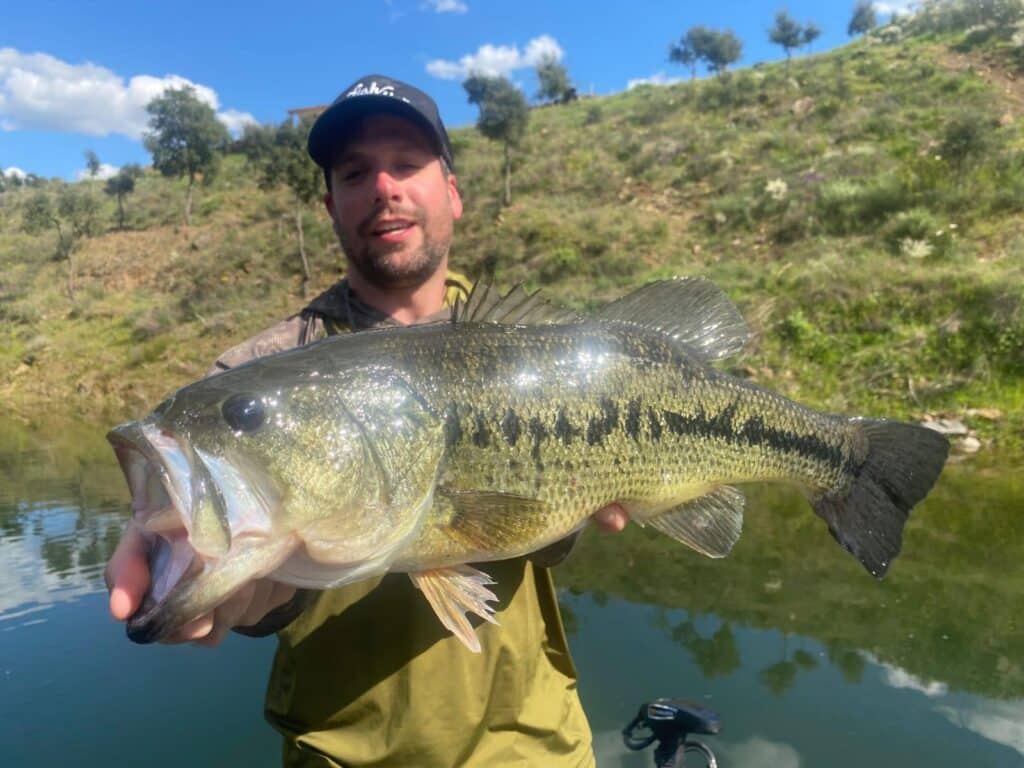
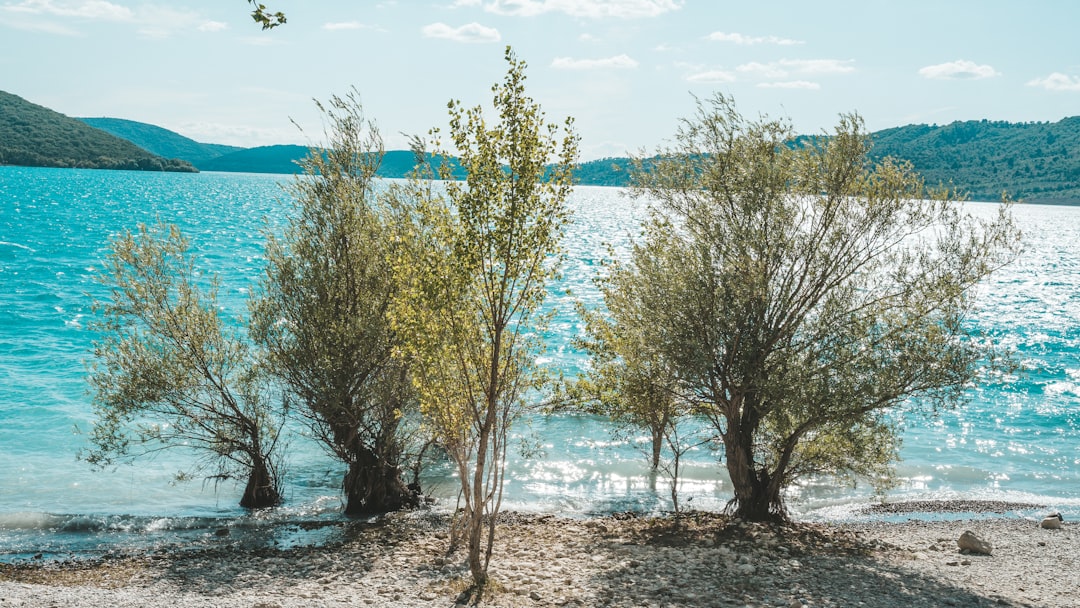
Nestled in the heart of Provence, between the Alpes-de-Haute-Provence and the Var, Lake Verdon – better known as Lake Sainte-Croix – is one of the most beautiful bodies of water in France. Its turquoise waters, fed by the famous Verdon Gorge, hide a population of predators that every lure angler dreams of: pike, zander, perch and even a few black bass in the warmest areas. We have walked its banks and boated across its 2,200 hectares many times, and we can tell you: this lake fully deserves its reputation.
In this article, we share everything you need to know to make your lure fishing session on this Provençal gem a success: the lake's history, the species present, techniques that work, access, weather, swims to look out for, and also where to sleep – including camping by the water so you are on the spot at first light. Follow the guide, let's go!
History and features of Lake Verdon
Lake Verdon is an artificial lake created by the construction of the Sainte-Croix dam, filled between 1973 and 1975 by EDF. Its primary purpose is hydroelectric power and irrigation for Provence, but it quickly became a major tourism and fishing destination. The figures are dizzying: around 2,200 hectares, making it the third largest artificial lake in France, an altitude of 477 metres, a maximum depth of almost 90 metres along the old bed of the Verdon, and a volume of nearly 760 million cubic metres. For us lure anglers, this layout is a blessing: the drowned old village of Les Salles-sur-Verdon, the abrupt breaks in slope, the submerged flats and the cold-water inflows from the gorge create an exceptional variety of swims. The clarity of the water, often with more than 5 metres of visibility, does however call for a finesse approach and careful retrieves. This lake has to be earned, but what a reward when a pike surges up from the turquoise depths!
Which fish can you catch at Lake Verdon?
The fish population of Lake Verdon is rich and varied. Among the predators, pike are the undisputed stars: specimens over a metre are caught every year, thriving on an abundant diet of roach, bleak and small perch. Zander are also very well represented, with good densities on the drop-offs and flats between 8 and 20 metres. Perch literally swarm, with spectacular feeding frenzies in summer, and a few stripies over 40 cm to spice things up. Lake trout sometimes come down from the gorge and frequent the cold-water inflow areas. Among the bottom-dwellers, there are carp, tench, bream and some very fine roach, which make up the predators' larder.
In terms of technique, here is what works best in our experience. For pike, favour big 15 to 20 cm shad soft lures on a slow steady retrieve along the drop-offs in spring and autumn, and swimbaits near the flats early in the morning in summer. If you are a beginner, our guide on how to fish for pike will give you all the basics. Zander are mainly caught by vertical jigging from a boat, with 10 cm finesse soft lures weighted between 10 and 20 grams, or on the drop-shot in the snaggy areas of the old village. Perch respond very well to small crankbaits, micro-jigs and the drop-shot during summer feeding frenzies. Don't hesitate to add an attractant to your lures in this very clear water: it can make a noticeable difference with educated fish. Always check the predator fishing season opening dates before planning your trip, as the lake is classified as second-category water.
The birdlife is a valuable indicator for us predator hunters. Great crested grebes and cormorants dive where baitfish gather: watch them closely. Grey herons stand over shallow areas rich in small perch. As for vegetation, the scarce weed beds in the gently sloping bays (notably around Bauduen) shelter pike and perch in spring, while the submerged trees of the old riverside woodland make deadly zander spots. Also look out for lavender fields and terraces running down into the water: they often give away interesting submerged rocky structures.
How to get to the lake
The lake can be reached by car from Aix-en-Provence (about 1h15 via the A51 then the D952) or from Draguignan (45 minutes via the D957). Four main villages surround the lake: Sainte-Croix-du-Verdon, Les Salles-sur-Verdon, Bauduen and Moustiers-Sainte-Marie, set slightly back. Free car parks, or paying ones in season, are available near the beaches of each village, with boat launches at Sainte-Croix-du-Verdon and Les Salles-sur-Verdon. A crucial point: petrol engines are prohibited across the whole lake! Only electric motors are allowed, which delights anglers in float tubes, kayaks and electric boats. Bring high-capacity batteries given the size of the lake. Public transport is limited: the Zou! bus line serves Moustiers from Manosque in season, but your own vehicle remains essential for carrying your fishing gear and getting around the shores.
Map of the lake
Weather and fishing conditions
The upland Mediterranean climate offers more than 300 days of sunshine a year, but beware of the mistral, which can whip up serious waves on this vast lake – caution is essential in a float tube. Water temperature ranges from 6-8°C in winter to 22-24°C at the surface in high summer, with a marked thermocline at around 8-12 metres in July and August: that is where to look for zander and big pike in the warm season. For lure fishing, our favourite conditions here are days with stable or slightly falling atmospheric pressure, with a moderate wind rippling the surface and breaking up the light in this crystal-clear water. Autumn mornings after a blow are magical for pike with power fishing. In high summer, focus your efforts on the first hours of daylight and the evening session: daytime boating pressure (pedalos, paddleboards) pushes the predators deeper.
What to do at Lake Verdon?
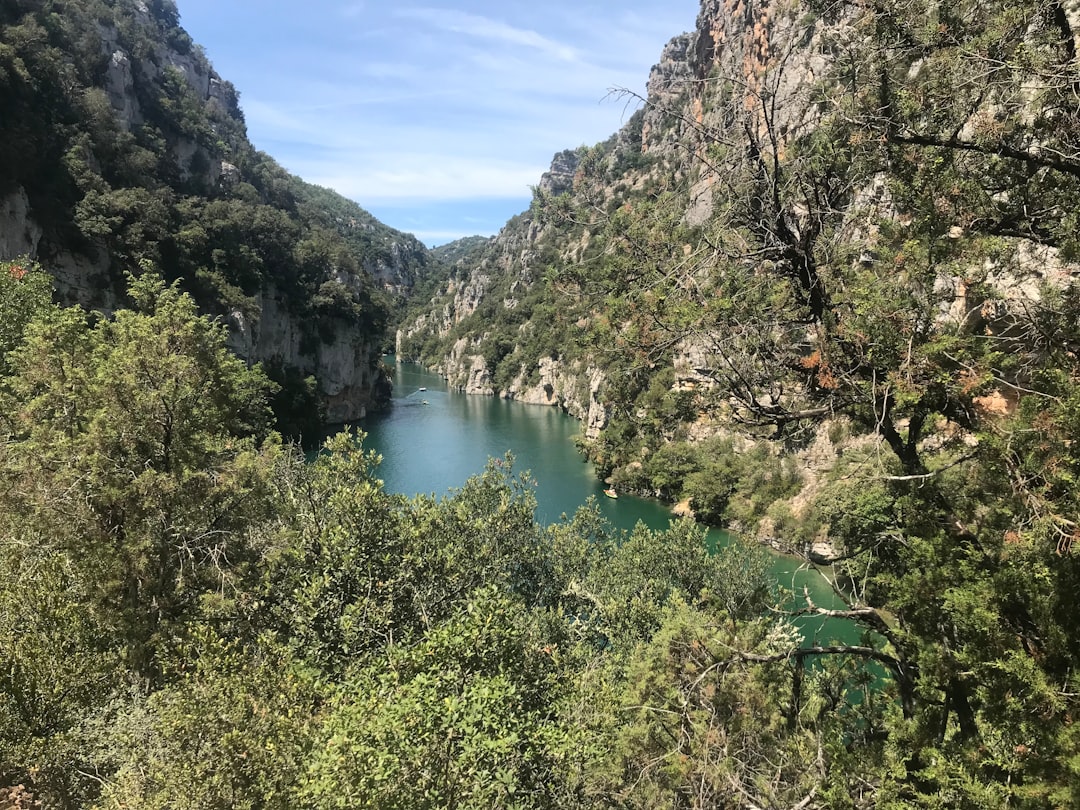
Lure fishing is obviously still our number one activity here, and the ban on petrol engines guarantees a rare tranquillity for tracking predators. But Lake Verdon offers many other pleasures to round off a family holiday: swimming at the lifeguarded beaches in summer, pedalo and canoe hire to head up into the entrance of the gorge (an unforgettable sight), paddleboarding on the turquoise waters, and mountain biking on the trails of the nearby Valensole plateau. Hilltop villages such as Moustiers-Sainte-Marie, listed among the most beautiful villages in France, are well worth a detour between sessions.
As for swims, here are our landmarks. From the bank: the Sainte-Croix-du-Verdon point and its rocky drop-offs for zander on soft lures, the Bauduen bays for pike in spring, and the Galetas bridge area (entrance to the gorge), where the cool water attracts baitfish – and therefore predators. By boat or float tube, the area around the drowned old village of Les Salles-sur-Verdon is a must: the submerged structures concentrate zander and perch. A fish finder is a major asset here for locating drop-offs and baitfish shoals at these considerable depths.
Hiking and scouting swims around the lake
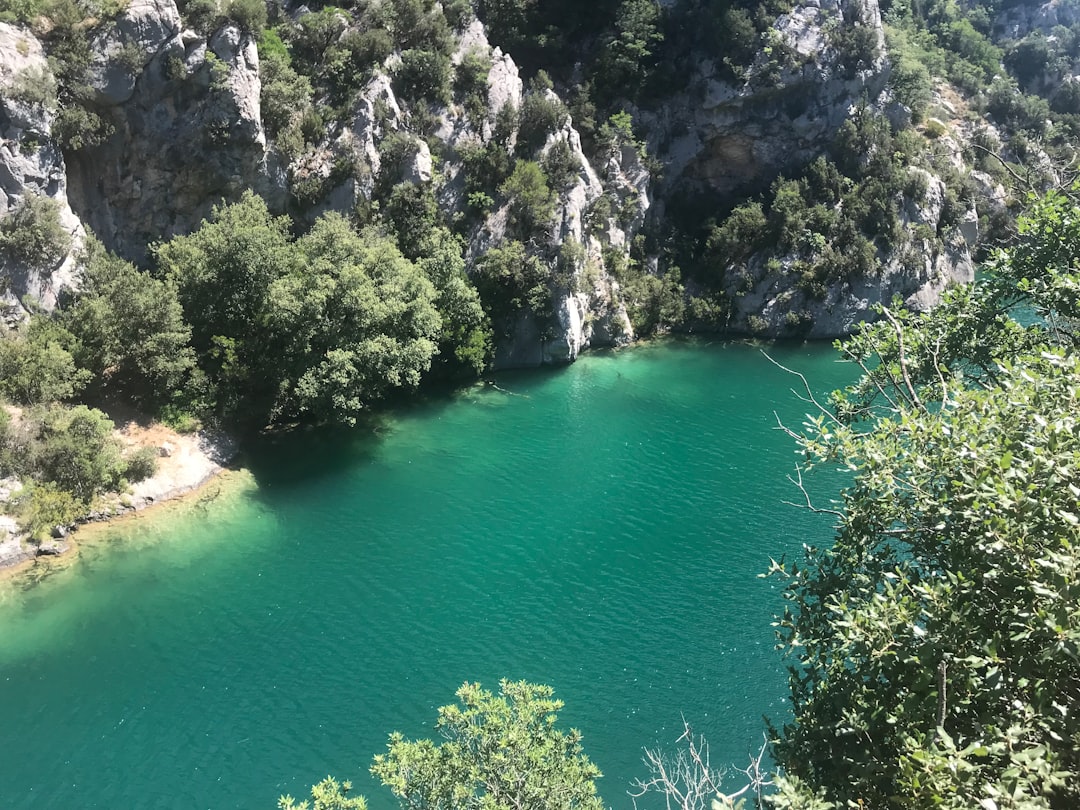
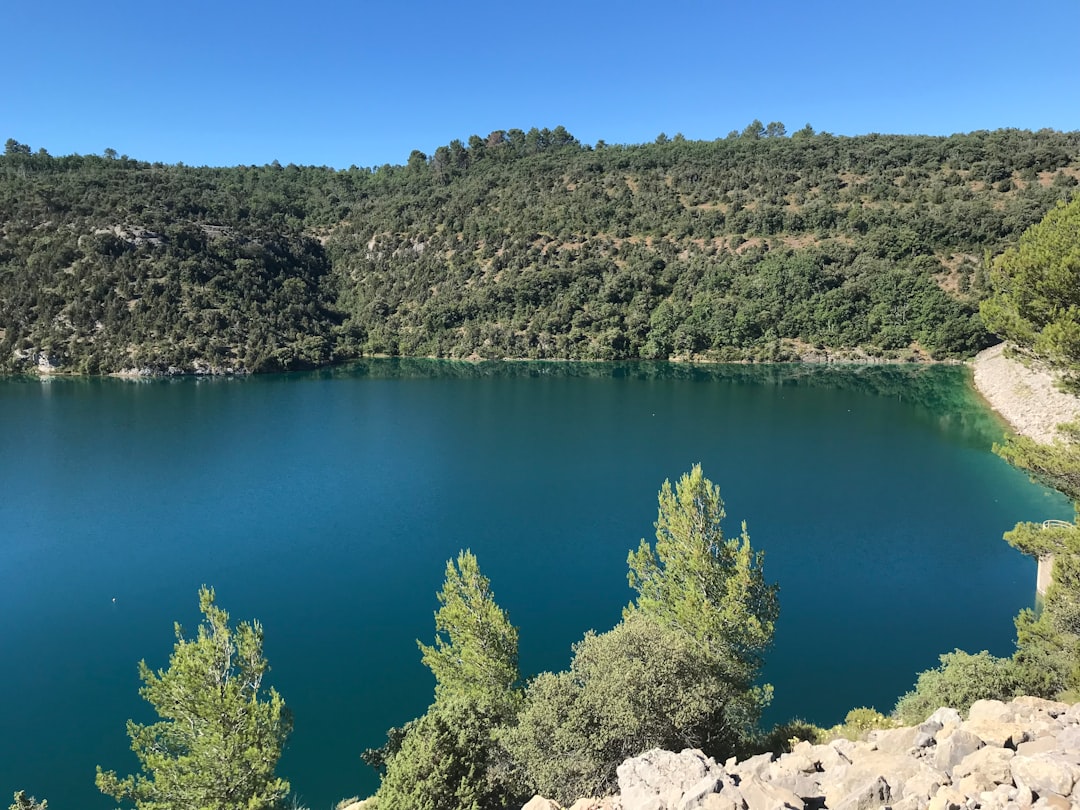
Hiking around the lake is also a chance to scout swims from above – the clear water lets you make out drop-offs and structures from the viewpoints. Three loops we recommend: the Sainte-Croix-du-Verdon circuit trail (5 km, 1h30, easy), which overlooks the western drop-offs, perfect for visualising the breaks in slope where you can hunt zander by vertical jigging. The Bauduen loop via the chapel (8 km, 2h30, moderate) offers a bird's-eye view of the southern bays and their pike-holding weed beds. Finally, the Bas-Plan trail towards the Galetas bridge (10 km, 3 hours, moderate) runs along the entrance to the gorge: watch the current areas and the perch feeding below. Take polarised glasses and note your observations in a mapping app: this scouting on foot is worth any fish finder when preparing your bank sessions.
Where to stay and eat?
To make the most of the best fishing hours, nothing beats a campsite at Lake Verdon as close to the water as possible. Several sites line the lake: Camping de la Source in Les Salles-sur-Verdon, Camping Les Roches in Sainte-Croix-du-Verdon and the campsites of Bauduen, some with direct access to the banks – ideal for casting a few lures at daybreak before breakfast. Note that night fishing is not permitted on the lake, but sleeping on site guarantees you will be at your swim at first light. For gîtes and B&Bs, Moustiers-Sainte-Marie and Bauduen are full of charming places, to be booked early in high season. To eat, the terraces of Les Salles-sur-Verdon serve generous Provençal cuisine, and don't miss the markets of Moustiers (Friday morning) and Aups (Wednesday and Saturday) to stock up on local produce – truffles, goat's cheese and olive oil – enough to recharge your batteries after a day working the drop-offs.
FAQ – your questions about Lake Verdon
Which lure colours work best here?
In the very clear waters of Lake Verdon, natural colours rule: roach, bleak, perch and translucent ghost-type patterns give the best results in sunny weather. Under overcast skies or in strong wind, don't hesitate to switch to more contrasting colours such as white or chartreuse to trigger strikes from pike and zander.
Can you fish for pike all year round at Lake Verdon?
No, the lake is classified as second-category water and pike benefit from a specific closed season to protect spawning, generally from late January to late April. Consult the current prefectoral order and the local AAPPMA regulations before you come, as dates and minimum legal sizes may change every year.
How do you reach the best fishing spots?
The best bank swims are around Sainte-Croix-du-Verdon, Bauduen and near the Galetas bridge, accessible from the village car parks. For deep areas such as the drowned old village of Les Salles-sur-Verdon, a boat with an electric motor (petrol engines are prohibited), a float tube or a kayak is essential, with launch points available at Sainte-Croix and Les Salles-sur-Verdon.
What are the lake's fishing records?
Pike over 1.10 metres and zander over 80 cm are regularly caught on this lake, which ranks among the best predator lakes in the south of France. Fine perch over 45 cm are not rare either, thriving on the abundance of baitfish and the depth of the lake, which offers them refuges all year round.
Is swimming allowed at Lake Verdon?
Yes, swimming is allowed and very popular in summer, with lifeguarded beaches in July and August near the villages of Sainte-Croix-du-Verdon, Les Salles-sur-Verdon and Bauduen. For anglers, it is best to avoid these busy areas during the day and to favour the wild sectors or the early morning hours, when the predators are active and the banks deserted.
Which technique works best for zander in lakes?
Vertical jigging is the top technique for zander on this deep lake: an 8 to 12 cm finesse soft lure, weighted between 10 and 20 grams depending on depth, worked slowly over the drop-offs and submerged structures. The drop-shot is an excellent alternative in the snaggy areas of the drowned old village, and a bottom-scraping retrieve works well at dawn on the shallower flats.