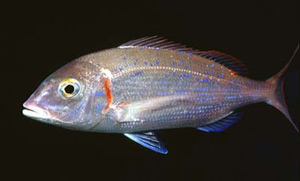
A silvery-pink body flecked with blue, an oval outline built for rooting about just above sandy bottoms: the pandora is one of the most prized sea breams among anglers in the Mediterranean and the Atlantic. Often called red pandora for its coppery colouring, this soft-bottom fish (Pagellus erythrinus) appeals as much to the naturalist, who observes a curious hermaphroditism in it, as to the fine-bait angler, always looking for a good bite on a static bait.
In this profile, we review everything you need to know about this fish: its morphology, its benthic habitat, its diet, its reproductive cycle, the regulations that govern it, and of course our favourite techniques, rigs and baits for targeting it. Enough to understand the species better before going out to meet it.
Our article in brief
- The pandora common (Pagellus erythrinus) is a silvery-pink marine sea bream, recognisable by its fine blue spots and pointed snout.
- It commonly measures 15 to 30 cm and weighs a few hundred grams, with good specimens sometimes exceeding 40 cm and 1 kg.
- A benthic fish of sandy and muddy bottoms, it feeds on invertebrates and is remarkably easy to catch on natural bait, either static or drifting.
- Its capture is regulated: a minimum size of about 15 cm in the Mediterranean, higher in certain areas such as the Gulf of Lion.
- A hermaphrodite and common species, it deserves to be fished in moderation: respecting sizes, quotas and releasing small fish.
Morphology and identification of the common pandora
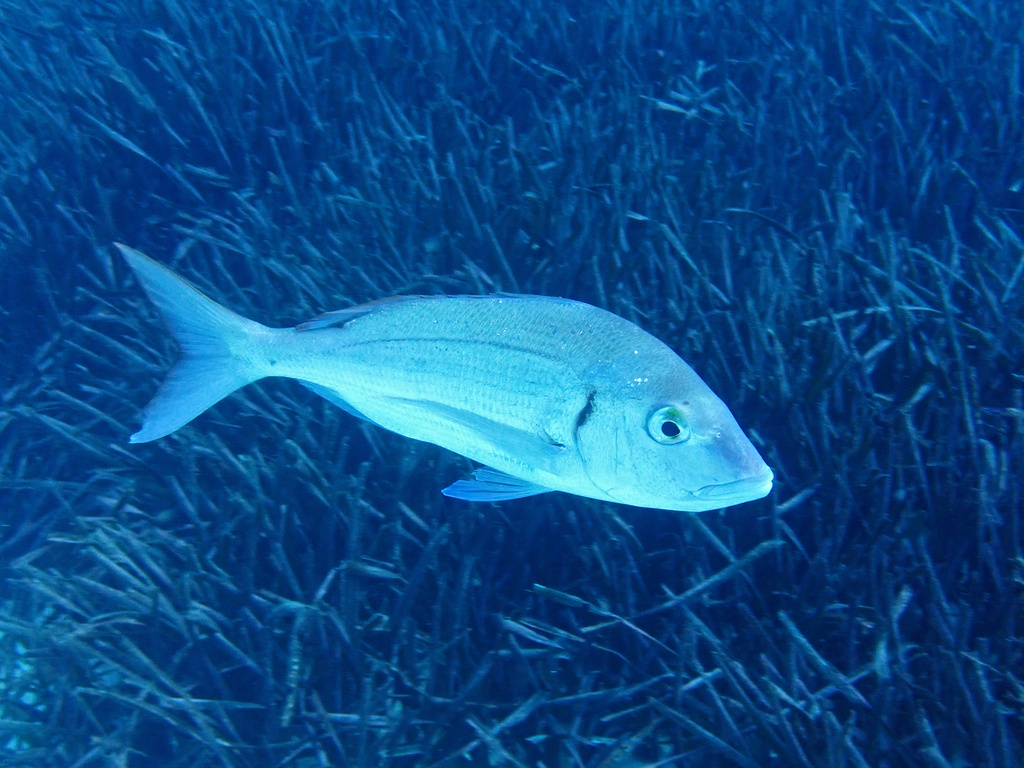
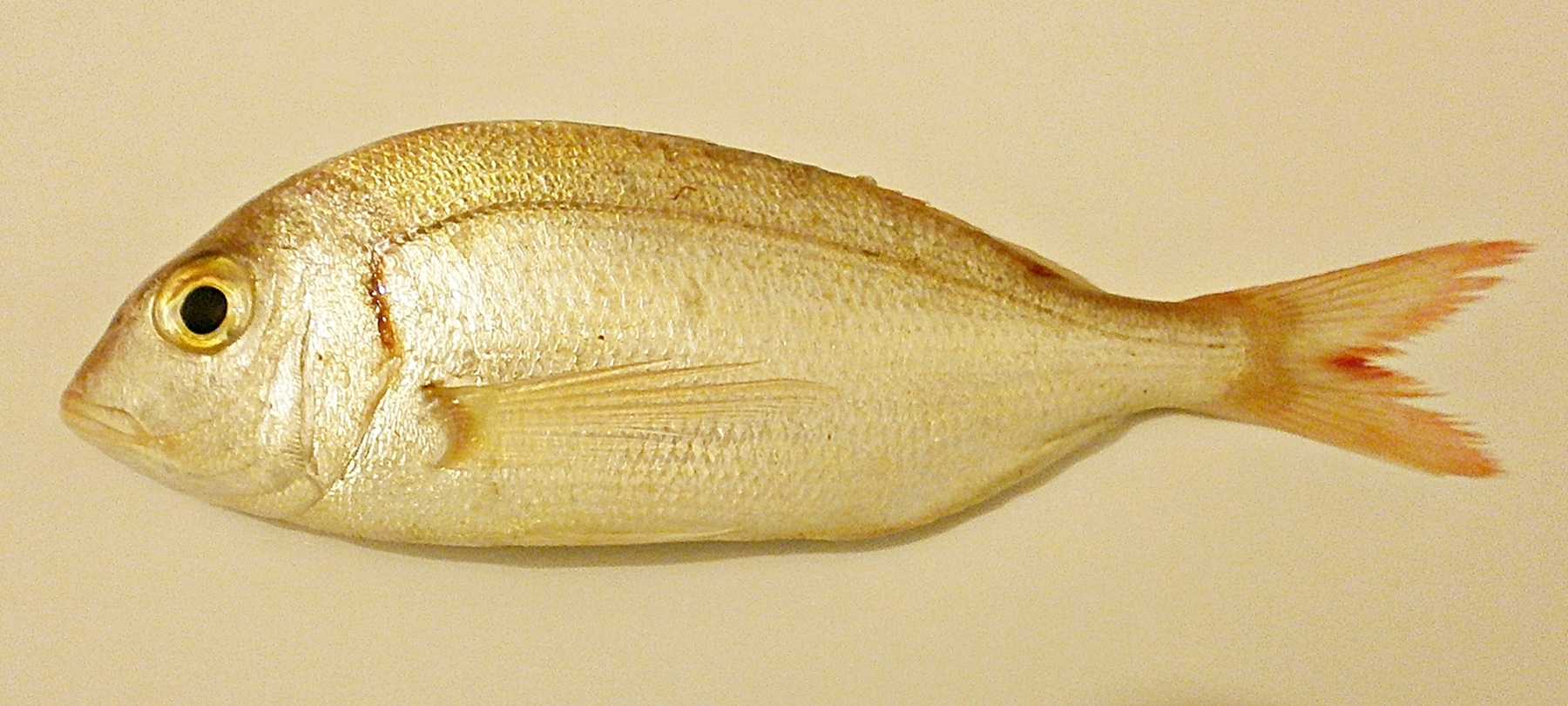
The common pandora has an oval body, laterally compressed, typical of sea breams. Its silvery-pink colouring with bluish sheens makes it instantly recognisable: the back is dotted with fine blue spots, the upper edge of the gill cover is lined with carmine red, and a small reddish spot often marks the base of the pectoral fins. This coppery colouring earns it the nickname red pandora.
A pointed head and omnivore's teeth
The head has an almost straight profile extended by a pointed snout, and the eye is distinctly small: its diameter remains smaller than the length of the snout, a valuable detail for identification. The mouth combines pointed teeth at the front, made for gripping, with two or three rows of molar-like teeth at the back, capable of crushing shellfish and crustaceans. An opportunist's set of teeth, in keeping with its diet.
Size and lifespan
A common pandora usually measures between 15 and 30 cm and weighs 200 to 500 g. Good specimens exceed 40 cm and pass the kilo mark, with the maximum documented size approaching 50 to 60 cm. It is a slow-growing fish that can live for more than fifteen years. Here are the species' biometric reference points:
| Features | Reference point |
|---|---|
| Average size | 15 to 30 cm |
| Maximum size | up to 50-60 cm |
| Average weight | 0.2 to 0.5 kg |
| Maximum weight | over 3 kg |
| Longevity | up to 15 years (sometimes more) |
| Sexual maturity | 1 to 2 years |
Where does the pandora live?
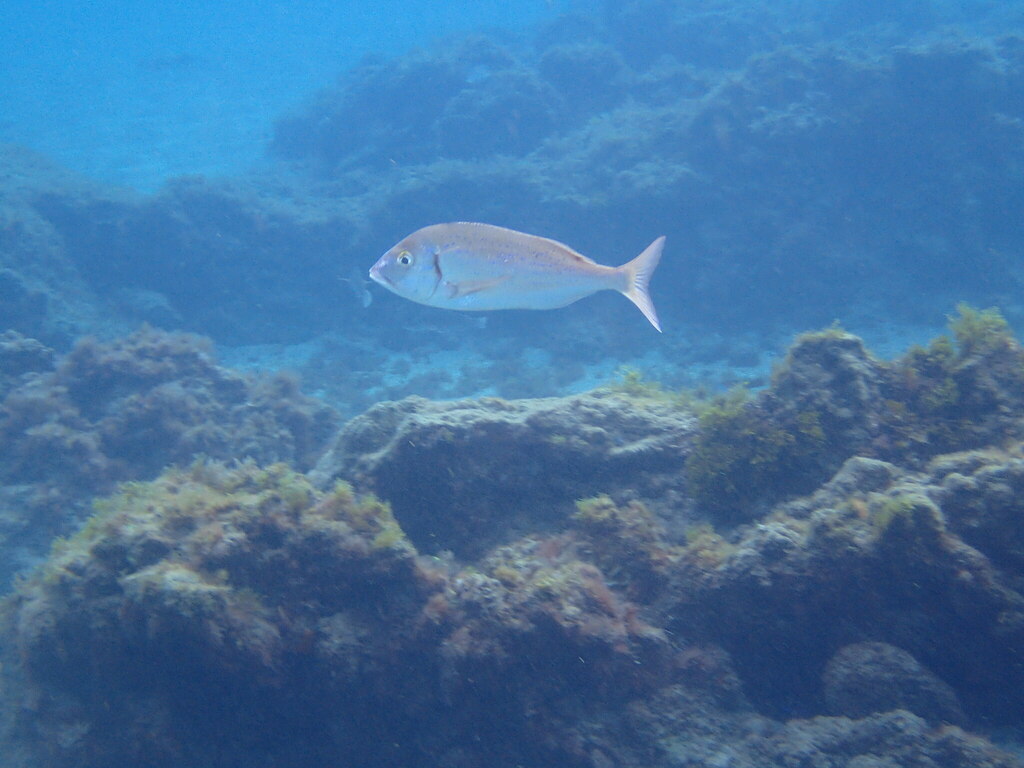
The pandora is a demersal fish, living in contact with the bottom without being entirely tied to it. It favours soft substrates — sand, mud, sparse seagrass beds — and also frequents the edges of rocky areas where it comes to forage. In the Mediterranean, it is found from a few metres below the surface down to nearly 200 m deep, with the biggest fish readily holding on deep bottoms through the year.
Its range is vast: the whole Mediterranean, the Black Sea, and the north-east Atlantic from Scandinavia to Cape Verde. In France, it is mainly targeted on the Mediterranean coasts, but it is also found in the Bay of Biscay. Gregarious, it moves in small shoals that follow the feeding areas, which explains the sometimes consistent catches once the spot has been found.
What does the pandora eat?
The pandora is an omnivore with a strong carnivorous bias. It tirelessly sifts through the sediment in search of benthic prey, which its mixed teeth allow it to exploit. Its menu consists mainly of:
- Invertebrates : marine worms, small crustaceans and shellfish, whose shells it crushes with its molars.
- Molluscs : small mussels, razor clams and cephalopods, which it picks off soft bottoms.
- Small fish : fry and bottom-dwelling fish caught opportunistically.
This foraging behaviour explains its attraction to natural baits laid on the bottom. The pandora inspects, nibbles, then takes the bait confidently once it feels safe: a typical bite, discreet at first, which turns into a clear pull. It is a fish active by day as well as at dusk, and bites particularly well when the current sets prey moving again.
Life cycle and reproduction of the pandora
The pandora has a fascinating biological feature: it is a protogynous hermaphrodite. Individuals first function as females, then turn into males as they grow. Spawning takes place from the warm days of spring to the end of summer, when the water warms up, and the pelagic eggs drift with the currents before hatching.
| Parameter | Data |
|---|---|
| Spawning period | May to August |
| Spawning temperature | 19 to 21 °C |
| Sexuality type | protogynous hermaphrodite |
| Egg type | pelagic |
| Sexual maturity | at around 1 to 2 years |
Regulations and legal size of the pandora
Recreational sea fishing for pandora is governed by a minimum catch size. In the Mediterranean, the legal size is set at about 15 cm for the common pandora, in accordance with national regulations. In certain sensitive areas such as the Gulf of Lion, a higher minimum size, of around 25 cm, may be imposed to give the fish time to breed at least once.
Catch marking and good practice
In recreational sea fishing, certain species must undergo marking by removing part of the tail fin, intended to prevent their resale. We recommend checking whether the pandora is concerned in your area. Please note: these sizes and obligations are reference points that may change and vary locally by maritime prefectural order. We encourage you to always check the regulations in force with the interregional directorate of the sea before fishing.
How to fish for pandora?
Pandora fishing is first and foremost fine-bait fishing, where the finesse of the rig makes the difference. The golden rule: present a fresh bait just above the bottom, on a discreet line, and let the fish take it. Here is how we organise our approach depending on the spot and the fishing method:
| Technique | Baits and rigs | Ideal conditions |
|---|---|---|
| Static fishing (anchored boat) | running rig, worm, strip of cuttlefish | sandy bottoms, moderate current |
| Drift fishing | weight 1-2 m off the bottom, bloodworm, prawns | large sandy areas, 20-80 m |
| Handline / from the shore | fine hooks, pieces of prawn or fish | harbours, breakwaters, drop-offs |
As for tackle, a sensitive, light rod, a smooth reel and a fine line are the basics: the pandora is wary, and a fine braid combined with a fluorocarbon leader that stays discreet noticeably increases the number of bites. We favour small, very sharp hooks and fresh baits: worm, strip of cuttlefish, piece of prawn. When drifting, the ideal is to let the boat sweep the bottom slowly while keeping contact with the weight.
To see these techniques in action, here is a video dedicated to pandora fishing with worms, drifting, on a running rig:
Baits, rigs and small bottom lures
While the pandora is traditionally caught on natural bait, it also responds very well to modern light techniques that search the bottom. Here are our favourite options to keep things varied:
- Running rig : the great classic for static fishing, with a sliding weight and a long leader for a natural presentation.
- Tenya : a Japanese jighead onto which you hook a piece of prawn or fish, deadly when fished vertically for sea breams.
- Madai and inchiku : these skirted jigs, worked gently just above the bottom, trigger reaction strikes, especially from big pandoras.
- Small soft lure : a discreet shad rigged on a light jighead can fool active pandoras, like a small Mediterranean lure retrieved slowly.
Whatever the approach, stealth comes first: fine lines, weights matched to the current and slow retrieves. The pandora is not a fish that chases prey for long; you need to present the bait or lure as close as possible, with patience.
Records and anecdotes about the pandora
The French record for common pandora, ratified by the Fédération française des pêcheurs en mer, stands at 1.77 kg, a catch made by Jean-Louis Latxague on 2 July 2006 — a fine benchmark for a species whose average weight is counted in hundreds of grams. Worldwide, the maximum published weight for the species is around 3 kg, proof that true "trophy pandoras" exist, even if they remain rare. Another curiosity: because it changes sex during its life, the same individual may have been female before becoming male, a biological plasticity that intrigues naturalists.
Ecological role and conservation of the pandora
As a benthic predator, the pandora contributes to the balance of soft bottoms: by eating worms, crustaceans and molluscs, it regulates invertebrate populations and forms an important link in the coastal food chain. Its presence reflects the good health of the seagrass beds and sandy areas it frequents.
The species is classified as Least Concern and remains common, but it is under heavy fishing pressure, both commercial and recreational. Its slow growth and hermaphroditism make it vulnerable to overfishing of large individuals. As responsible anglers, we have a role to play: strictly respecting minimum sizes, limiting what we take, releasing small fish carefully and avoiding emptying a spot. That is the price for the pandora to remain a faithful companion on our sea trips.
FAQ about the pandora
How big can the pandora get?
A common pandora usually measures 15 to 30 cm and weighs 200 to 500 g. Good specimens exceed 40 cm and a kilo, with the maximum documented size approaching 50 to 60 cm and a weight that can exceed 3 kg in exceptional cases.
Which baits should you use for pandora?
Fresh natural baits are the most effective: marine worms, pieces of prawn, strips of cuttlefish or fish. Presented just above the bottom on a fine rig, they trigger bites. The tenya and the madai, worked gently, round out this range well.
When does the pandora breed?
Spawning takes place from May to August, when the water reaches 19 to 21 °C. The pandora is a protogynous hermaphrodite: individuals first function as females before becoming males as they grow. The eggs are pelagic and drift with the currents.
What is the legal size of the pandora in the Mediterranean?
The minimum catch size for the common pandora is about 15 cm in the Mediterranean. In certain areas such as the Gulf of Lion, a higher minimum size (around 25 cm) may apply. These rules vary locally: always check the maritime order in force before fishing.
What is the best season to fish for pandora?
Pandora can be fished all year round, but late spring and summer often offer the best conditions, when the fish move closer and feed actively. Periods of moderate current, which set prey moving again, are particularly favourable.
How do you tell the common pandora from the axillary seabream?
The common pandora (Pagellus erythrinus) is silvery pink, flecked with blue spots, with no marked spot at the base of the pectorals. The axillary seabream (Pagellus acarne) has a dark spot at the armpit of the pectorals. Nor should it be confused with the blackspot seabream (Pagellus bogaraveo), with its large eyes and black spot on the lateral line.