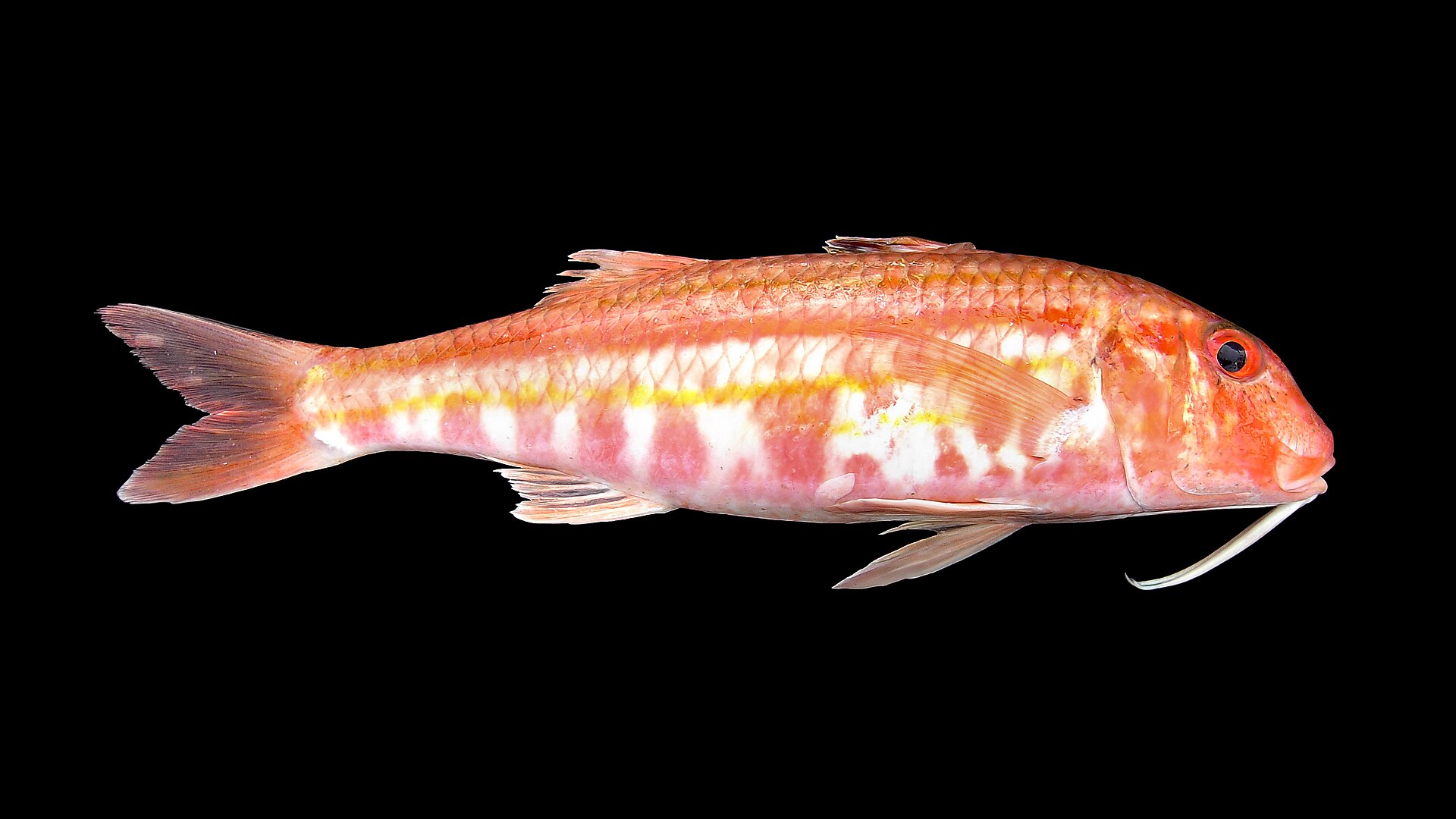
A carmine body washed with pink, two fine barbels quivering under the chin and an almost vertical head profile: the striped red mullet is one of the most sought-after bottom fish on our coasts, as much for its beauty as for its exceptional flesh. This sediment forager (Mullus surmuletus), which gourmets nickname the "woodcock of the sea", fascinates the naturalist with its benthic way of life and rewards the patient angler who knows how to winkle it out with bait.
In this profile, we review everything you need to know about this fish: its morphology, its habitat, its diet, its reproductive cycle, the regulations that govern it, and our favourite rigs for targeting it. Enough to understand the species better before going out to meet it.
Our article in brief
- The striped red mullet , or striped red mullet (Mullus surmuletus) is a coastal bottom fish recognisable by its pinkish-red colouring and the two sensory barbels tucked under its chin.
- It commonly measures 15 to 30 cm, with the biggest fish approaching 40 cm and nearly a kilo.
- A sediment forager, it is caught on fine bait (worm, prawn), either static, drifting or on a handline — and not on lures.
- Recreational catches are governed by a minimum size of 15 cm on all French coasts.
- Its flesh is highly prized, but it must not be confused with the gurnard sold as "rouget-grondin" or with the red mullet of muddy bottoms.
Morphology and identification of the red mullet
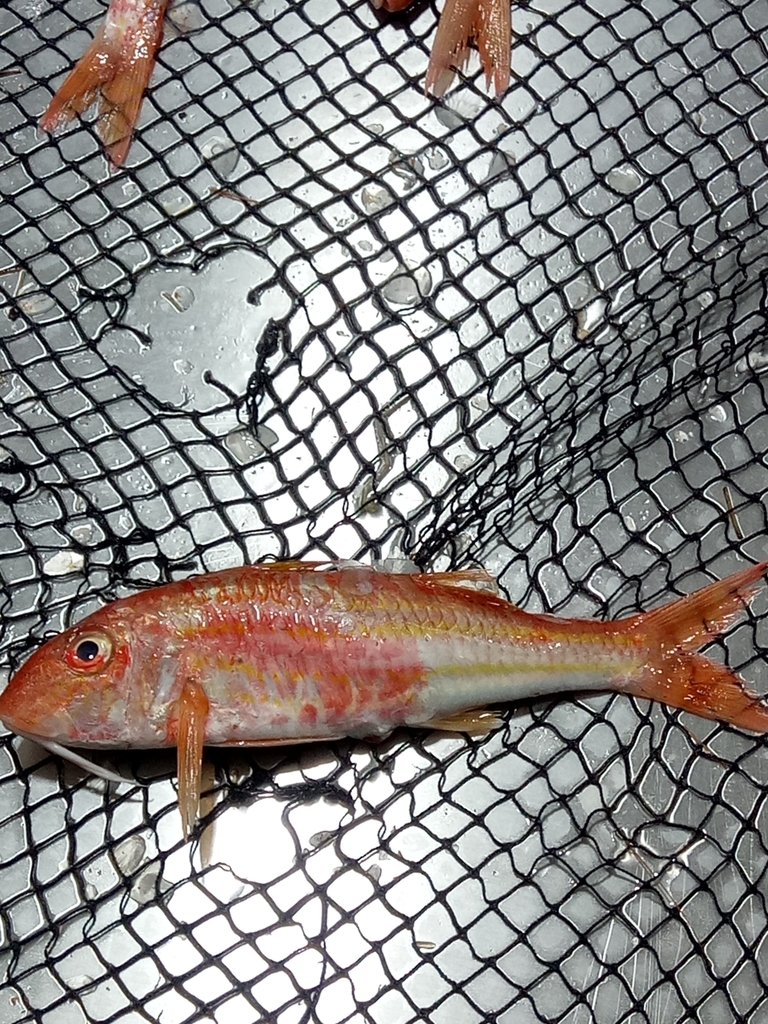
The red mullet has an elongated, slightly compressed body covered in large scales that come off easily. Its head is massive, with an almost vertical forehead profile, and it has two clearly separate dorsal fins. The colouring varies from bright red to pink depending on the light and depth, with fine yellow lines along the flanks — a fish that seems to "change colour" once brought to the surface.
A colourful body and sensory barbels
The most distinctive feature remains the pair of chin barbels extending from the lower jaw. Far from being decorative, these appendages are genuine organs of taste and touch: the fish deploys them to probe the sediment, then folds them back into a groove under the throat when swimming. It is this sensory tool that makes the red mullet such an efficient forager, able to detect a worm buried under the sand.
Striped red mullet or red mullet?
Two closely related species share our coasts. The striped red mullet (Mullus surmuletus) has a first dorsal fin striped with yellow and brown bands and clear yellow lines along the flanks; the red mullet (Mullus barbatus) has a steeper head profile and a colourless first dorsal fin. Nor should it be confused with the gurnard, sometimes sold in France under the misleading name " grondin rouget ": this fish belongs to a completely different family (the Triglidae), with a large armoured head and broad pectoral fins — nothing to do with our mullet.
Size and lifespan
An adult red mullet usually measures between 15 and 30 cm and weighs 100 to 300 g. Good specimens, which are rarer, approach 40 cm and can come close to a kilo. Here are the species' biometric reference points:
| Features | Reference point |
|---|---|
| Average size | 15 to 30 cm |
| Maximum size | about 40 cm |
| Average weight | 100 to 300 g |
| Maximum weight | about 1 kg |
| Longevity | 10 to 11 years |
| Sexual maturity | about 2 years (15 to 17 cm) |
Where does the red mullet live?
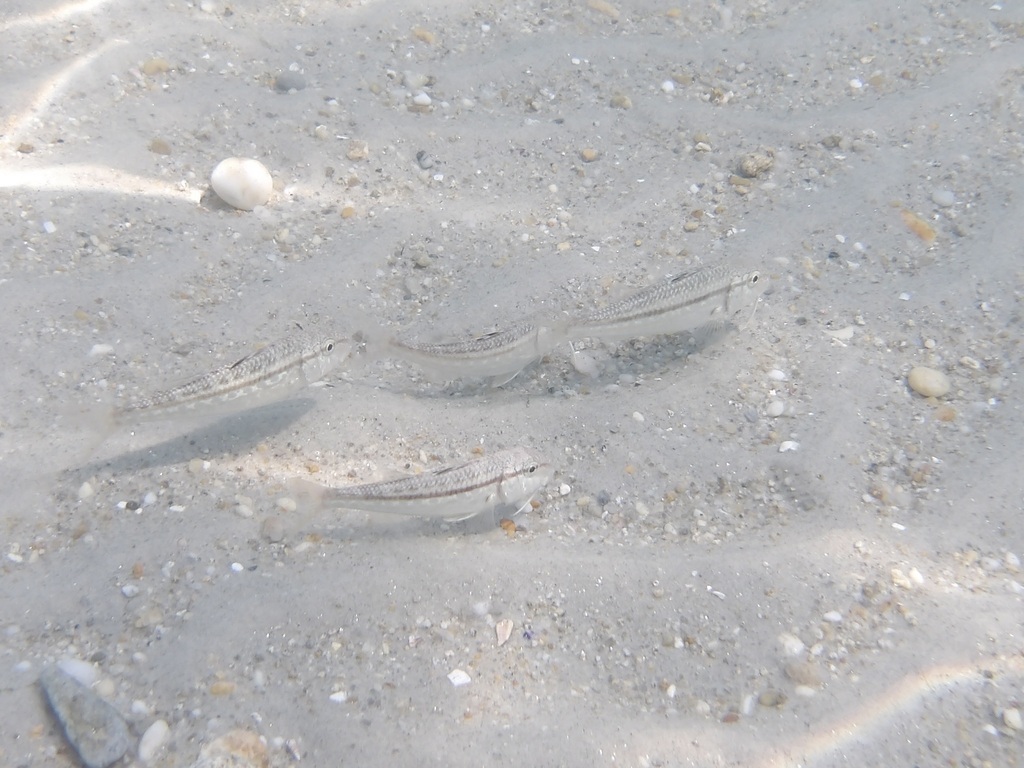
Despite its French name of "rock mullet", Mullus surmuletus mainly frequents soft bottoms: sand, gravel, mixtures of mud and shell, as well as the edges of eelgrass and Posidonia beds. It favours transition zones, where crumbly sediment meets a few rocky outcrops and where its prey burrow. It is found from the first few metres down to around a hundred metres deep for the biggest fish, which move offshore in winter.
Its range is vast: from Norway to Morocco, throughout the Channel, the North Sea, the Atlantic and all around the Mediterranean. The Mediterranean red mullet is in fact a fixture of fishmongers' stalls in the South of France. A gregarious fish, it often moves in small groups that search the same patch of sand together, which explains the sometimes very prolific catches once the shoal has been located.
What does the red mullet eat?
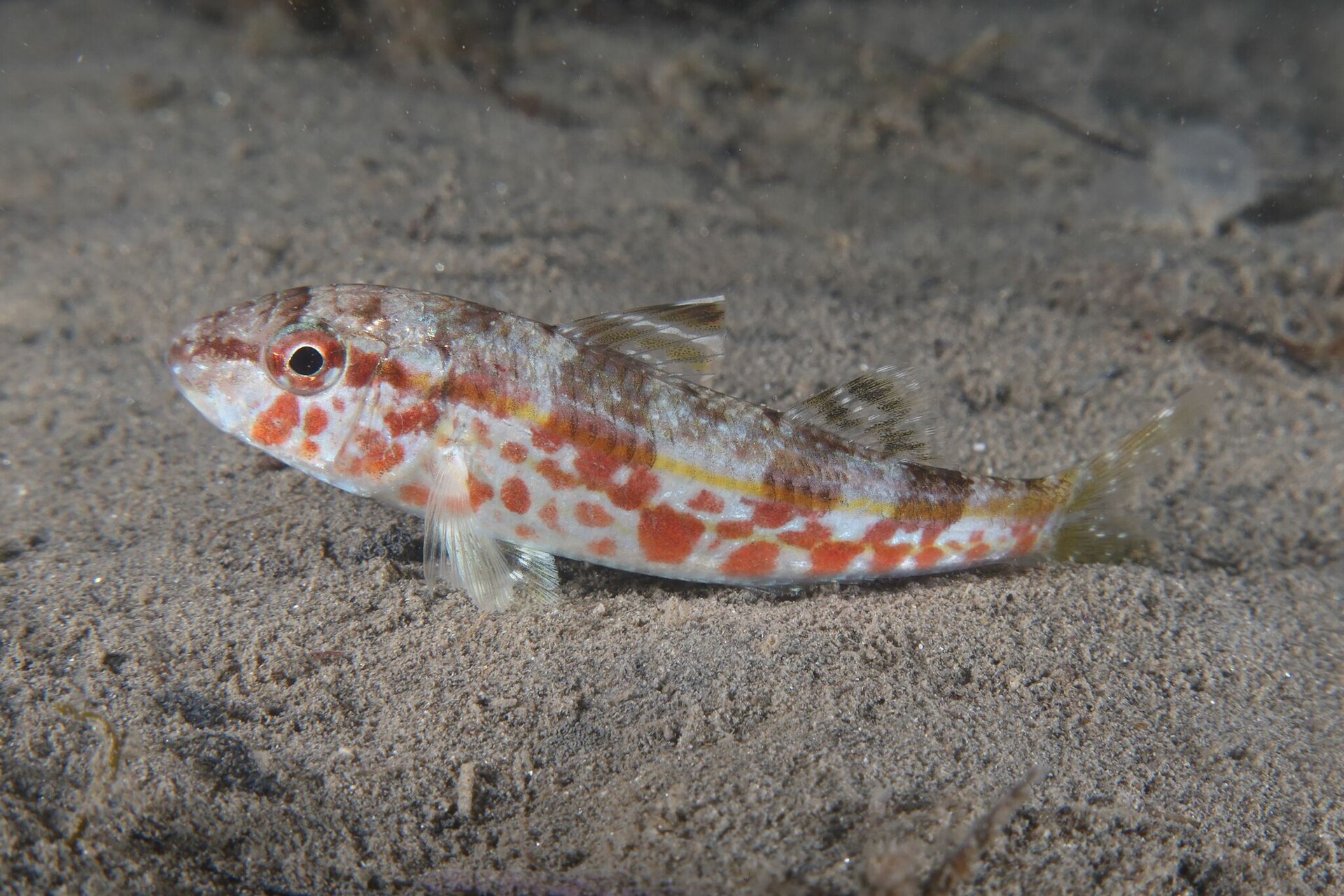
The red mullet is a bottom predator, opportunistic and methodical. Rather than hunting in open water, it patrols just above the substrate and searches the sediment with its barbels to extract small buried prey. Its menu consists mainly of invertebrates:
- Marine worms : ragworms, lugworms and other burrowing annelids, its favourite food.
- Crustaceans : small shrimps, amphipods, gammarids and young crabs.
- Molluscs and others : small bivalves, molluscs and various larvae dug out of the sand.
Its technique is fascinating: the fish tilts its head downwards, plunges its barbels into the sediment and stirs it until it raises a cloud of particles. This foraging behaviour, which digs real "hollows" in the sand, dictates the choice of baits and rigs. Feeding activity is more marked at dawn and dusk.
Life cycle and reproduction of the red mullet
Reproduction takes place in spring, when coastal waters warm up. The pelagic eggs drift in open water before hatching; the larvae lead a planktonic life for a few weeks, then the blue-green juveniles colonise shallow sandy bottoms at the end of summer. Here are the key points of the cycle:
| Parameter | Data |
|---|---|
| Spawning period | April to June |
| Maturity (males) | about 15 cm |
| Maturity (females) | about 17 cm |
| Egg type | pelagic, drifting in open water |
| Settling on the bottom | juveniles at the end of summer |
Regulations and legal size of the red mullet
Recreational sea fishing is regulated to preserve the resource. For the striped red mullet, the minimum recreational catch size is set at 15 cm on all French coasts (Channel, North Sea, Atlantic and Mediterranean), in line with European regulations, compared with 11 cm for sale in commercial fishing. This minimum size gives fish time to reach their first sexual maturity before being taken.
Marking and good practice at sea
Remember that in recreational sea fishing, certain species must undergo tail marking after capture, and that selling the catch from recreational fishing is prohibited. Minimum sizes and procedures may change depending on the coast: we encourage you to always check the maritime regulations in force with the relevant authorities before fishing, as these rules may be tightened locally.
How to fish for red mullet?
Let's be frank: the red mullet is not a lure fish. It is a bottom forager caught onfine natural bait, presented just above the sediment on discreet hooks. The golden rule is to keep constant contact with the bottom to feel the bites, which are often quick and repeated. Here is how we organise our approach depending on the situation:
| Technique | Rig | Ideal conditions |
|---|---|---|
| Handline (boat) | 3 fine snoods on 0.20-0.25 mm fluoro, weight at the end of the line | shallow sandy bottoms, drifting |
| Static fishing / surfcasting (shore) | Carolina-style running rig, fluorocarbon leader | beaches and sandy areas |
| Drag fishing / drifting | dragged weight + snood scraping the bottom | actively searching the substrate |
As for tackle, a sensitive rod, a reel spooled with fine braid and a discreet leader make a reliable base. The fluorocarbon is our ally for the snoods: its low visibility makes the difference with this wary fish. We favour fine, short-shanked hooks suited to the red mullet's small mouth, and cut worms into 1 to 2 cm pieces.
To see this bottom fishing in action, here is a video dedicated to hunting red mullet:
Baits and rigs for red mullet
Unlike predators targeted with lures, red mullet are fished with natural bait. The whole secret lies in the freshness of the bait and the finesse of the presentation. Here are our favourite baits and rigs for this bottom fish:
- Marine worms : bloodworm, ragworm ("gravette") and lugworm, the safe bets, in small pieces on fine hooks.
- Prawn and shrimp : a piece firmly hooked is particularly appealing to big Mediterranean red mullet.
- Shellfish meat : mussel or razor clam round out the range in shellfish areas.
- The handline : a multi-snood rig, deadly from a boat for searching several depths and multiplying catches.
- The running rig : Carolina-style from the shore (sliding weight, bead, fluorocarbon leader), ideal for static fishing on sand.
Records and anecdotes about the red mullet
The red mullet remains a small fish: scientific data (FishBase, naturalist sources) put the species' maximum at around 40 cm for a weight close to 1 kg, a size very few anglers come across. To our knowledge, there is no widely ratified official record for this species, and we remain cautious about the figures in circulation: a 30 cm red mullet is already a very fine catch. Another curiosity: cooks long nicknamed it the "woodcock of the sea", because its flesh is traditionally prepared without gutting, like game.
Ecological role and conservation of the red mullet
By constantly sifting through the sediment, the red mullet helps stir up soft bottoms and regulate invertebrates. Its benthic way of life makes it a good indicator of the quality of coastal habitats, and the species, highly prized, is under heavy fishing pressure, both commercial and recreational.
As responsible anglers, we have a role to play: respecting the 15 cm minimum size, carefully releasing undersized fish and limiting what we take to what we eat. Protecting seagrass beds and coastal sandy bottoms, true nurseries for juveniles, is just as essential. That is the price for the red mullet to keep brightening our seabeds and our plates.
FAQ about the red mullet
How big can the red mullet get?
The red mullet usually measures 15 to 30 cm. The biggest specimens can approach 40 cm and weigh close to a kilo, but such a size remains rare. Its lifespan is around ten years.
What is the difference between the red mullet and the gurnard ("rouget-grondin")?
They are two very different fish. The red mullet (family Mullidae) is a small bottom fish with two barbels under its chin. The gurnard, sometimes sold in France as "grondin rouget", belongs to the Triglidae family, with a large armoured head and broad pectoral fins. The trade name is confusing, but they are not the same fish.
Which bait should you use for red mullet?
Marine worms (bloodworm, ragworm, lugworm) are the baits of choice, cut into small pieces. Prawn, shrimp and shellfish meat also work very well. Red mullet are fished with natural bait presented just above the bottom, not with lures.
When does the red mullet breed?
Spawning takes place in spring, generally from April to June, when coastal waters warm up. The eggs are pelagic and drift in open water, then the juveniles colonise shallow sandy bottoms at the end of summer.
What is the minimum catch size for red mullet?
For recreational fishing, the minimum catch size for the striped red mullet is 15 cm on French coasts. As these rules may change and be tightened locally, always check the maritime regulations in force with the relevant authorities before fishing.
Where is the red mullet found?
The red mullet frequents soft bottoms (sand, gravel, edges of seagrass beds) from the first few metres down to around a hundred metres deep. It is found from Norway to Morocco, in the Channel, the North Sea, the Atlantic and all around the Mediterranean.