
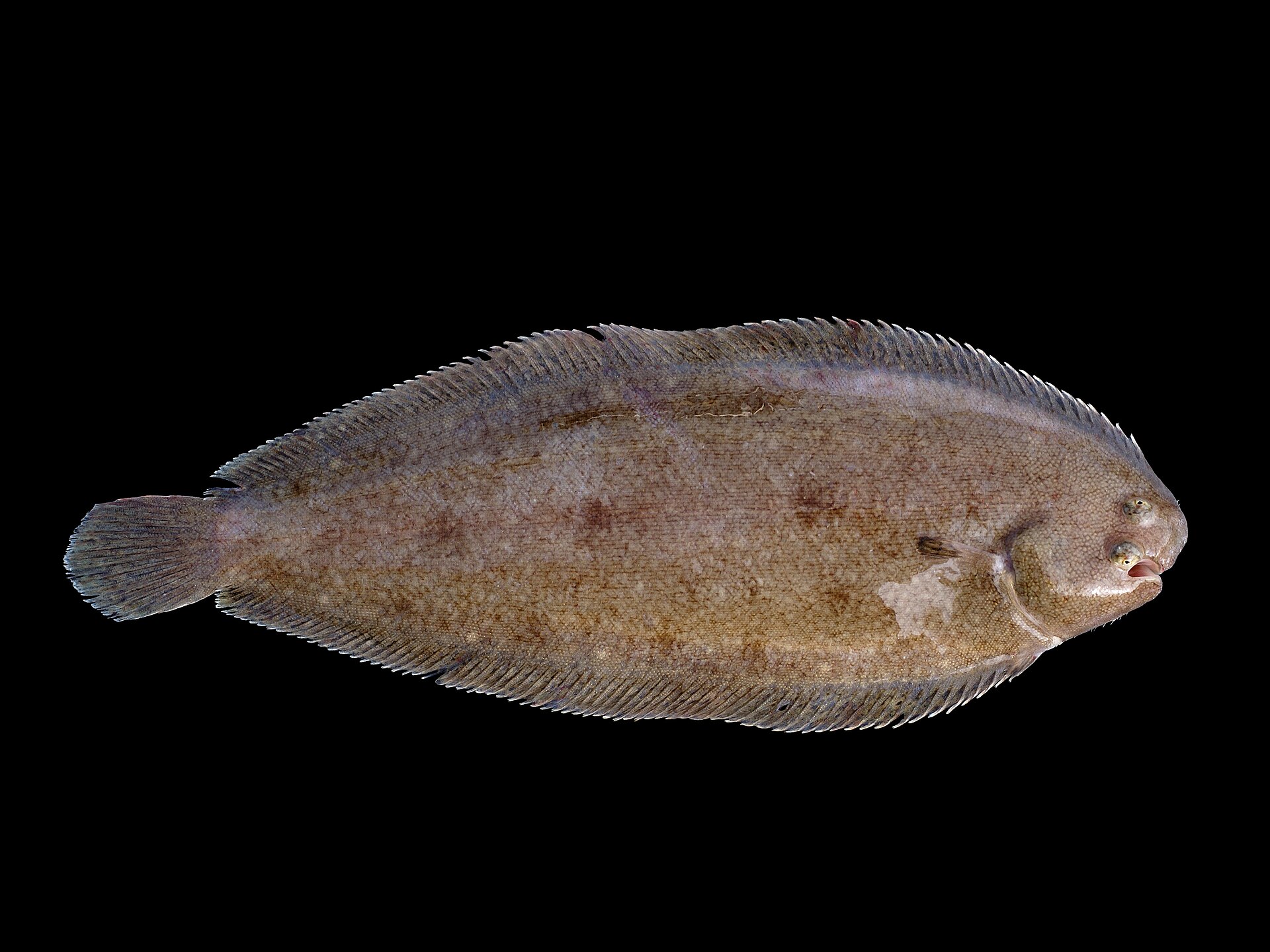
An oval silhouette pressed flat against the bottom, two small eyes just showing above the sand and a livery that blends into the sediment: the sole is one of the most sought-after flatfish on our coasts, both on the fishmonger’s slab and from the beach. Discreet, nocturnal and perfectly camouflaged, the common sole (Solea solea) intrigues naturalists with its asymmetrical morphology and fascinates surfcasters, who target it with natural bait in the surf.
In this species profile, we go through everything you need to know about this fish: its morphology, habitat, diet, breeding cycle, the regulations that apply to it and, of course, our favourite techniques, baits and rigs for outwitting it. Everything you need to understand the species better before heading out to meet it.
Our article in brief
- The sole (Solea solea) is a flatfish of sandy and muddy bottoms, recognisable by its oval body, its eyes on the right side and its camouflaged livery.
- It commonly measures 25 to 35 cm, with large specimens approaching 70 cm and almost 3 kg.
- A nocturnal benthic predator, it is fished from the shore by surfcasting, with natural bait (lugworm, ragworm) — not with lures.
- Fishing for it is regulated at sea: minimum landing size of 24 to 25 cm depending on the coastline.
- A prized species under heavy pressure, it deserves responsible fishing (respecting the minimum size, releasing small soles).
Sole morphology and identification
The sole has an oval body, very flattened, built for a life pressed against the bottom. Its upper side, known as the eyed side, is greyish-brown to reddish, scattered with dark spots that camouflage it on sand and mud; the blind underside is whitish. Like all flatfish, it is not symmetrical: at the end of its larval metamorphosis, its left eye migrates towards the right eye, so that the adult always lies on its left side.
A camouflaged livery and a pectoral spot
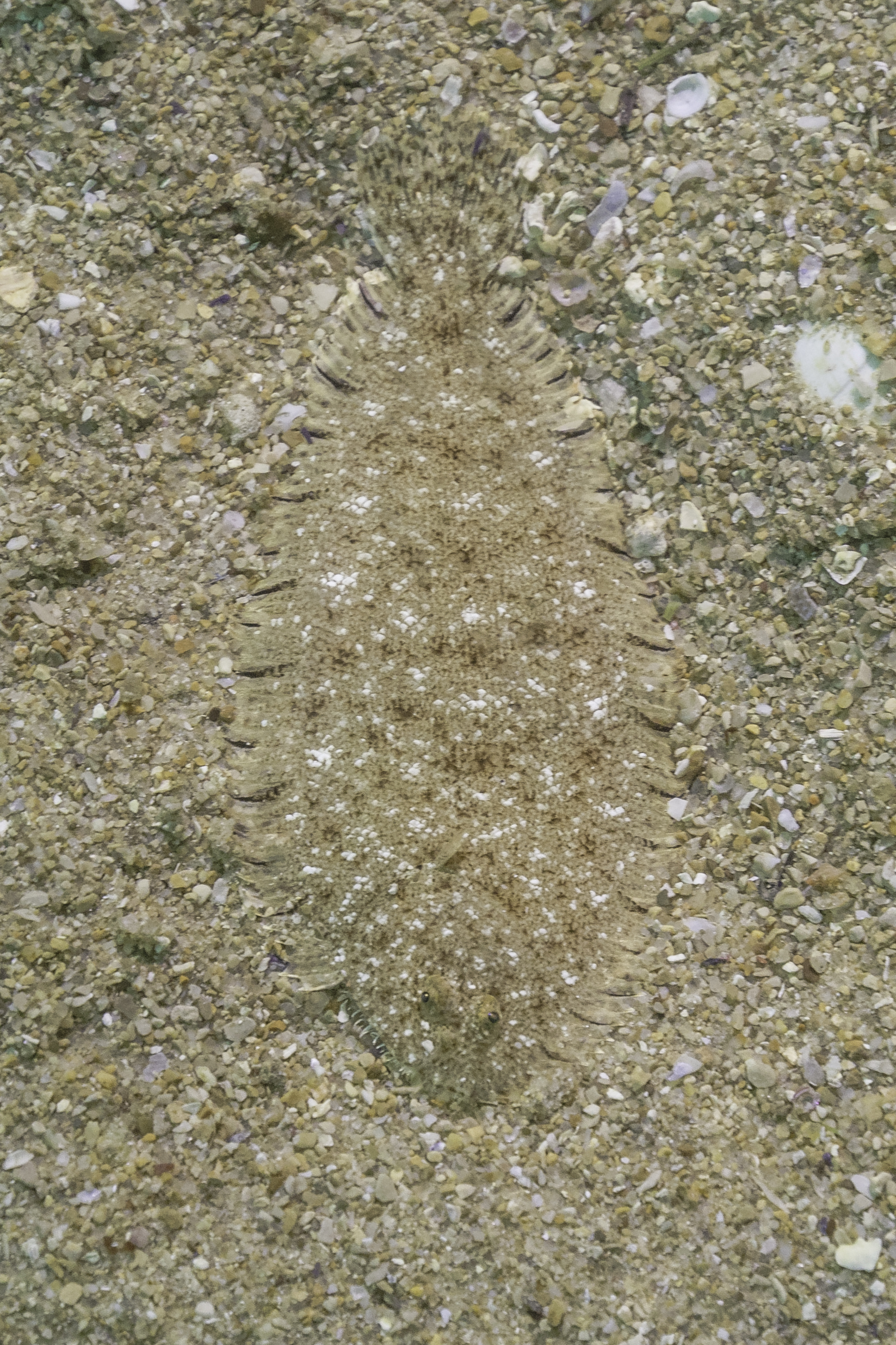
The most useful feature for identifying it is the black spot at the tip of the pectoral fin, clearly visible on the eyed side. The sole also has an extraordinary capacity for camouflage: it adjusts the colour of its livery to that of the substrate within minutes, until it becomes almost invisible once half-buried. Its small, curved mouth on the blind side is fringed with sensory papillae that help it detect prey.
Size and lifespan
A common sole usually measures between 25 and 35 cm and weighs a few hundred grams. Fine specimens, often females, can approach 70 cm and nearly 3 kg, but such sizes have become rare under fishing pressure. Here are the biometric benchmarks for the species:
| Features | Reference point |
|---|---|
| Medium size | 25 to 35 cm |
| Maximum size | about 70 cm |
| Average weight | 200 to 700 g |
| Maximum weight | up to 3 kg |
| Longevity | 20 to 25 years |
| Sexual maturity | 3 to 4 years |
Where does the sole live?
The sole is a strictly benthic species, tied to soft bottoms: sandy beaches, foreshores, mudbanks and sandy-muddy areas. It is found from the intertidal zone down to around 200 m, but most often frequents shallow water, shallower than 70 m. Euryhaline, it readily enters estuaries and harbours, right up to the edge of fresh water, which explains why it is sometimes caught just a few metres from the shore.
Its range covers the Eastern Atlantic, from southern Norway to Senegal, as well as the Mediterranean, the Channel and the North Sea. Loyal to its sandy areas, it nevertheless makes seasonal movements: as winter approaches, it moves out to deeper offshore waters, before returning to the coast in spring to feed and breed. Young soles grow up in coastal and estuarine nurseries.
What does the sole eat?
The sole is a nocturnal benthic predator. Unlike pike or bass, it does not hunt by sight: its vision is poor, and it is thanks to its sense of smell and its sensory papillae that it locates prey buried in the sediment. Its diet is based on the small fauna of soft bottoms:
- Marine worms : lugworms, ragworms and other annelids, which make up most of its diet.
- Small crustaceans : young crabs, shrimps and burrowing amphipods.
- Molluscs : small bivalves such as cockles and young razor clams.
Its technique is discreet: the sole gently sucks in its prey right on the bottom, without crushing it. This activity is mainly crepuscular and nocturnal; by day, the fish usually stays buried, with only its eyes poking out of the sand. This behaviour directly shapes the fishing, which gives its best results at night, with a bait presented on the bottom.
Sole life cycle and reproduction
The sole spawns in spring, when coastal waters warm up. Females release pelagic eggs that drift in open water; after hatching, the larvae first swim symmetrically, like any other fish, before undergoing the metamorphosis characteristic of flatfish: the left eye migrates, the body flattens and the youngster settles on the bottom of coastal nurseries. These shallow areas play a vital role in replenishing stocks.
| Parameter | Data |
|---|---|
| Spawning period | February to April |
| Spawning temperature | 8 to 12 °C |
| Number of eggs | 130,000 to 1,300,000 depending on size |
| Egg type | pelagic (drifting) |
| Nurseries | estuaries and shallow coastal areas |
Sole regulations and minimum size
Sole fishing takes place at sea and therefore falls under the regulations for recreational sea fishing, which are separate from those for fresh water. The key rule to know is the minimum catch size, below which any fish must be returned to the water: it is set at 24 cm in the Mediterranean and to 25 cm on the Channel and Atlantic coasts. Any sole taken must also be marked (removal of part of the tail fin) in accordance with recreational fishing obligations.
Rules to check before every trip
Unlike pike, the sole is not subject to a closed season for recreational fishing, but maritime regulations change regularly and can vary locally. Sizes, any quotas and marking requirements may be amended by order. We encourage you to always consult the orders of the maritime prefecture and the interregional sea directorate (DIRM) before fishing.
How to catch sole by surfcasting
Sole fishing is a great surfcasting classic on sandy beaches. The golden rule: present a natural bait right on the bottom, preferably at night or at dusk, when the fish becomes active and starts rummaging through the sediment. There is no need to cast as far as possible at all costs: soles often hunt in the first gutter, in the surf. Here is the basic tackle we use for this bait fishing:
| Element | Our recommendation |
|---|---|
| Cane | 4.20 m surfcasting rod, casting weight 100-200 g |
| Reel | size 6000 to 8000, spooled with a fine main line |
| Leader | fluorocarbon 0.26 to 0.35 mm |
| Hooks | long shank, sizes 6 to 1, possibly red |
| Bait | lugworm, ragworm, American ragworm, hard worm |
For the line, a braid or fine mono as the main line, extended with a tapered shock leader, absorbs the strain of casting a heavy lead; the fluorocarbon of the leader provides discretion. We prioritise clean sand near a gully, a channel or a drop-off, taking care with baiting so that the fragile worms remain attractive once the rig has landed.
To see this fishing in action, here is a video on surfcasting for sole:
Baits and rigs for sole
Sole cannot be caught on lures: its tiny mouth and its scent-led way of feeding demand natural bait, presented right on the bottom. Everything therefore comes down to the choice of bait and the finesse of the rig. Here are our pointers for putting together an effective line:
- The best baits : lugworm, mud ragworm and American ragworm are among the most consistent baits; hard worm and cockle round out the range.
- The basic rig : one or two short snoods held on the main line by beads, to keep the bait pinned to the bottom where the sole forages.
- The attractive touch : a floating bead lifts the bait slightly, while a red bead or a red hook adds a visual stimulus in churned-up water.
- The hook : go for a long shank (sizes 6 to 1), which makes it easier to thread a whole worm and to unhook the fish.
- Line : a discreet leader in fluorocarbon of 0.26 to 0.35 mm is more than enough, as the sole is not a powerful fighter.
Sole records and anecdotes
The French common sole record ratified by the Fédération française des pêcheurs en mer is a catch of 1.775 kg, taken on 19 October 1988 off the Île de Ré. As for the world record, the International Game Fish Association (IGFA) lists in the “all-tackle” category a sole of around 800 g caught in the Netherlands on 12 July 1997 by P. C. Ouwendijk — a modest mark explained by the small number of claims, the sole being first and foremost a fish for the table. Another curiosity: its camouflage is so effective that a diver can pass within a few centimetres of a buried sole without noticing it.
Ecological role and conservation of the sole
As a predator of soft bottoms, the sole holds an important place in coastal food chains: by eating worms, crustaceans and small molluscs, it contributes to the balance of benthic fauna, while also serving as prey for many fish and seabirds. The health of its estuarine nurseries is a good indicator of the quality of coastal areas.
The species is, however, under heavy pressure: highly prized on the market, it is intensively fished by trawlers, and several European stocks are considered fragile. The degradation of estuaries, which shelter young soles, makes the situation worse. As responsible recreational anglers, we have a role to play: respecting the minimum landing size, carefully releasing undersized fish and limiting what we take. That is the price of the sole remaining a regular on our beaches.
Sole FAQ
How big can the sole grow?
A common sole usually measures 25 to 35 cm. Large specimens, often females, can approach 70 cm and weigh up to about 3 kg, but such sizes are now rare because of fishing pressure.
What bait should you use for sole?
Natural baits are essential: lugworm, mud ragworm and American ragworm are the most effective. Sole are caught on bait presented on the bottom, not on lures, because of their small mouth and their scent-led hunting.
When is the best time to fish for sole?
As the sole is mainly active at night, dusk and the hours of darkness offer the best conditions, especially on sandy beaches. The autumn and spring months, when the fish frequents shallow coastal waters, are often the most productive.
What is the minimum landing size for sole?
The minimum landing size is 24 cm in the Mediterranean and 25 cm on the Channel and Atlantic coasts. Any smaller sole must be returned to the water. As these rules may change, always check your maritime prefecture’s order before fishing.
When does the sole spawn?
Spawning takes place in spring, generally from February to April, when coastal waters reach 8 to 12 °C. Females release pelagic eggs, and the larvae then move into estuarine nurseries after their metamorphosis into flatfish.
How do you recognise the common sole?
The common sole has an oval, elongated body, a greyish-brown to reddish eyed side and, above all, a characteristic black spot at the tip of the pectoral fin. Both its eyes are on the right side, and its livery adapts to the colour of the bottom for perfect camouflage.


