
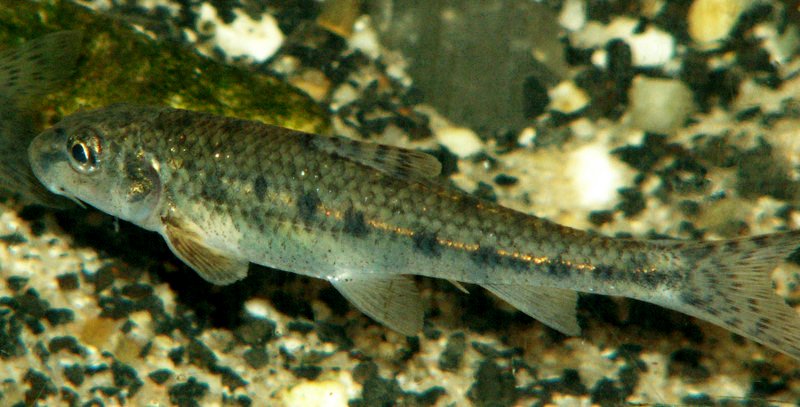
A small bottom-dwelling fish with a thick snout adorned with two barbels, the stud is a familiar sight in our rivers and one of the very first catches of every beginner. This modest cyprinid (Gobio gobio), which we love to tease with maggots on the pole, appeals as much to the naturalist, who sees it as a valuable indicator of water quality, as to the sociable angler looking for a good fish fry by the water.
In this species profile, we go through everything you need to know about this fish: its morphology, habitat, diet, breeding cycle, the regulations that apply to it and, of course, our favourite techniques and baits for catching it. Everything you need to understand the species better before heading out to meet it.
Our article in brief
- The stud (Gobio gobio) is a small bottom-dwelling cyprinid, recognisable by its spindle-shaped body, thick snout and two barbels.
- It commonly measures 10 to 15 cm, with the largest specimens reaching around twenty centimetres.
- Gregarious and a keen forager, it lives in shoals over sand and gravel beds and is remarkably easy to catch on the pole, with maggots or worms.
- There is no minimum legal size for it, but fishing for it is still governed by the prefectural order and the rules of the local AAPPMA.
- Sensitive to pollution, it is an excellent bio-indicator of good water quality and oxygenation.
Gudgeon morphology and identification
The gudgeon has an elongated, spindle-shaped body, slightly flattened on the belly, built for a life hugging the bottom. Its colouring shows golden to greenish-brown tints on the back, with a row of dark bluish spots along the flanks, while the belly turns silvery white. This discreet livery gives it effective camouflage over the sand and gravel beds it favours.
A forager's snout and barbels
Its most distinctive feature is its sturdy head, extended by a thick snout and an inferior, downward-facing mouth. On either side of the mouth hang two barbels , sensory feelers that act as true organs of touch and taste that the fish drags over the substrate to root out its food. This detail, together with its large eyes set high on the head, is a giveaway: you can recognise a gudgeon at first glance.
Size and lifespan
An adult gudgeon commonly measures between 10 and 15 cm and weighs 20 to 30 g. The larger specimens, which are rarer, can approach twenty centimetres and reach 150 g. Here are the key biometric figures for the species:
| Features | Reference point |
|---|---|
| Medium size | 10 to 15 cm |
| Maximum size | around 20 cm |
| Average weight | 20 to 30 g |
| Maximum weight | up to 150 g |
| Longevity | 4 to 5 years (up to 8) |
| Sexual maturity | 2 to 3 years |
Where does the gudgeon live?
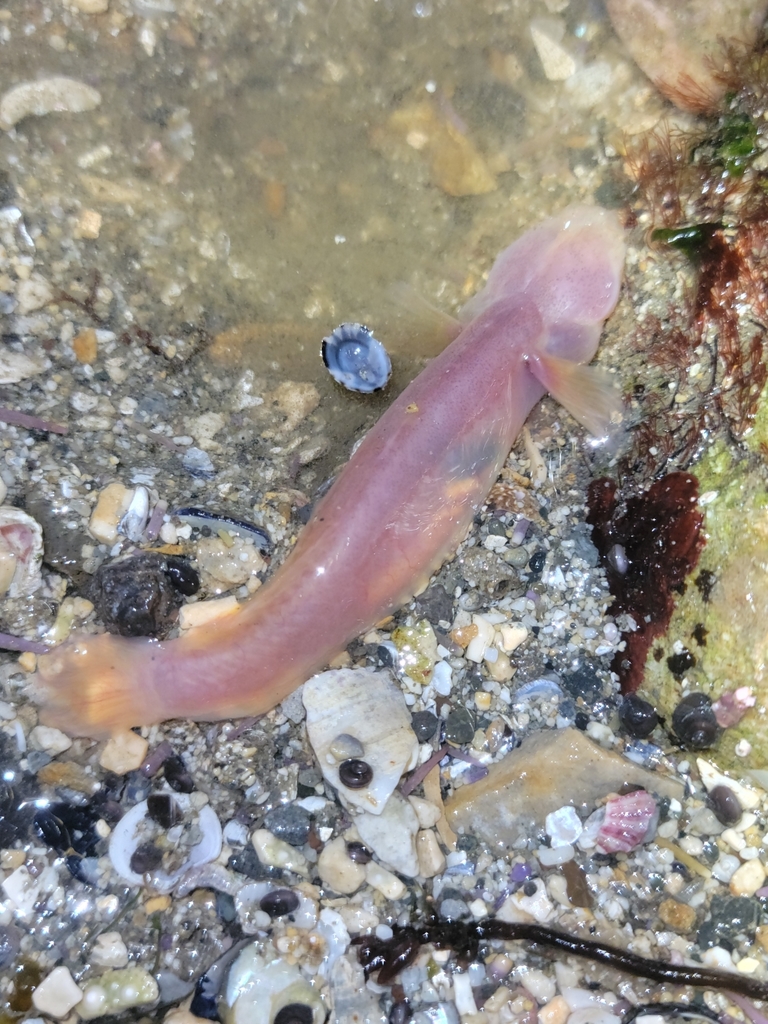
The gudgeon favours clear, cool, well-oxygenated and generally flowing water: lowland and foothill rivers, streams and canals, but also the margins of lakes and ponds, provided the bottom stays clean. It always looks for hard substrates of sand, gravel and pebbles, where it moves about close to the bottom. It is a gregarious fish that travels and feeds in shoals, sometimes large ones, which explains the lively sessions it provides.
Its range covers most of Europe, and it is found in almost every French river basin, from the rivers of Brittany to the tributaries of the Rhône. It occurs both in the upstream trout zones and in the slower barbel stretches. Well-oxygenated stillwaters such as Lake Vassivière or the Lake Passy can also hold it, wherever inflows and gravel beds suit it.
What does the gudgeon eat?
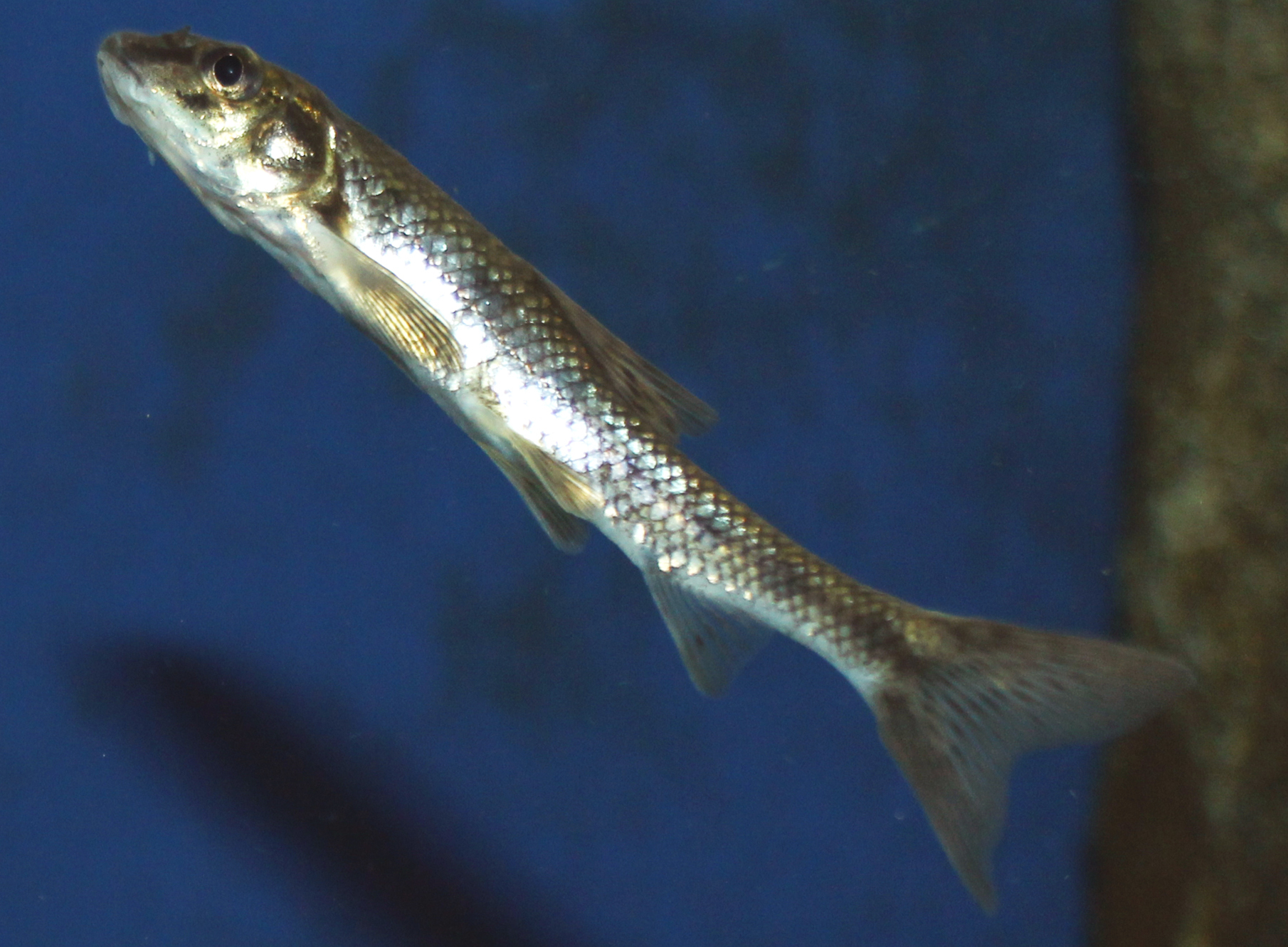
The gudgeon is an opportunistic benthic fish that tirelessly searches the bottom with its barbels. Its diet, essentially carnivorous on a microscopic scale, consists of the small prey it finds in the substrate:
- Benthic invertebrates : insect larvae, worms, small crustaceans and molluscs.
- Zooplankton : micro-crustaceans in open water, especially in young fish.
- Plant debris and diatoms : a supplement taken from bottom deposits.
Its feeding technique is easy to observe: the gudgeon works its way along the bottom in short movements, snout down, sucking up sediment which it sorts before spitting out the inedible particles. This rooting stirs fine particles into suspension, a cloud that often attracts its fellows and triggers feeding across the whole shoal — behaviour the pole angler knows how to exploit.
Gudgeon life cycle and spawning
The gudgeon spawns in late spring, once the water has warmed up for good. Spawning stretches over several weeks in successive batches: females lay their eggs in small clusters stuck to stones and vegetation in shallow, flowing areas. In males, courtship is marked by the appearance of nuptial tubercles, small whitish growths on the head and the front of the body. The fry hatch after one to four weeks depending on the temperature.
| Parameter | Data |
|---|---|
| Spawning period | May to June |
| Spawning temperature | 14 to 18 °C |
| Number of eggs | 1,000 to 3,000 per female |
| Spawning substrate | stones and vegetation in flowing water |
| Hatching | 10 to 30 days |
Gudgeon regulations and legal size
Good news for pole anglers: the gudgeon is subject tono minimum legal catch size and no specific national quota. As a common coarse fish, it can be caught in both first- and second-category waters, in line with the general rules applying to each stretch. Catching it does, however, require a valid fishing licence.
What to check before fishing for gudgeon in 2026
Although no national regulation targets the species directly, several local rules may apply: opening dates specific to first-category waters, the number of live baits allowed, or restrictions on using gudgeon as livebait. These provisions are subject to change by prefectural order. We therefore always recommend checking your department's prefectural order and your AAPPMA's rules before setting off, so you can fish with complete peace of mind.
How to catch gudgeon on the pole
Pole fishing for gudgeon is pure, sociable fun, ideal for beginners as well as for relaxing by the water. The golden rule: present a fine bait that skims the bottom, where the fish feed, and hold the shoal with well-measured groundbait. Here is how we organise our approach depending on the swim and the current:
| Situation | Recommended approach | Best time |
|---|---|---|
| Slow river, gentle current | fine line with a light float, bait laid on the bottom | spring, summer |
| Strong current, gravel bed | heavier-carrying float, bunched shot, bait dragging a few centimetres | summer, early autumn |
| Cool, clear water | discreet hooklength, sparing groundbait with leam | autumn, mild winter |
As for tackle, a 3 to 4 metre telescopic pole, a 0.10 to 0.12 mm nylon main line and a 1 to 3 g float depending on the current make a reliable setup. We finish with a fine hooklength and a small short-shank size 18 to 20 hook, perfectly suited to the fish's small mouth. The decisive trick is the groundbait: a dense ball loaded with soil that holds on the bottom without breaking up, stirs the substrate and keeps the shoal in the swim. Because the gudgeon is gregarious, once the first bite comes, the bites often follow one another without a break.
To see these techniques in action, here is a video dedicated to pole fishing for gudgeon in a river:
Tackle and baits for gudgeon
Unlike predators, the gudgeon is not caught on lures: it is a natural-bait fish, presented as close to the bottom as possible. There is no need for heavy artillery; all you need is a box of fresh bait and a well-balanced rig. Here are our favourite baits and setups:
- Maggots : the king of gudgeon baits, cheap and deadly, hooked singly or in pairs on a small hook.
- Redworms or small bloodworms : very effective, especially in slightly coloured or cold water.
- Bottom groundbait : dense and sticky, loaded with leam, to hold on the bottom and gather the shoal without overfeeding it.
- Fine line : 0.10-0.12 mm nylon, size 18 to 20 hook and a light float, for a discreet presentation and instant bite detection.
Records and anecdotes about the gudgeon
The gudgeon is not a record fish: its small size and status as a common species keep it out of the official record lists, and the finest specimens rarely exceed twenty centimetres. Its real fame lies elsewhere, in everyday French: "taquiner le goujon" (teasing the gudgeon) has become a byword for simple, cheerful fishing by the water, while fried gudgeon remains a classic of riverside cooking. Another curiosity: this small cyprinid enjoys a fine reputation among naturalists, as its presence, demanding clean water, is in itself a certificate of a healthy watercourse.
Ecological role and conservation of the gudgeon
A discreet but essential link in the food chain, the gudgeon plays a key role in our rivers: by feeding on bottom invertebrates, it helps recycle organic matter, and it is itself a prime prey for predators such as pike, perch and trout. Its sensitivity to pollution also makes it an excellent bio-indicator: where the gudgeon thrives, the water is clear, cool and well oxygenated.
The species is, however, weakened by declining water quality, silting of riverbeds and the artificialisation of rivers, which destroy the gravel substrates it needs to spawn. As responsible anglers, we have a part to play: take only what we need for the fry-up, handle released fish with care, and support the preservation of clean-bottomed rivers. That is the price of the gudgeon continuing to liven up our pole fishing sessions.
Gudgeon FAQ
How big can a gudgeon get?
An adult gudgeon commonly measures 10 to 15 cm and weighs 20 to 30 g. The largest specimens, which are rarer, can approach 20 cm and weigh up to 150 g in favourable conditions.
What baits should I use for gudgeon?
Maggots are the go-to bait, cheap and very effective. Redworms and small bloodworms also give excellent results. Present them on a small size 18 to 20 hook, as close to the bottom as possible, with dense groundbait to concentrate the shoal.
When do gudgeon spawn?
Spawning takes place in late spring, mainly in May and June, when the water reaches 14 to 18 °C. Females spawn several times, laying their eggs in clusters on the stones and vegetation of shallow, flowing areas.
Is there a legal size for gudgeon?
No, the gudgeon is not subject to any minimum legal size or specific national quota. Fishing for it is still governed by the general rules for the category of the stretch and by the local prefectural order: always check the regulations of your department and your AAPPMA.
What is the best season for gudgeon fishing?
The warmer months, from spring to autumn, offer the best conditions: the water is warm and gudgeon shoals are active over sand and gravel beds. Mild summer days on flowing rivers are particularly good for pole fishing.
Why is the gudgeon said to indicate good water quality?
The gudgeon is very sensitive to pollution and needs clear, cool, well-oxygenated water over clean beds. Its presence in good numbers is therefore regarded by naturalists as a good bio-indicator of the health and quality of a watercourse.


