
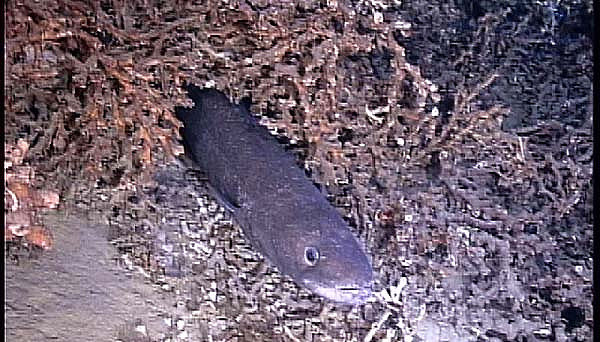
A long, snake-like body lurking in the depths of a wreck, a powerful mouth and a cold stare emerging from the darkness: the conger eel is one of the most impressive predators of our coasts. This large nocturnal eel (Conger conger), also known as the sea eel or European conger, haunts breakwaters and shipwrecks, where it waits for nightfall to hunt. Fiercely combative, it fascinates naturalists as much as anglers looking for a thrill.
In this species guide, we review everything you need to know about this fish: its anatomy, habitat, diet, breeding cycle, the regulations that apply to it and, of course, our favourite techniques, rigs and baits for targeting it. Everything you need to understand the species better before heading out in search of it, at night, over a reef or a wreck.
Our article in brief
- The conger eel (Conger conger) is a large marine eel, recognisable by its cylindrical, scaleless body and powerful mouth.
- It commonly measures 1 to 2 m, with the largest females exceeding 2.50 m and weighing over 40 kg.
- A nocturnal predator of wrecks and breakwaters, it is caught on bait (dead fish, cuttlefish) with heavy static tackle, from the shore or a boat.
- Catching one requires solid tackle: big hooks, a reinforced leader and great care when handling, as its bite is formidable.
- A common but little-known marine species, it acts as a cleaner and regulator of rocky seabeds.
Conger eel anatomy and identification
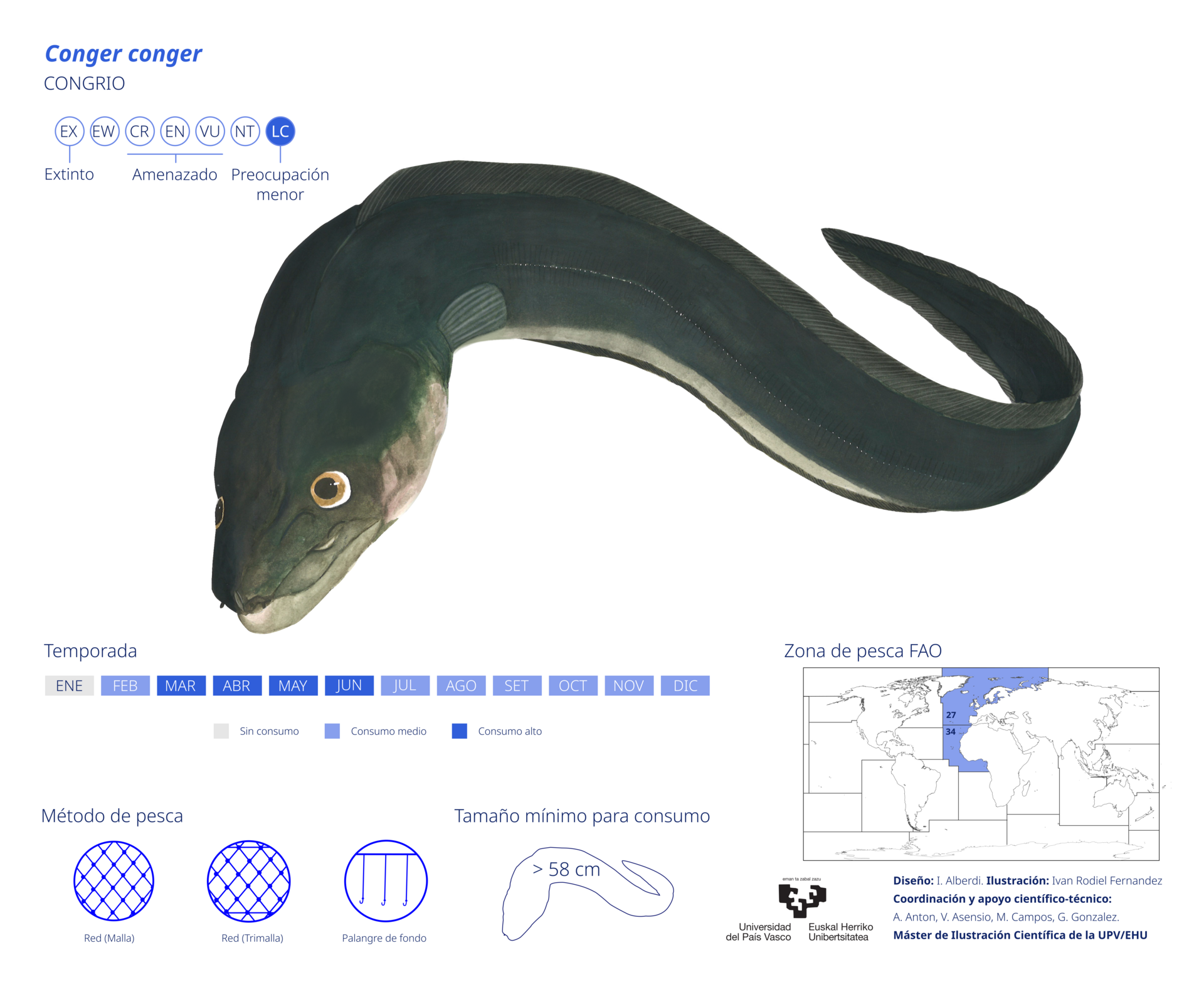
The conger eel has an elongated body, cylindrical at the front then compressed towards the tail, like a gigantic eel. Its skin is smooth, with no visible scales, and covered in abundant mucus that makes it very slippery. Its colouring ranges from slate grey to very dark brown on the back, lightening towards a whitish belly: perfect camouflage in the gloom of rocks and wrecks.
A formidable mouth and jaw
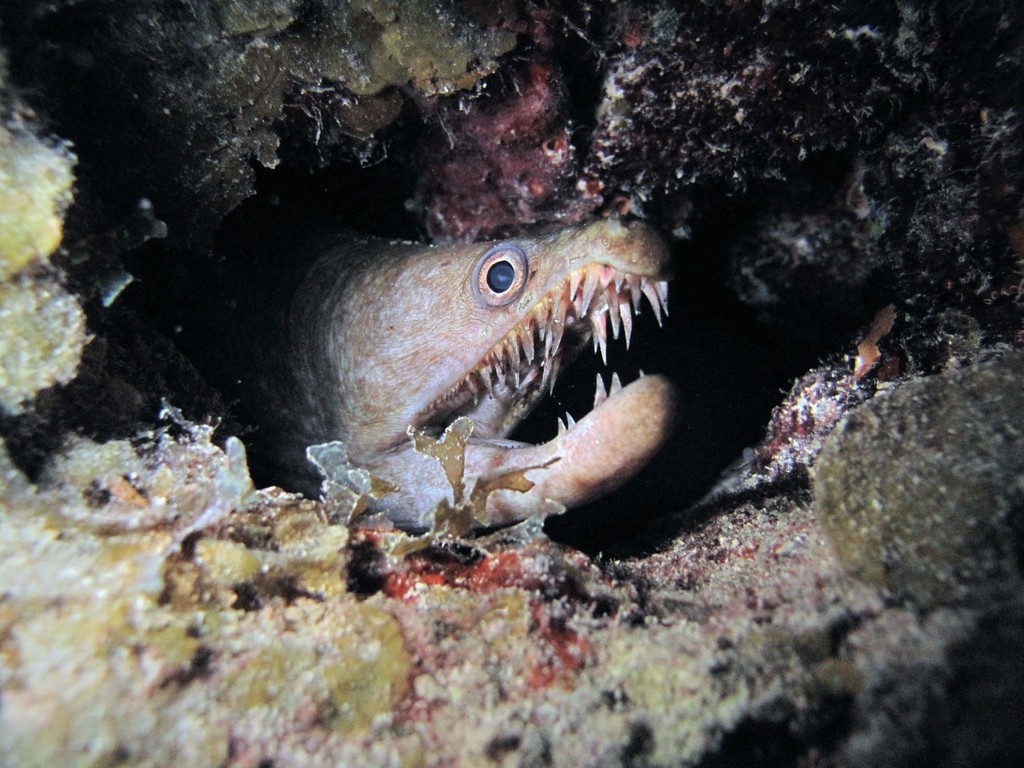
The most impressive feature remains its massive head, with a mouth that extends to below the eye, armed with fine but closely set teeth arranged in several rows. The upper jaw slightly overhangs the lower. This bite explains the conger’s reputation: a dangerous fish to handle, capable of inflicting serious wounds and severing a poorly chosen leader. Caution is essential every time you unhook one.
Fins and size
The long, continuous dorsal fin starts just behind the pectorals and runs to the tail, where it joins the anal fin; there are no pelvic fins. An adult conger commonly measures between 1 and 2 m and weighs 5 to 25 kg. The largest specimens, almost always females, exceed 2.50 m and can approach, or even exceed, 40 kg. Here are the species’ biometric benchmarks:
| Features | Reference point |
|---|---|
| Medium size | 1 to 2 m |
| Maximum size | about 3 m |
| Average weight | 5 to 25 kg |
| Maximum weight | over 60 kg |
| Depth | 0 to 500 m |
| Sexual maturity | 5 to 15 years |
Where do conger eels live?
The conger is a structure fish par excellence. It seeks out rugged rocky bottoms, breakwaters, drop-offs, harbour walls and above all wrecks, where it finds the dark crevices in which it spends the day under cover. It is not unusual for several fish to share the same wreck, turning wrecks into veritable conger reservoirs. Loyal to its lies, it rarely strays far from its shelter except under cover of darkness.
Its range covers the eastern Atlantic, from Norway and Iceland to Senegal, as well as the Mediterranean and the Black Sea. Young fish frequent shallow coastal waters, harbours and rocky foreshores, while large fish move to deeper ground. Along our Channel and Atlantic coasts, countless wrecks provide first-class habitat for the species.
What do conger eels eat?
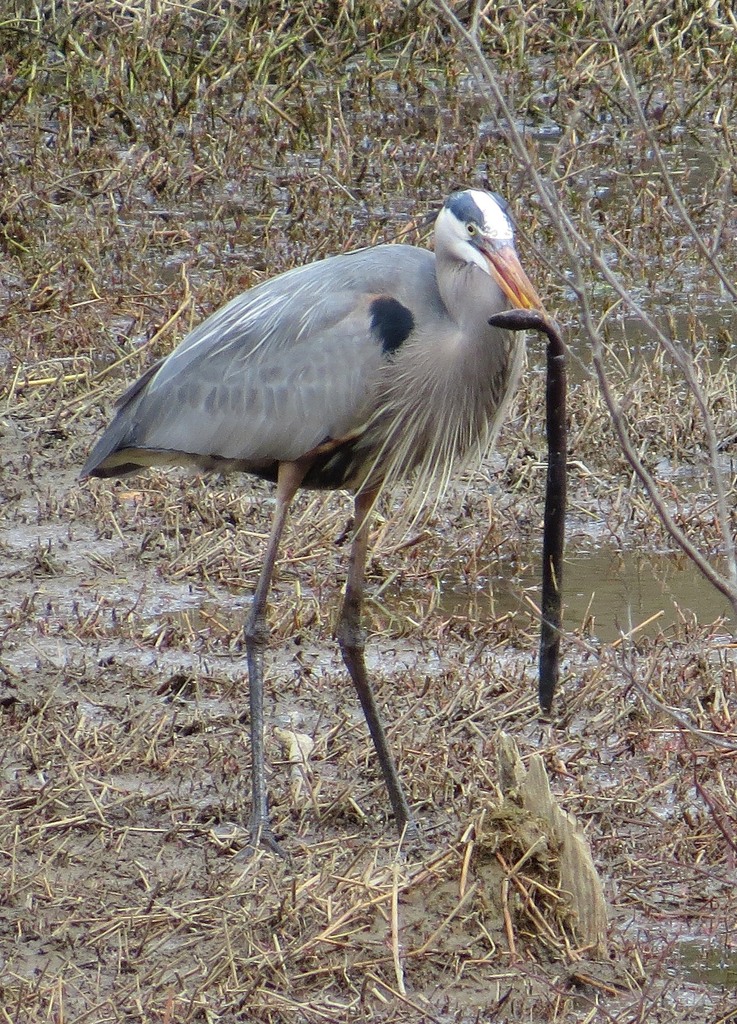
The conger is an opportunistic nocturnal predator. It hunts both by ambush and by prowling around its shelter, and readily supplements its diet by scavenging, cleaning the seabed of dead fish. Its menu is varied:
- Fish : horse mackerel, mackerel, sardines, sand eels, garfish and other oily fish, which it particularly enjoys.
- Cephalopods : cuttlefish, squid and octopus, which it adores.
- Crustaceans : crabs and small crustaceans gleaned from crevices.
Its hunting technique is brutal: it bursts out of its hole, seizes its prey with a snap of the jaws, then immediately retreats into its shelter, twisting powerfully to tear large prey apart. This instinct to return to its hole explains the violence of the first seconds of the fight, when a hooked conger tries to regain its hideout.
Conger eel life cycle and breeding
Conger reproduction remains partly mysterious. Once mature, the adults stop feeding, leave the coast and migrate to great depths in the Atlantic and Mediterranean to breed just once. The conger is semelparous: males and females die after spawning. The transparent, leaf-shaped larvae (leptocephali) drift for a long time with the currents before reaching the coast and undergoing metamorphosis.
| Parameter | Data |
|---|---|
| Spawning area | great depths of the Atlantic and Mediterranean |
| Spawning depth | several thousand metres |
| Number of eggs | several million per female |
| Breeding | once only (semelparous species) |
| Larval stage | drifting leptocephalus |
Regulations and minimum size for conger eel
Conger fishing falls under recreational sea fishing, whose framework differs considerably from that of freshwater fishing. At European level, a minimum catch size of 58 cm applies to conger in several areas of the north-east Atlantic. In the Mediterranean, no EU minimum size is set for the species, but local regulations may exist.
Marking and good practice in 2026
In recreational sea fishing, certain species must undergo marking (removal of part of the tail fin) as soon as they are caught, to show that they are not intended for sale. Size, marking and quota rules change and vary according to the coast and the bylaws in force. We urge you to always check the maritime regulations applicable to your area, with the direction interrégionale de la mer or on official websites, before keeping a fish.
How to catch conger eel?
Conger fishing is above all static bait fishing on the bottom. Forget lures: it is the smell of a dead fish or a piece of cuttlefish that will draw the conger out of its hole, usually at dusk or after dark. It is targeted from the shore (harbour walls, piers, breakwaters, surfcasting) as well as from a boat, directly over wrecks and reefs. Here is how we organise our approach depending on the spot:
| Fishing spot | Technical | Best time |
|---|---|---|
| Harbour walls and breakwaters | heavy static fishing, surfcasting rod | nightfall, flood tide |
| Wrecks (boat) | fishing straight down, heavy lead on the bottom | slack water, day or night |
| Coastal rocky bottoms | short leader close to the bottom | night, coloured water |
When it comes to tackle, think strong: a powerful rod, a sturdy reel loaded with strong braid and a well-set drag are essential. As soon as you get a bite, often sudden and brutal, strike and hold firm to stop the conger getting back into its hole: it is a trial of strength, pure power. When landing it, the greatest care is needed — never put your fingers near its mouth, and unhook it with long-nosed pliers.
To see these techniques in action, here is a video on rigs, baits and techniques for conger fishing:
Baits and tackle for conger eel
Conger are not caught on lures but on natural bait, and success depends on presentation and the strength of the whole set-up. Here are the points on which we never compromise:
- Bait : strip or head of mackerel, sardine, horse mackerel, a piece of cuttlefish or squid — oily, smelly baits, as fresh as possible.
- Hooks : big, strong forged hooks, from 4/0 to 8/0 depending on the size of fish targeted, with flawless points.
- Leader : a strong, short leader in heavy fluorocarbon (60 to 100/100) or reinforced with a length of wire, to withstand the bite and abrasion.
- Leads : heavy leads to hold bottom, suited to the current and depth.
- Safety : long-nosed pliers, a thick glove and a disgorger to handle the fish safely.
The classic rig is a simple leader pinned to the bottom; on a wreck from a boat, a short, robust rig with the lead at the end is preferred, to get the fish away from danger quickly. The golden rule remains the same: everything must be oversized, as a big conger will test the slightest weak link.
Records and anecdotes about conger eel
The IGFA-ratified world record belongs to Vic Evans, with a conger of 60.44 kg (133 lb 4 oz) caught in 1995 off Berry Head, in Devon, England. There is no single official body ratifying recreational sea fishing records in France, but fine catches are reported there: off Fécamp, a conger nicknamed “Nessie”, almost 2 m long and over 30 kg, made the headlines. The largest congers described by science may even exceed 70 kg, dimensions that fuel many a sailor’s legend.
Ecological role and conservation of conger eel
As a predator and scavenger of rocky seabeds, the conger plays a dual ecological role: it regulates populations of fish and cephalopods, and it cleans the seabed by eating dead prey. Its presence is a sign of rocky habitats and wrecks teeming with life, true oases of biodiversity amid sandy bottoms.
The species is not considered threatened globally, but its unusual biology — a single breeding event at the end of its life, at very great depth — makes it sensitive to excessive fishing pressure on large fish, which are precisely the future spawners. As responsible anglers, we have a role to play: keep only what we need, carefully release unwanted fish, and respect sensitive habitats such as wrecks and reefs. That is the price of these discreet giants continuing to haunt our seabeds.
Conger eel FAQ
How big can conger eels grow?
An adult conger commonly measures 1 to 2 m and weighs 5 to 25 kg. Large specimens, almost always females, exceed 2.50 m and can reach about 3 m and over 60 kg in exceptional cases.
Is the conger eel dangerous to handle?
Yes, caution is essential. Its powerful jaw, lined with closely set teeth, can inflict serious bites. Never put your fingers near its mouth: unhook it with long-nosed pliers, holding the fish on the ground with a thick glove.
Which bait should you use for conger eel?
Oily, smelly baits are the most effective: strip or head of mackerel, sardine, horse mackerel, a piece of cuttlefish or squid. Conger are caught on dead bait presented on the bottom, not on lures.
Where and when to fish for conger eel?
It is caught over rocky bottoms, harbour walls, breakwaters and above all wrecks, from the shore or a boat. It is a nocturnal fish: the best bites come at dusk and after dark, often around slack water.
What tackle should you use for conger eel?
You need solid tackle: a powerful rod, a sturdy reel with strong braid, big strong forged hooks (4/0 to 8/0), a leader reinforced with heavy fluorocarbon or wire, and heavy leads to hold bottom. Everything must be oversized.
How do conger eels breed?
The conger is semelparous: it breeds only once, at the end of its life. The adults stop feeding and migrate to great depths in the Atlantic and Mediterranean to lay several million eggs, then die. The leptocephalus larvae then drift towards the coast.


