
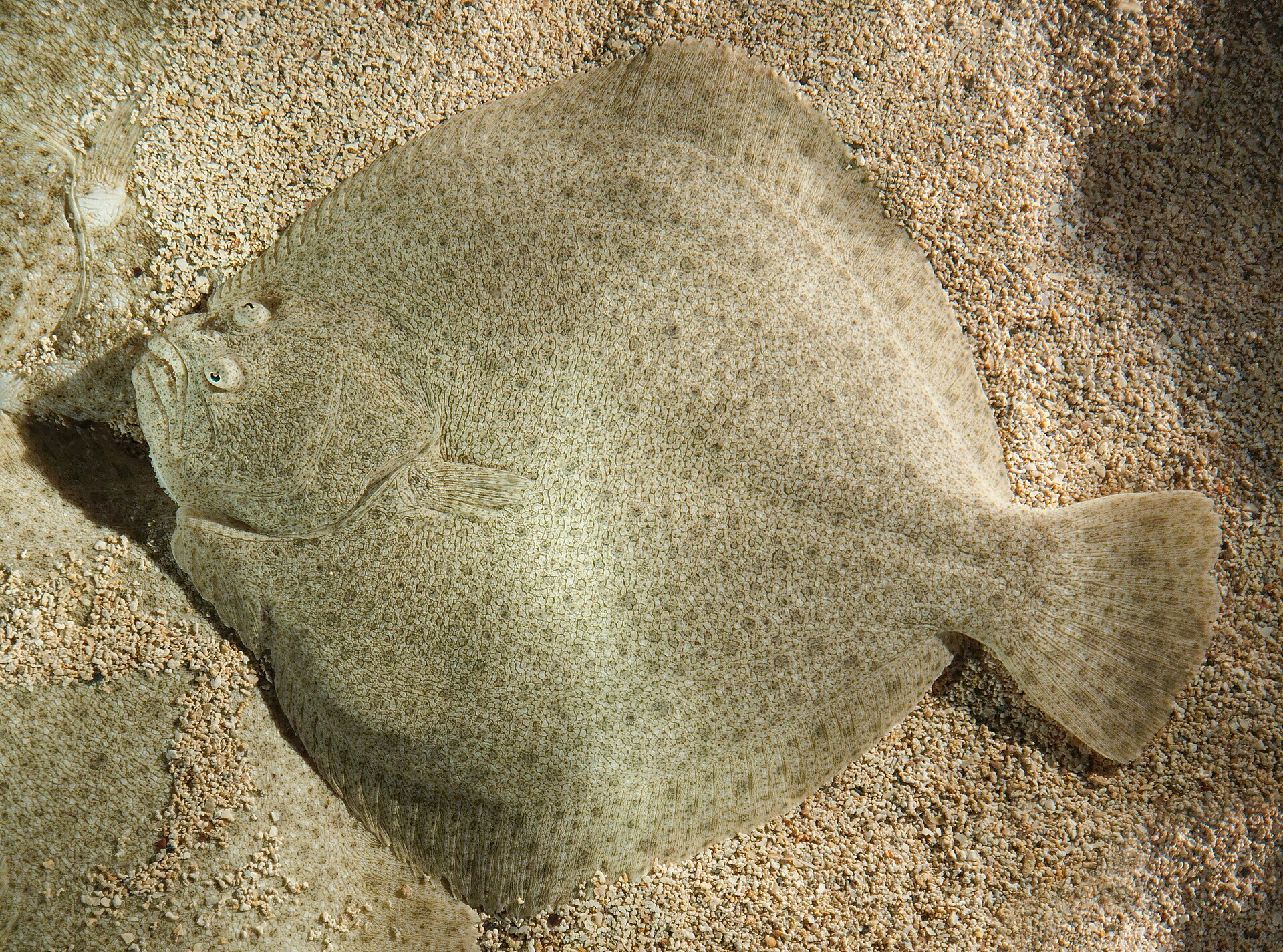
Lying on the sand like a flat cake on the seabed, both eyes trained on the surface and a mouth capable of inhaling a sand eel in a fraction of a second: the turbot is the most prestigious flatfish of our coasts. This ambush predator (Scophthalmus maximus) fascinates naturalists as much as shore and boat anglers, who see it as a discreet but powerful opponent, crowned by white flesh that is among the most sought after in fine dining.
In this species guide, we review everything you need to know about this fish: its unusual anatomy, its sandy-bottom habitat, its diet, breeding cycle, the maritime regulations that apply to it and, of course, our favourite techniques and rigs for targeting it. Everything you need to understand the species better before heading out in search of it.
Our article in brief
- The turbot (Scophthalmus maximus) is a large flatfish of sandy bottoms, recognisable by its almost round body covered in bony tubercles.
- It commonly measures 40 to 70 cm, with the largest specimens exceeding a metre and weighing over 10 kg.
- A camouflaged ambush predator, it is mainly caught on live bait (sand eel) and natural bait, static, on the drift or by surfcasting.
- It is subject to a minimum catch size at sea, often set at around 30 cm depending on the coast.
- With its highly prized white flesh, it should not be confused with the brill (Scophthalmus rhombus), which has no tubercles.
Turbot anatomy and identification
The turbot has an instantly recognisable shape: a broad, almost circular body, only one and a half times as long as it is wide, flattened to hug the bottom. It is a “left-eyed” flatfish of the order Pleuronectiformes: at the end of its larval metamorphosis, it lies on its right side while both eyes migrate to the left side, which now faces upwards. This upper side changes colour to match its surroundings, from sandy grey to mottled brown, blending into the substrate.
A tubercled skin, without scales
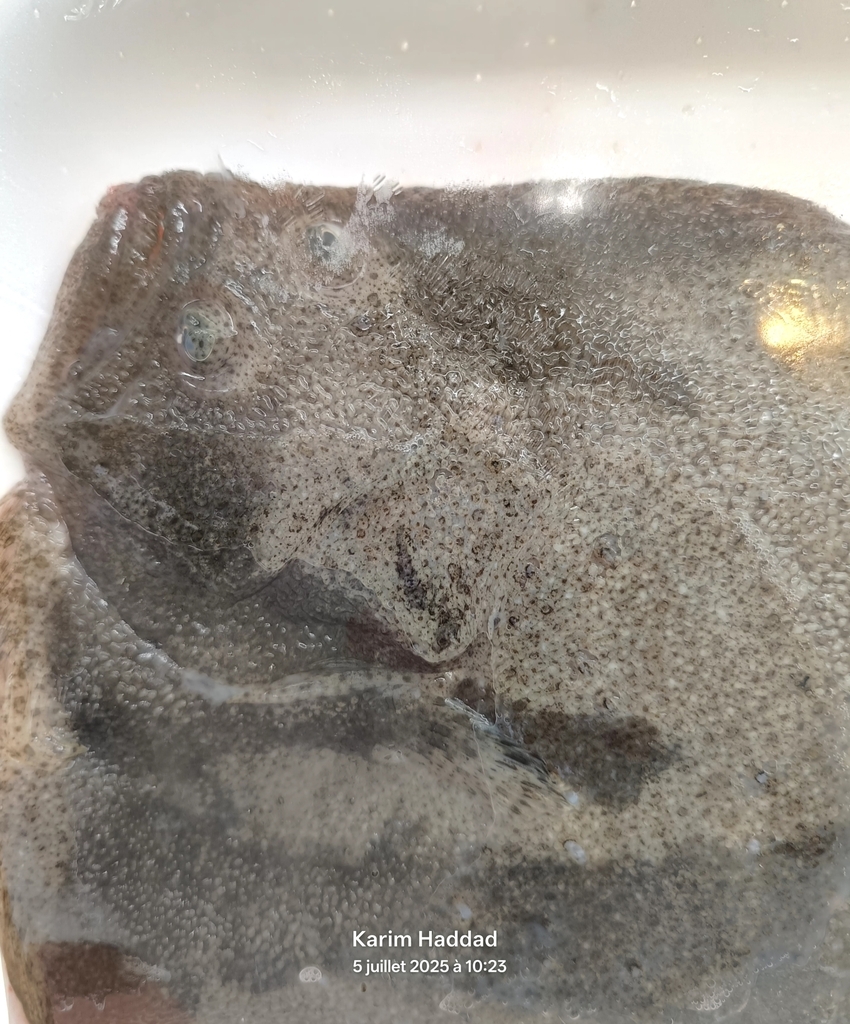
The most distinctive feature of the turbot is the absence of ordinary scales: its upper side is scattered with bony tubercles , small hard protuberances that are modified scales. This detail makes it possible to tell it apart from the brill (Scophthalmus rhombus) with certainty, the latter having a more elongated body and smooth skin without these tubercles. The blind underside remains white and smooth.
Size and lifespan
An adult turbot commonly measures 40 to 70 cm and weighs 1 to 4 kg. Large specimens exceed a metre and can approach, or even exceed, 10 kg in exceptional conditions. Young fish, called “turbotins” in French, are small turbot in the fish trade. Here are the species’ biometric benchmarks:
| Features | Reference point |
|---|---|
| Medium size | 40 to 70 cm |
| Maximum size | about 1 m |
| Average weight | 1 to 4 kg |
| Maximum weight | over 10 kg (up to ~25 kg reported) |
| Longevity | up to 20-25 years |
| Depth range | 10 to 150 m |
Where do turbot live?
The turbot is a strictly marine species, tied to soft bottoms. It favours sand, gravel or mud mixed with shell, where it partially buries itself, leaving only its eyes showing. It is found from the shallows close to shore down to 150 m, with a preference for areas where the current concentrates shoals of baitfish: sandbanks, the edges of deeps and the approaches to estuaries.
Its range covers the north-east Atlantic, from Norway and Iceland to Morocco, as well as the North Sea, the Baltic, the English Channel, the Bay of Biscay, the Mediterranean and the Black Sea. In France, it is found along all the Channel and Atlantic coasts, where long sandy beaches and bays with a large tidal range are its favourite hunting grounds. It is a sedentary fish, loyal to its lies, found season after season in the same favourable areas.

What do turbot eat?
The turbot is an opportunistic predator, formidably effective despite its apparent stillness. Its diet changes with age, but is based above all on small fish that it catches by ambush:
- Fish : sand eels (its favourite food), small sprats, sardines, gobies and young flatfish.
- Crustaceans : shrimps, small crabs and other sand-dwelling invertebrates, especially in young fish.
- Molluscs : occasionally, small cephalopods and shellfish as the opportunity arises.
Its hunting technique is that of an ambush predator: motionless and camouflaged on the bottom, it waits for prey to come within reach before lunging in a short burst to inhale it. This strategy explains why turbot like to lie in wait in areas of current, where the tide naturally brings them shoals of baitfish. It is also the key to catching them: present a live, moving bait tight to the bottom, right on their lie.
Turbot life cycle and breeding
Turbot breed in spring and summer, as the water warms up. The highly prolific females release several million pelagic eggs less than a millimetre across into open water, where they are fertilised and then dispersed by the currents. After hatching, the larvae swim normally like any other fish: it is as they grow that the spectacular metamorphosis takes place, one eye migrating to the other side to produce the familiar flat adult. The juveniles then move to coastal sandy bottoms, their true nurseries.
| Parameter | Data |
|---|---|
| Spawning period | April to August |
| Number of eggs | several million per female |
| Egg type | pelagic, ~1 mm |
| Sexual maturity | at around 3 to 5 years |
| Nurseries | coastal sandy bottoms |
Regulations and legal size for turbot
Turbot fishing is governed by maritime regulations, which set a minimum catch size designed to protect young fish. On the Channel, Atlantic and North Sea coasts, this minimum size is most often set at around 30 cm. As a biological benchmark, bear in mind that turbot only reach full breeding maturity well beyond this legal size: releasing modest-sized fish is therefore a worthwhile gesture for the stock.
Regulations to check locally
Please note: minimum catch sizes and any restrictions may vary by maritime area and change with successive management plans. The Mediterranean, for example, does not always set a dedicated minimum size for this species. As these rules fall under maritime regulations (and not freshwater fishing law), we urge you to always check the provisions in force with the direction interrégionale de la mer or the maritime prefectures for your coast before keeping a fish. If in doubt, catch and release remains the best option.
How to catch turbot?
Let’s be honest: turbot is not primarily a lure fish. It is a bottom hunter that you tempt first and foremost with live bait and natural bait, presented tight to the sand. Three complementary approaches dominate depending on the spot and access:
| Technical | Overview | Ideal conditions |
|---|---|---|
| Surfcasting | running ledger or paternoster, bait tight to the bottom | sandy beaches, start of the flood |
| Drift fishing (boat) | live bait or fish strip dragged along the bottom, sliding lead | sandbanks and edges of deeps |
| Static fishing | bait held on the spot, waiting | areas of current concentrating baitfish |
The key moment is often the start of the flood tide, when turbot use the current to move closer to the shore in search of food. A calm sea makes bite detection much easier. As for tackle, a surfcasting rod or a powerful boat rod, combined with a reliable braid and a leader made of fluorocarbon, makes a solid base. The finesse lies mainly in the rig and the freshness of the bait.
To see these techniques in action, here is a video on the techniques, lures and baits to use for turbot:
Baits, rigs and lures for turbot
Since turbot hunt tight to the bottom, presentation is everything. The king of baits remains the live sand eel, carefully hooked through the nose and sent down still lively: it is the fish’s natural prey par excellence. Failing that, strips of mackerel or sardine, marine worms and shrimps give good results. Here are our pointers on baits and rigs:
- Live sand eel : the number-one bait, hooked through the nose and presented just behind the lead so it stays tight to the sand.
- Mackerel or sardine strip : shiny and smelly, deadly on a running ledger.
- Rigs : running ledger with a sliding lead, or a two-hook paternoster with long-shank hooks and fluorescent beads (pink, yellow or green) to attract attention.
- Soft lures : a shad or a weighted soft lure (such as the Fiiish Black Minnow) worked slowly along the bottom can trigger attacks, alongside natural bait.
To go further with your choice of tackle and rigs, see our dedicated guides on fishing braid, to fluorocarbon and hook size for soft lures. The watchwords for turbot remain stealth and bait that is always fresh, kept in contact with the bottom.
Records and anecdotes about turbot
The turbot is one of the largest flatfish in Europe. Record rod-caught fish are around 13 to 15 kg: a Scottish specimen of almost 14 kg (about 29 lb) caught by Robert McMillan is among the benchmarks often cited for British waters. As there is no single ratifying body in France, these figures should be taken as remarkable orders of magnitude rather than official records: we remain cautious about their accuracy and encourage you to cross-check specialist sources. Another curiosity: the turbot is a camouflage champion, able to change the colour of its upper side to imitate sand or gravel to the point of becoming almost invisible to its prey and to divers alike.
Ecological role and conservation of turbot
As a bottom predator, the turbot regulates populations of small fish and invertebrates on sandy substrates. Its presence is a sign of healthy coastal nurseries and soft bottoms, habitats that are sensitive to degradation. It is also a species of great economic value: highly prized for its firm, delicate white flesh, it is the subject of a well-developed aquaculture industry, notably in Spain, which partly relieves pressure on wild stocks.
The species nevertheless remains sensitive to overfishing and to the degradation of the coastal seabeds that shelter its juveniles. As responsible anglers, we have a role to play: scrupulously respect minimum catch sizes, carefully release undersized fish and large spawners, and limit what we keep to what we will eat. That is the price of turbot continuing to inhabit our beaches and shallows for future generations.
Turbot FAQ
How big can turbot grow?
An adult turbot commonly measures 40 to 70 cm and weighs 1 to 4 kg. Large specimens exceed a metre and can weigh over 10 kg, with exceptional weights of around 20 to 25 kg sometimes reported in the literature.
How do you tell turbot from brill?
The turbot has an almost round body and an upper side scattered with bony tubercles, without ordinary scales. The brill (Scophthalmus rhombus) is more elongated and its skin is smooth, without these tubercles. This is the most reliable way to tell them apart.
Which bait should you use for turbot?
Live sand eel is the king of baits: it matches the turbot’s natural prey and should be carefully hooked through the nose and presented tight to the bottom. Strips of mackerel or sardine, marine worms and shrimps are good alternatives. A soft lure worked slowly along the bottom can complement the approach.
What is the legal size for turbot?
At sea, the minimum catch size for turbot is most often set at around 30 cm on the Channel, Atlantic and North Sea coasts. These rules fall under maritime law and may vary by area: always check the rules in force on your coast before keeping a fish.
Is the turbot a dangerous fish?
No, the turbot is not dangerous to humans. It has neither venom nor dangerous spines; its bony tubercles are simply protuberances of the skin. It is sought above all for its firm, delicate white flesh, considered one of the finest there is.
When is the best time to fish for turbot?
Turbot are fished in calm seas, with a peak in activity at the start of the flood tide, when the current brings them closer to the shore. The milder seasons, from spring to autumn, are generally the most productive, although winter fishing from the shore remains possible on some beaches.


