A prehistoric silhouette covered in bony plates, a long snout fringed with barbels brushing the bottom of estuaries: the Europeansturgeon is one of the most fascinating and most threatened fish on our continent. A true “living fossil”, this species (Acipenser sturio) has come down through the ages for more than 200 million years, almost unchanged since the time of the dinosaurs. Now on the brink of extinction, it survives in the wild in just one French river basin.
In this species profile, we cover everything you need to know about this discreet giant: its unique morphology, habitat, diet and reproductive cycle, but also its protected status and the reasons why it is not fished. Our angle is one of knowledge and conservation, because the future of the EuropeanAcipenser sturio depends directly on our understanding of the species.
Our article in brief
- The sturgeon , or European sturgeon (Acipenser sturio) is a primitive anadromous fish, recognisable by its rows of bony scutes, its barbelled snout and its cartilaginous skeleton.
- It is a “living fossil” that can exceed 3 metres, weigh more than 200 kg and live for over 70 years.
- Listed as critically endangered (IUCN), it has been fully protected in France since 1982: fishing for it is strictly prohibited.
- It survives in the wild only in the Gironde-Garonne-Dordogne basin, where a reintroduction programme has been running since 2007.
- It should not be confused with the farmed Siberian sturgeon (Acipenser baerii), raised in fish farms for caviar and unrelated to the protected wild species.
Sturgeon morphology and identification
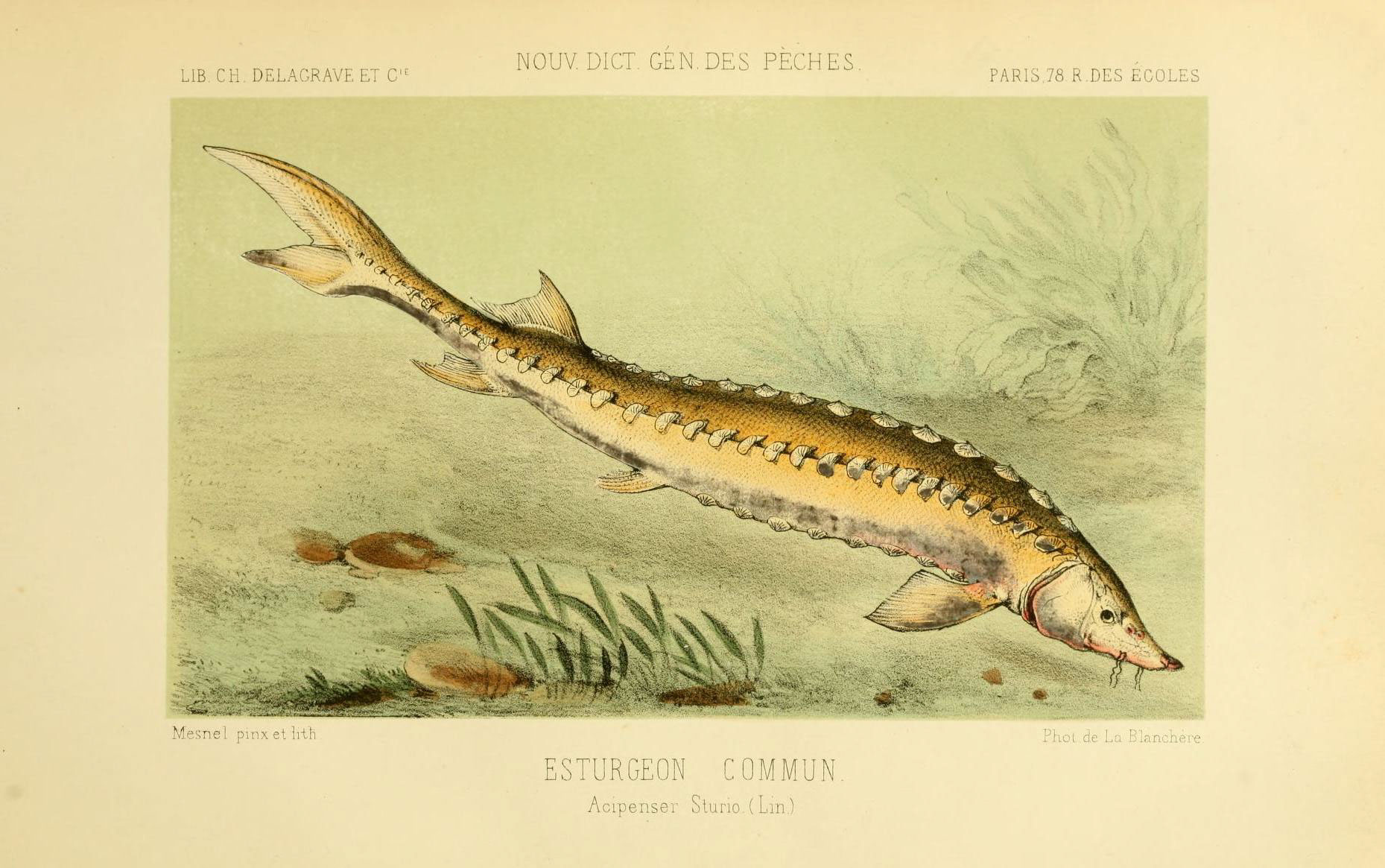
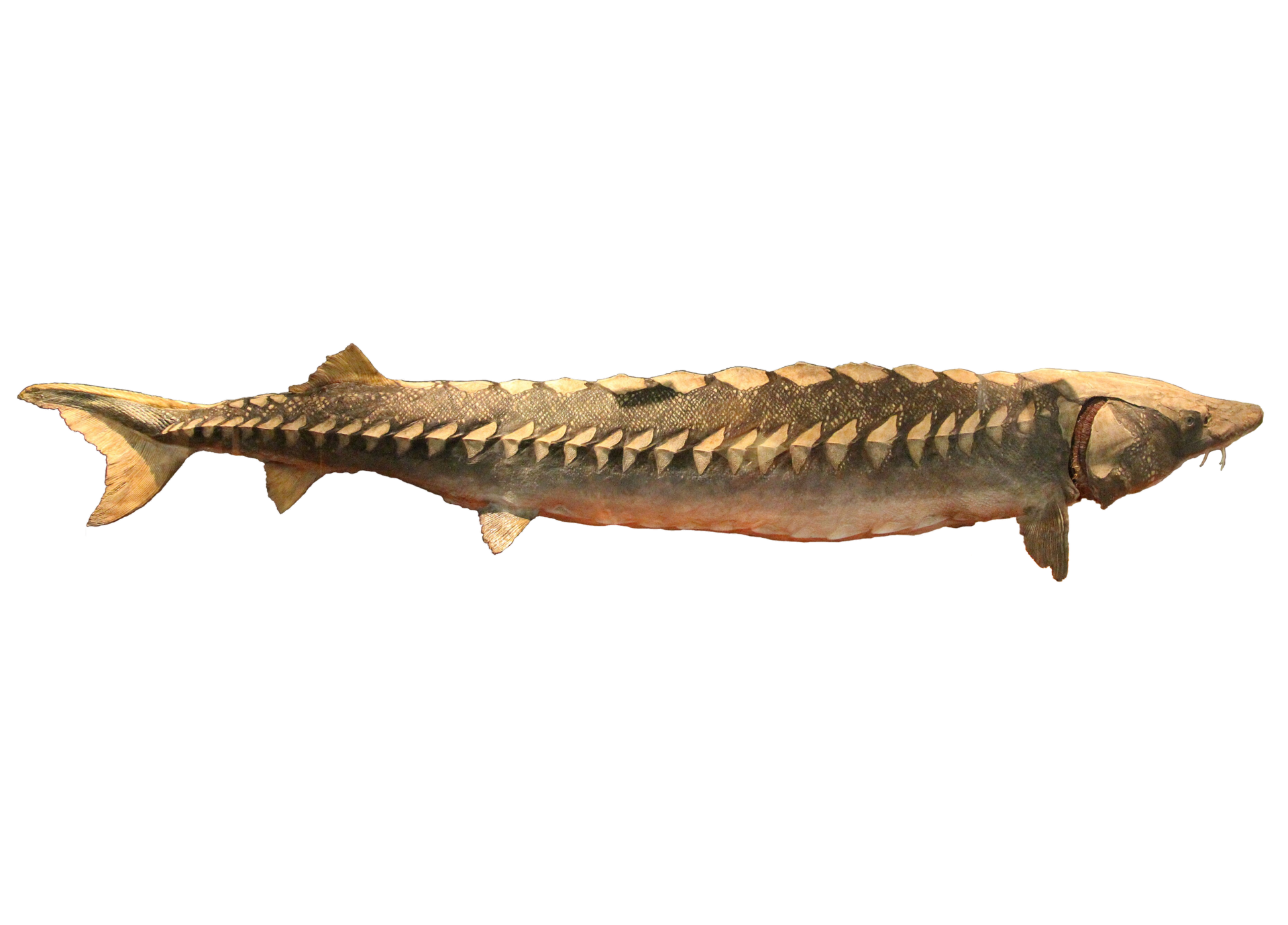
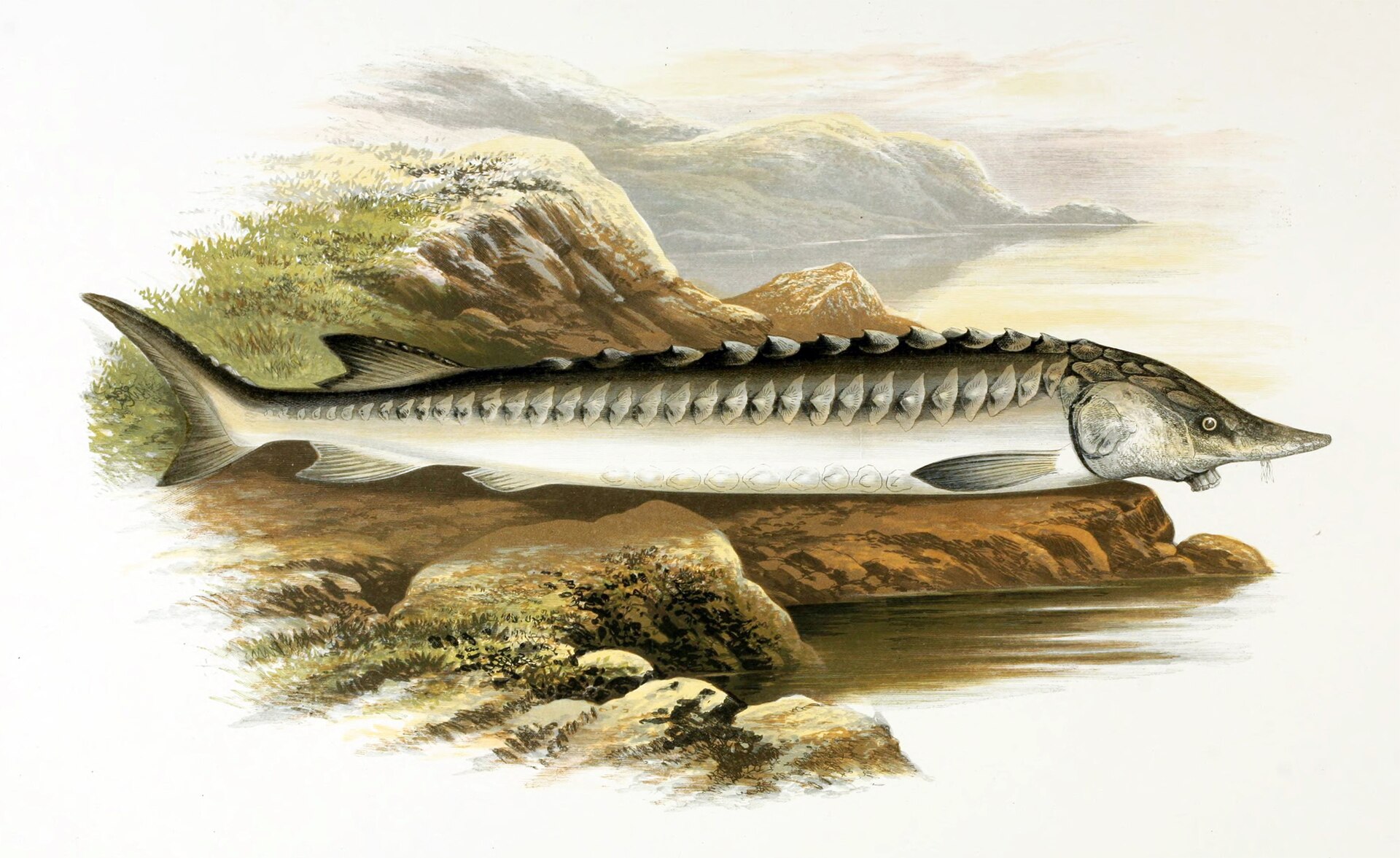
The European sturgeon has an inimitable appearance, inherited from a lineage almost unchanged since the Mesozoic era. Its elongated, spindle-shaped body is not covered in scales but in five longitudinal rows of large bony plates called scutes, which form a true suit of armour. Remarkably, its skeleton is essentially cartilaginous, like that of sharks, which sets it apart from almost all the fish in our fresh waters.
A unique snout and mouth
The head extends into a long, pointed snout, beneath which are four sensory barbels. These tactile and taste organs help it detect prey buried in the sediment. Its mouth, located on the underside, is protrusible: it extends like a tube to suck up food. Unlike pike or zander, the sturgeon has no teeth at all as an adult — it is a forager, not a hunter.
Size and lifespan
The sturgeon is a giant. Adults commonly measure between 1 and 2 metres, but the largest historical specimens exceeded 3 metres, or even more, weighing over 200 kg. Its growth is slow and its lifespan exceptional, which explains the species’ fragility in the face of exploitation. Here are the biometric benchmarks:
| Features | Reference point |
|---|---|
| Average size (adult) | 1 to 2 m |
| Maximum historical size | over 3 m |
| Maximum weight | 200 to 300 kg |
| Longevity | over 70 years |
| Maturity (males) | 10 to 12 years |
| Maturity (females) | 13 to 16 years |
Where does the European sturgeon live?
The sturgeon is an anadromous fish: it spends most of its life at sea, on coastal seabeds and in estuaries, but runs up large rivers to breed in fresh water. This migratory lifestyle, straddling ocean and river, makes it particularly sensitive to barriers to migration such as dams and to the degradation of estuaries.
Historically, its range covered almost all European coasts, from Norway to the Black Sea by way of the Mediterranean. That abundance is now just a memory: today, the only known wild population in the world survives in the Gironde-Garonne-Dordogne basin in France. Only a few hundred individuals are thought to remain there, making this estuary the species’ last natural sanctuary.
What does the sturgeon eat?
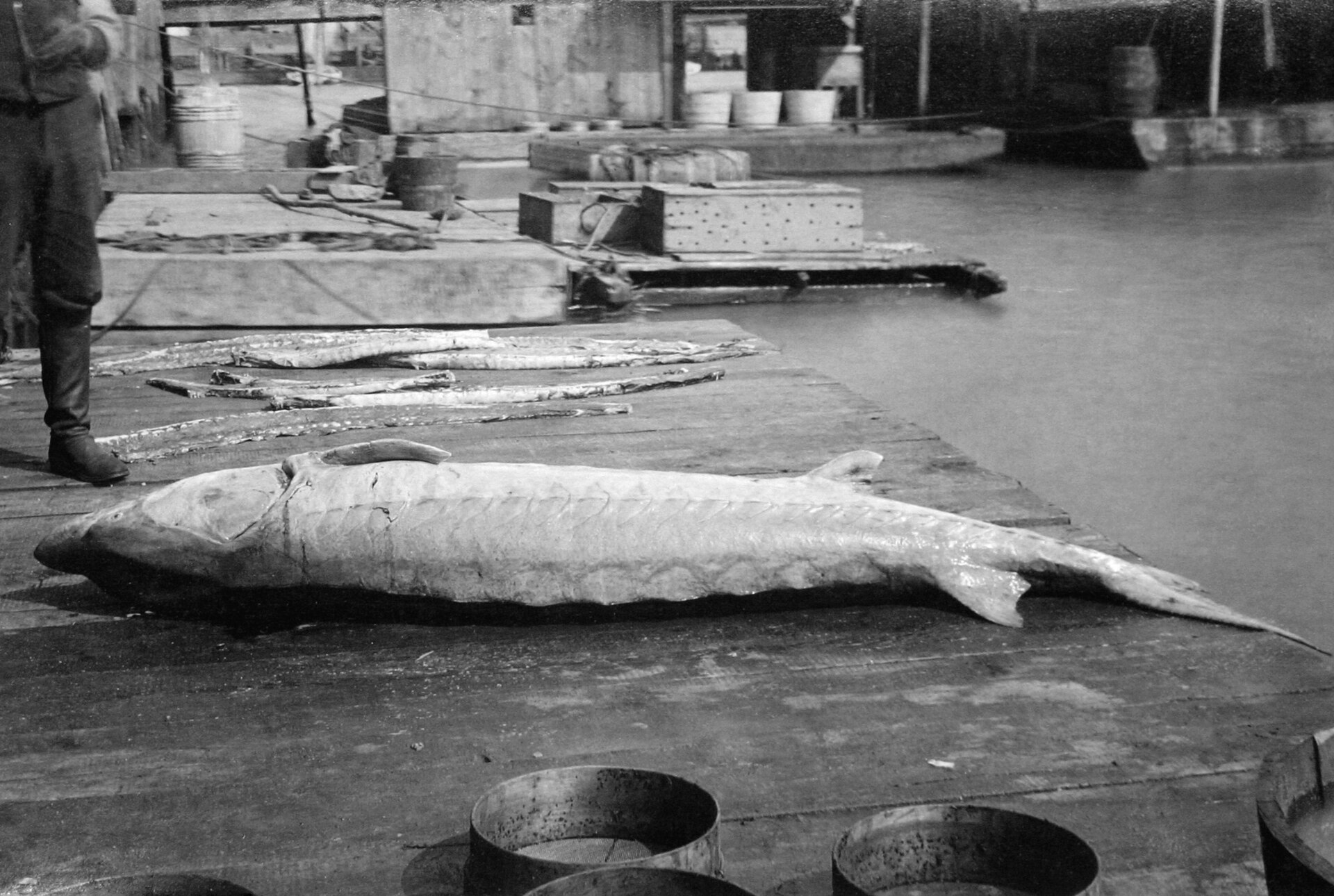
Unlike the predatory fish of our rivers, the sturgeon is a benthic fish, meaning it feeds on the bottom. It rummages through the sediment with its barbels, locates small organisms and then sucks them up with its protrusible mouth. Its diet varies according to the environment it frequents:
- In fresh water : insect larvae, worms and small bottom-dwelling invertebrates.
- In estuaries : marine worms and benthic crustaceans that abound in the mud.
- At sea : mainly worms, molluscs and small crustaceans gathered on soft seabeds.
This discreet diet, with no active predation, makes it a peaceful animal that acts as a “plough” of the seabed. Its search for food keeps it in constant contact with the substrate, which also explains its vulnerability to accidental capture in nets and bottom trawls.
Sturgeon life cycle and reproduction
Sturgeon reproduction is a slow and infrequent process, which is one of the main obstacles to the species’ recovery. Adults run up the river in spring and spawn in May-June, over gravel beds in fresh water. A crucial point: the female only breeds every three to four years, whereas the male can do so every year. With females reaching maturity at around 13-16 years, each generation takes more than a decade to renew itself.
| Parameter | Data |
|---|---|
| Spawning period | May to June |
| Upstream migration | in spring |
| Spawning substrate | gravel beds in fresh water |
| Frequency (female) | every 3 to 4 years |
| Last known natural reproduction | 1994 |
Young sturgeon spend their first years in the Gironde estuary, a true nursery, before heading out to sea. This long estuarine stay is a sensitive stage: the slightest deterioration in water quality or habitat compromises the recruitment of an entire year class.
Sturgeon protected status and regulations
The European sturgeon is one of the most protected fish on the continent. Listed as “critically endangered” on the IUCN Red List, it enjoys one of the strictest legal statuses there is. In France, the species has been fully protected by ministerial order since 1982 : catching, keeping, transporting and selling it are all prohibited.
A multi-level protection framework
Beyond national law, the EuropeanAcipenser sturio is listed in Appendix I of CITES (international trade prohibited), in the Bern Convention and in the annexes of the European Habitats Directive. In practical terms, this means that no fishing for wild sturgeon is permitted, anywhere. In the event of accidental capture, the law requires the animal to be released immediately, with the greatest care, and the catch to be reported to the monitoring bodies. These reports are also invaluable to the scientists tracking the species’ survivors.
Why the sturgeon is not fished
It is important to be clear: unlike our other species profiles, there is no “fishing technique” for the European sturgeon, because fishing for it is purely and simply prohibited. This fish was long coveted for its flesh and above all for its eggs, the source of caviar. It was precisely this overexploitation, combined with pollution and the destruction of its spawning grounds, that drove the species to the brink of extinction during the 20th century.
Wild sturgeon, farmed sturgeon: don’t confuse them
The caviar sold today never comes from the wild European sturgeon. It comes from the Siberian sturgeon (Acipenser baerii) and other species raised in fish farms, notably in Aquitaine. This farmed sturgeon, sometimes also found in certain private lakes, is a distinct species, legally farmed in closed systems. So the controlled production of farmed caviar should not be confused with the wild EuropeanAcipenser sturio , any taking of which remains strictly forbidden.
If you accidentally catch a sturgeon while fishing in an estuary or at sea, what to do is simple: don’t lift it out of the water, unhook it carefully, only photograph it briefly if it stays submerged, then release it and report the catch.
Sturgeon conservation and reintroduction
Since there are no lures or tackle to present for this species, let’s turn to what really matters: the efforts being made to save it. Since 2007, an ambitious restoration programme has been under way in France, led notably by INRAE and the MIGADO association. It relies on assisted reproduction from a captive stock, followed by the release of young sturgeon into the Garonne and the Dordogne.
The results are encouraging: more than one and a half million juveniles have been released into the wild, and the first individuals from the 2007-2014 releases are now reaching sexual maturity. A unique experimental station, located at Saint-Seurin-sur-l’Isle near Bordeaux, is at the heart of the scheme. Reintroduction operations are also being carried out abroad, for example in the Elbe in Germany.
To go behind the scenes of this rescue programme, here is a report on the experimental station dedicated to the reintroduction of the European sturgeon:
Sturgeon records and gigantism
Sturgeon are among the largest freshwater fish on the planet. For the European sturgeon, historical records mention specimens of more than 3 metres weighing over 200 kg, at a time when the species was still abundant in our rivers. These measurements should be treated with caution, as there are no longer any individuals of this size today, the current population being made up mainly of young fish from the releases. Other sturgeon species, such as the beluga of the Caspian Sea, reach even more staggering sizes. Another striking fact: this “living fossil” saw the dinosaurs come and go, its lineage having appeared more than 200 million years ago, making it one of the oldest vertebrates still present in our waters.
Ecological role and conservation of the sturgeon
By constantly rummaging through sediment, the sturgeon helps to stir and oxygenate the seabed, encouraging benthic life. As a migratory species linking sea, estuary and river, it is also an excellent indicator of ecological continuity and the overall health of a river basin. Its disappearance would signal the collapse of an entire link in the aquatic ecosystem.
Saving the European sturgeon is a long-term undertaking, matching the slowness of its life cycle. Restoring free passage in rivers, preserving estuary quality, continuing releases and scrupulously respecting the ban on capture: each of these levers counts. As observers of nature, our role is first and foremost to raise awareness of this living fossil and to report any sighting. That is the price of future generations still being able to glimpse, in the Gironde estuary, the peaceful shadow of this giant from the depths of time.
Sturgeon FAQ
Can you fish for the European sturgeon?
No. The European sturgeon (Acipenser sturio) has been a fully protected species in France since 1982. Fishing for it, keeping it and selling it are prohibited. In the event of accidental capture, the animal must be released immediately and the catch reported to the monitoring bodies.
How big can the sturgeon grow?
Adults commonly measure 1 to 2 metres. Historically, specimens of more than 3 metres and over 200 kg have been recorded. The species grows slowly and can live for more than 70 years.
Where does the European sturgeon still live in the wild?
The only known wild population in the world survives in the Gironde-Garonne-Dordogne basin in France. The species is represented there by a few hundred individuals, making this estuary its last natural sanctuary.
Does caviar come from the protected wild sturgeon?
No. Commercial caviar comes from farmed sturgeon, mainly the Siberian sturgeon (Acipenser baerii), raised in fish farms, notably in Aquitaine. It should not be confused with the wild European sturgeon (Acipenser sturio), any taking of which is strictly prohibited.
What does the sturgeon eat?
It is a benthic fish that feeds on the bottom. It rummages through the sediment with its barbels to suck up worms, insect larvae, molluscs and small crustaceans. Toothless as an adult, it is not a predator but a forager.
What should you do if you accidentally catch a sturgeon?
Keep the fish in the water, unhook it carefully without lifting it out, avoid any prolonged handling, then release it immediately. It is recommended to report the catch to the monitoring bodies, as these observations are invaluable for the conservation of the species.