
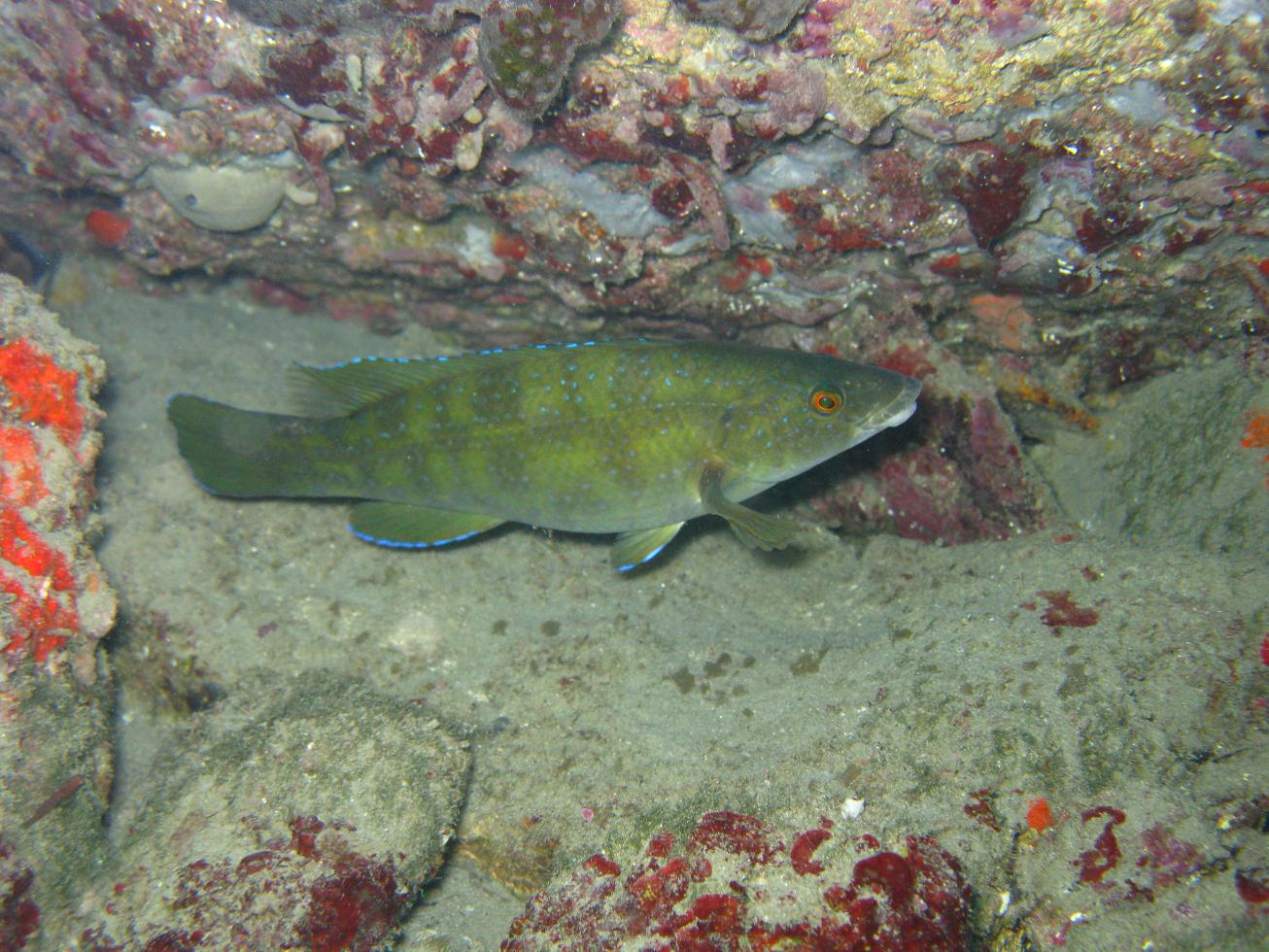
An olive-green livery that turns midnight blue in males, fleshy lips and the look of an inquisitive rock fish: the wrasse covers a whole tribe of colourful coastal fish that bring life to the rocky bottoms and seagrass beds along our shores. The reference species, the brown wrasse (Labrus merula), is a fine example of the wrasse family, which rockfishing anglers quickly learn to recognise on the end of their line: its curiosity and appetite for small bottom-dwelling prey make it an ideal sparring partner on Mediterranean rocky outcrops.
In this species guide, we review everything you need to know about this fish: its anatomy, habitat, diet, its breeding cycle marked by a curious sex change, the regulations that apply to it and, of course, our favourite techniques and lures for targeting it from the shore. Everything you need to understand the species better before heading out to scratch the bottom in search of it.
Our article in brief
- The wrasse covers many species of the wrasse family; the type species, the brown wrasse (Labrus merula), is a colourful rock fish of the Mediterranean and Atlantic coasts.
- It commonly measures 30 to 40 cm, with the largest specimens approaching 50 cm, and has an olive-green body that turns blue in breeding males.
- A crusher of crustaceans and shellfish, it is remarkably catchable when rockfishing with small soft lures and natural bait.
- There is no specific minimum size for it in France: refer to the general sea fishing regulations and use common sense.
- Slow growth and hermaphroditism make wrasse a fragile fish, which is why we encourage catch and release and responsible fishing.
Wrasse anatomy and identification
The brown wrasse has an oval, stocky body, slightly compressed laterally, covered in large scales and topped by a long dorsal fin running along almost the entire back. Its colouring, usually olive green to dark brown, turns into a splendid midnight-blue livery dotted with light blue spots in breeding males, while the dorsal, anal and caudal fins are edged with a thin bluish border. It is this shifting palette, typical of the wrasse family, that makes identification both tricky and fascinating.
Lips and teeth built for crushing
The most distinctive feature of wrasse remains their mouth: thick, fleshy lips backed by a powerful jaw armed with strong pharyngeal teeth. These tools are not designed for slicing like a predator’s, but for tearing off and crushing the shellfish, sea urchins and crustaceans the species feeds on. It is a forager that inspects every crevice rather than an open-water predator.
A wide diversity of species
The word “wrasse” actually covers dozens of species on the French coast alone. Alongside the brown wrasse, you will find the green wrasse (Labrus viridis), the ballan wrasse (Labrus bergylta) on the Atlantic coast, as well as the host of smaller wrasses of the genus Symphodus, including the well-known peacock wrasse. Here are the biometric benchmarks for the reference species, the brown wrasse:
| Features | Reference point |
|---|---|
| Medium size | 30 to 40 cm |
| Maximum size | about 50 cm |
| Typical weight | 0.3 to 1 kg |
| Sexual maturity | at around 2 years (15 to 20 cm) |
| Colouring | olive green, midnight blue in males |
| Family | wrasses (Labridae) |
Where do wrasse live?
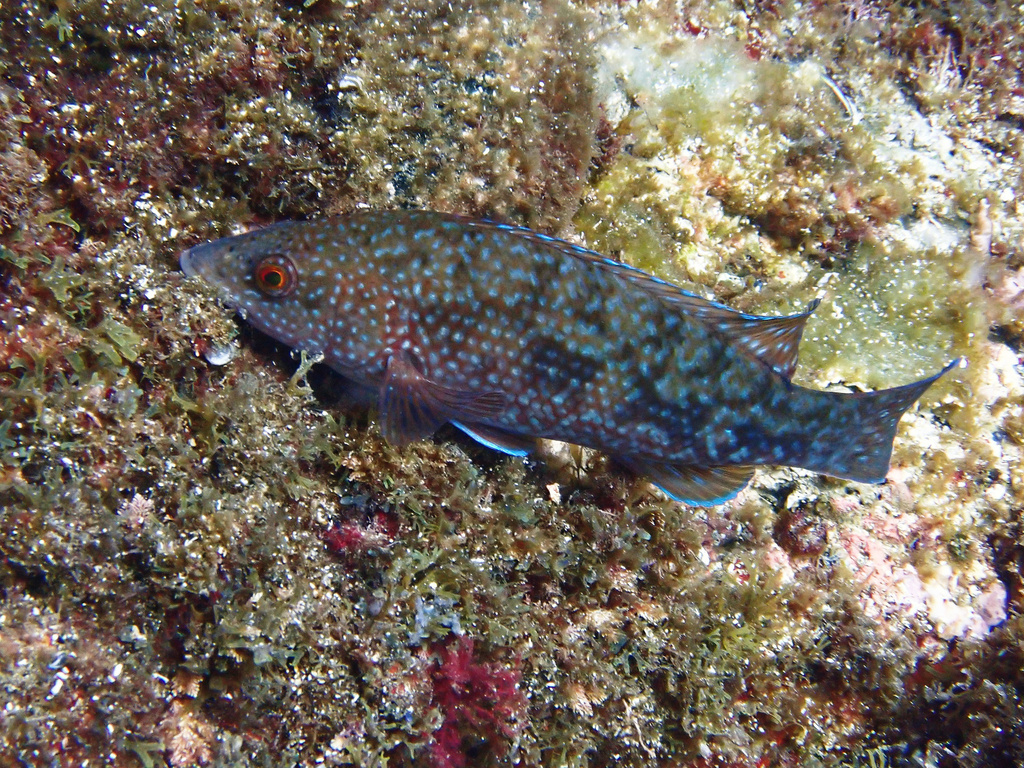
Wrasse are rock fish par excellence. They favour rugged bottoms, boulder fields, rock crevices and above all Posidonia seagrass beds, which they rarely stray far from. Young fish readily stay in shallow water, in the first few metres, while the largest specimens go down to 20 or 25 metres, always above the thermocline. It is a sedentary, territorial fish, loyal to its patch, found spot after spot in the same crevices.
Its range covers the whole Mediterranean and extends into the nearby Atlantic, from Portugal to Morocco. In France, the brown wrasse is common along the entire Mediterranean coast, from the Côte d’Azur to the Gulf of Lion and Corsica, wherever rock and Posidonia alternate. This presence close to the shore, within casting range, explains why it is one of the most regular catches for rockfishing anglers working breakwaters and coastal drop-offs.
What do wrasse eat?
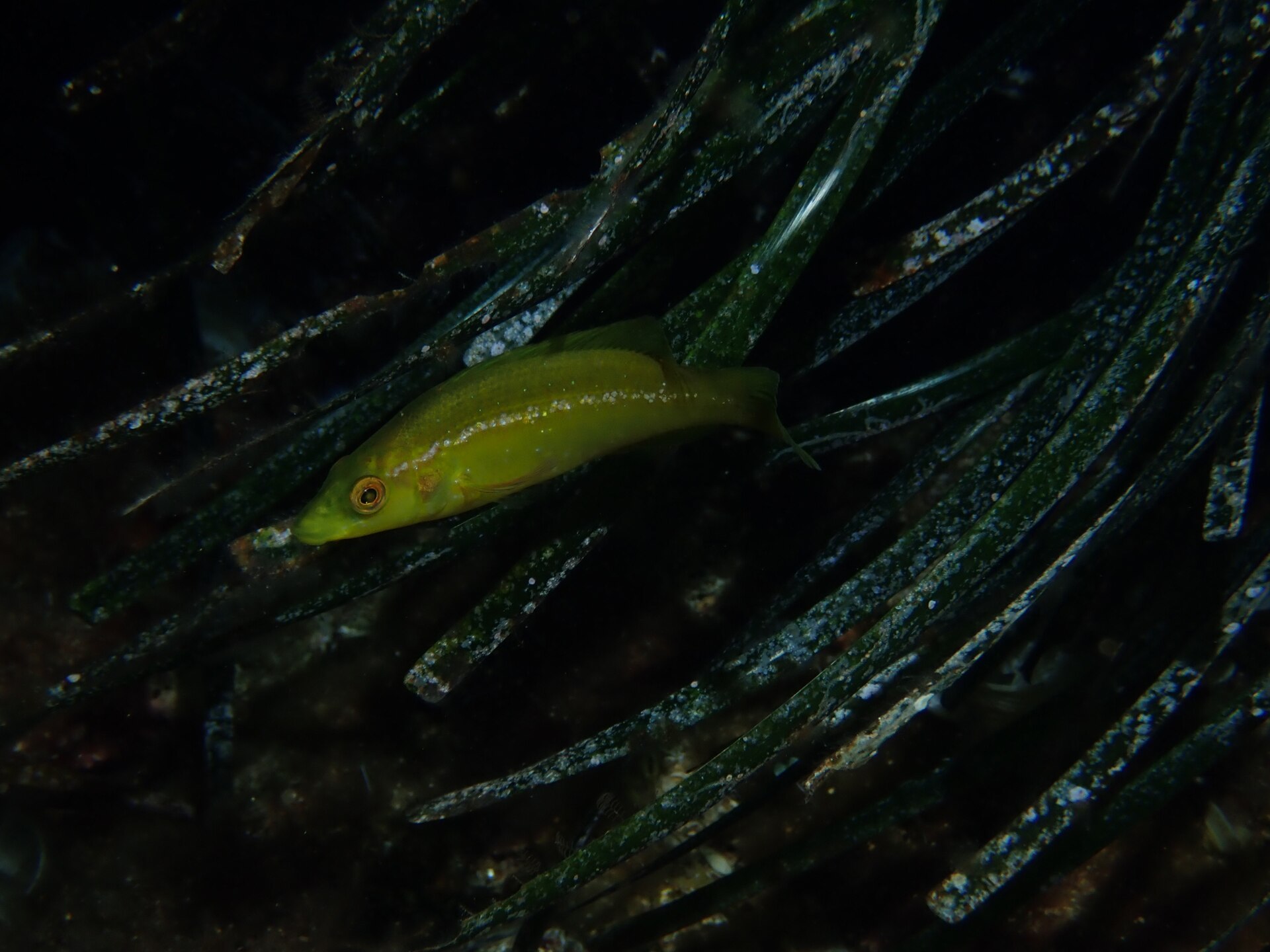
Wrasse are bottom-feeding carnivores specialising in invertebrates with shells or carapaces. Thanks to their powerful jaws and crushing pharyngeal teeth, they exploit a larder that most fish ignore:
- Molluscs : small shellfish, mussels and limpets, which it prises off and then crushes.
- Crustaceans : crabs, shrimps and other small crustaceans rooted out of the rocks.
- Echinoderms and worms : sea urchins, brittle stars and polychaete worms readily round out the menu.
Its technique is nothing like a spectacular hunt: the wrasse methodically inspects the substrate, turns over stones and grazes encrusted surfaces like a patient forager. This daytime activity, tied to the light, explains why it is mainly caught during the day with a slow retrieve along the bottom, when it comes to inspect anything that moves in its territory — including our soft lures.
Wrasse life cycle and breeding
The brown wrasse breeds in spring, from February to May in the western Mediterranean. But the great peculiarity of the wrasse family lies elsewhere: most are protogynous hermaphrodites, meaning they are born and live first as females before changing into males as they grow. In the brown wrasse, this sex change takes place at around four years of age. The largest fish in a population are therefore almost always males.
In many wrasses, notably the Symphodus species, the male builds and defends a nest lined with seaweed in which the females lay their eggs, which he guards until they hatch. This parental care, rare among sea fish, makes spawners particularly vulnerable to fishing pressure during the spawning season.
| Parameter | Data |
|---|---|
| Spawning period | February to May |
| Type of hermaphroditism | protogynous (female then male) |
| Sex change | at around 4 years |
| Sexual maturity | at around 2 years (15 to 20 cm) |
| Spawning behaviour | seaweed nest guarded by the male (many wrasses) |
Regulations and legal size for wrasse
Unlike sought-after large species such as bass or gilthead bream, wrasse are not subject to any specific minimum catch size under French recreational sea fishing regulations. Nor is there a dedicated quota for the species. That does not mean you should fish indiscriminately: recreational sea fishing remains governed by general rules — marking of catches kept for the table, respect for protected areas, a ban on selling your catch — which you should know before heading out.
A slow-growing species to be treated with care
Wrasse are slow-growing, sedentary and territorial fish: a single rocky outcrop can quickly be emptied of its best fish if everyone keeps their catch. We therefore urge the greatest caution and recommend catch and release, especially for large breeding males. These recommendations and the absence of a national legal size may be supplemented by local bylaws (maritime prefecture, reserves, no-take zones): always check the regulations in force in your area before fishing.
How to catch wrasse when rockfishing?
Fishing for wrasse is a treat of meticulous searching, the very heart of rockfishing. The principle: present a small morsel close to the bottom, tight to the rocks and seagrass, and work it slowly to trigger the curiosity of this forager. Two main approaches complement each other, lures and natural bait:
| Approach | Typical rig | Ideal situation |
|---|---|---|
| Soft lure (rockfishing) | creature bait, worm or artificial shrimp on a light jighead (1 to 7 g) | actively searching breakwaters |
| Crab imitation | small soft crab scraped along the bottom | rocky areas rich in crustaceans |
| Natural bait | piece of crab, worm, mussel or shrimp on a handline | static fishing, large wary fish |
As for tackle, a light rockfishing rod (L rating, 0.5 to 7 g or 3 to 10 g), a small 2000 reel loaded with fine braid and a fluorocarbon leader of 6 to 10/100 make the ideal set-up. The winning retrieve is almost always slow: let the jighead touch the bottom, tap it, drag it gently through areas where the rock gives way to Posidonia. It is these edges, breaks and holes between boulders — the same ones we search for bass in the Mediterranean — that hold the wrasse.
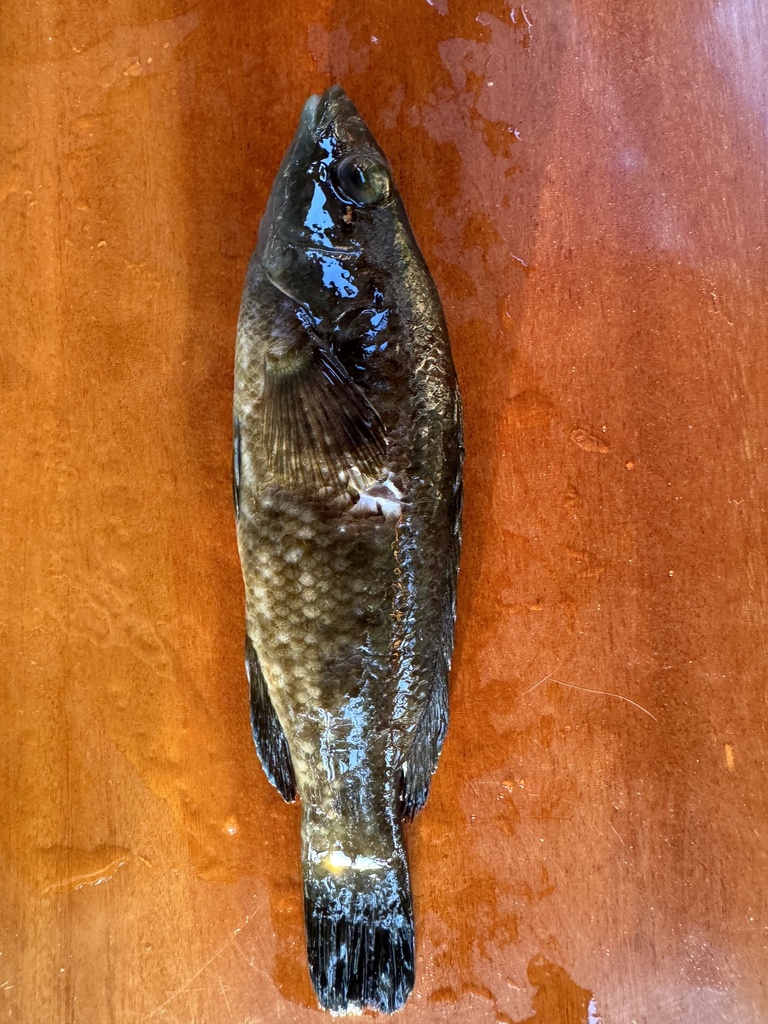
To see these shore-based lure fishing techniques in the Mediterranean in action, here is a useful video:
Our selection of wrasse lures
For wrasse, think small: rockfishing soft lures on light jigheads do most of the work. Scented artificial worms (such as Marukyu Power Isome), micro creature baits and small, discreet shads, worked to scrape the bottom, are excellent imitations of the species’ bottom-dwelling prey. A lightly weighted crab or shrimp imitation completes the box perfectly. To go further with your rigs, see our sea fishing guides:
- Our must-haves at sea: 10 soft lures for bass
- The all-round coastal box: our 10 essential lures for bass
- Mediterranean special: our lures for bass in the Mediterranean
- Searching the Posidonia: which lures to fish in seagrass beds
Records and anecdotes about wrasse
The brown wrasse is not a fish of spectacular records: its maximum size of around 50 cm makes it more of a finesse fishing target than a powerful opponent. In France there is no single official body ratifying recreational sea fishing records, and figures for this discreet species remain scarce — all the more reason to be wary of the “records” claimed on social media. The real curiosity of wrasse lies in their biology: this fish changes sex during its life and displays colours so variable with age, sex and season that the same individual can be unrecognisable from one period to the next. A fine subject for underwater photographers as well as anglers.
Ecological role and conservation of wrasse
As a crusher of invertebrates, the wrasse plays a discreet but useful role in the balance of coastal seabeds: by regulating populations of small crustaceans, molluscs and sea urchins, it contributes to the health of Posidonia seagrass beds, the true nurseries of the Mediterranean. Its presence, like that of all wrasses, is a sign of a rich, well-preserved rocky bottom.
A sedentary, slow-growing species with fragile reproduction, the wrasse is particularly sensitive to local overfishing and the degradation of seagrass beds. As responsible anglers, we have a role to play: practise catch and release on large spawners, keep fish only sparingly, crush barbs to make unhooking easier and respect protected areas. That is the price of rocky outcrops continuing to offer the magic of a blue wrasse hitting a soft lure close to the bottom.
Wrasse FAQ
How big can wrasse grow?
The brown wrasse commonly measures 30 to 40 cm, with the largest specimens approaching 50 cm and a weight close to a kilo. Sizes vary a great deal between wrasse species, however, with some Symphodus species remaining much smaller.
Which lures should you use for wrasse?
Small rockfishing soft lures are the most effective: scented artificial worms, micro creature baits, small shads and crab or shrimp imitations, rigged on light jigheads of 1 to 7 g and worked slowly along the bottom.
Do wrasse really change sex?
Yes. Like most wrasses, the brown wrasse is a protogynous hermaphrodite: it is born and lives first as a female, then changes into a male as it grows, usually at around four years of age. The largest fish are therefore almost always males.
Is there a legal size for catching wrasse?
There is no minimum catch size specific to wrasse under French recreational sea fishing regulations. The general rules apply (marking, protected areas, ban on selling) and, as a precaution, catch and release is strongly encouraged for this slow-growing species. Always check for any local bylaws.
Where can you find wrasse in the Mediterranean?
Wrasse frequent rocky bottoms, boulder fields and above all Posidonia seagrass beds, from the first few metres down to 20-25 m. When rockfishing, target breakwaters, drop-offs and the edges between rock and seagrass, within casting range from the shore.
Can you eat wrasse?
Wrasse is edible, its flesh being appreciated mainly in fish soup or bouillabaisse rather than as fillets. Given its slow growth and sensitivity to fishing pressure, however, we recommend releasing it or keeping it only in moderation.


