
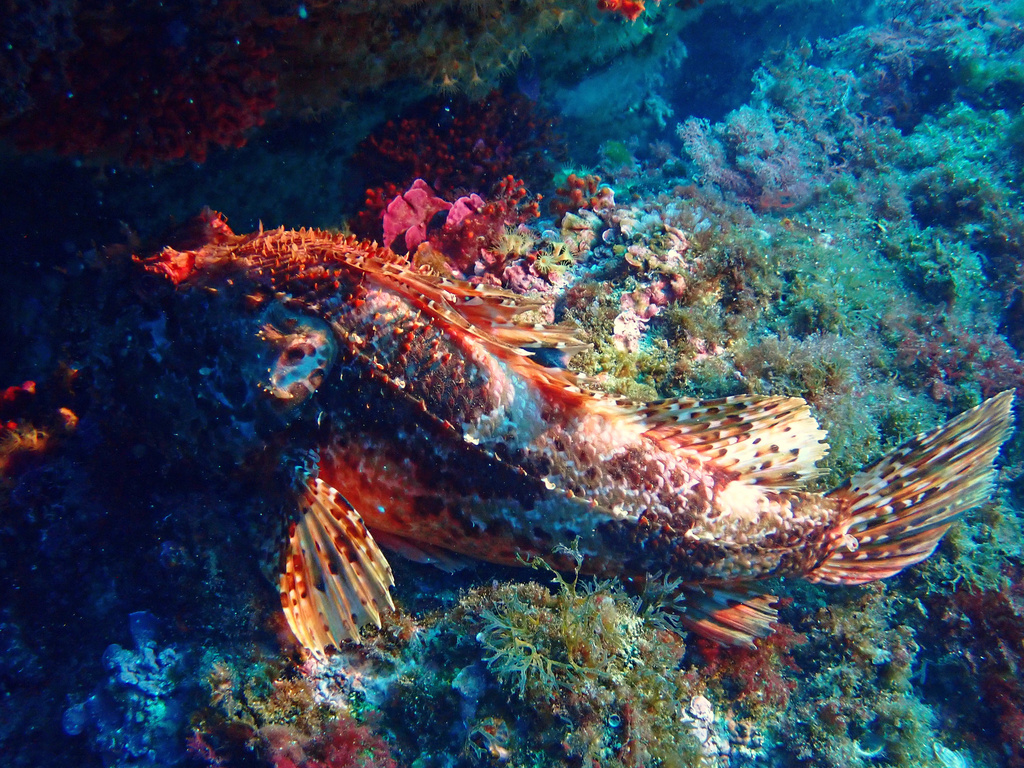
Lying motionless on a rocky bottom, so perfectly camouflaged that it can be mistaken for a weed-covered stone, the red scorpionfish is one of the most emblematic fish of the Mediterranean. This scorpionfish (Scorpaena scrofa), known in France as “chapon”, intrigues as much with its prehistoric look as with its formidable venomous spines. Queen of bouillabaisse, it is also a fine catch for anyone scraping rocky bottoms with bait or soft lures.
In this species guide, we review everything you need to know about this fish: its anatomy, habitat, diet, breeding cycle, the regulations that apply to it and, of course, our favourite techniques and tackle for targeting it. Everything you need to understand the species better, and above all to handle it safely, before heading out in search of it.
Our article in brief
- The scorpionfish , here the red scorpionfish (Scorpaena scrofa), also called chapon, is a bottom-dwelling fish of the rocks of the Mediterranean and the eastern Atlantic, an absolute master of camouflage.
- It commonly measures 30 to 40 cm, with large specimens exceeding 50 cm and weighing 3 to 4 kg.
- Warning: it carries dorsal and gill-cover spines that are venomous and its sting is very painful. Careful handling is a must, and hot water if you are stung.
- An ambush predator, it can be caught with static bait as well as rockfishing with soft lures over snaggy ground.
- Queen of bouillabaisse, it differs from its smaller cousin, the black scorpionfish (Scorpaena porcus).
Scorpionfish anatomy and identification
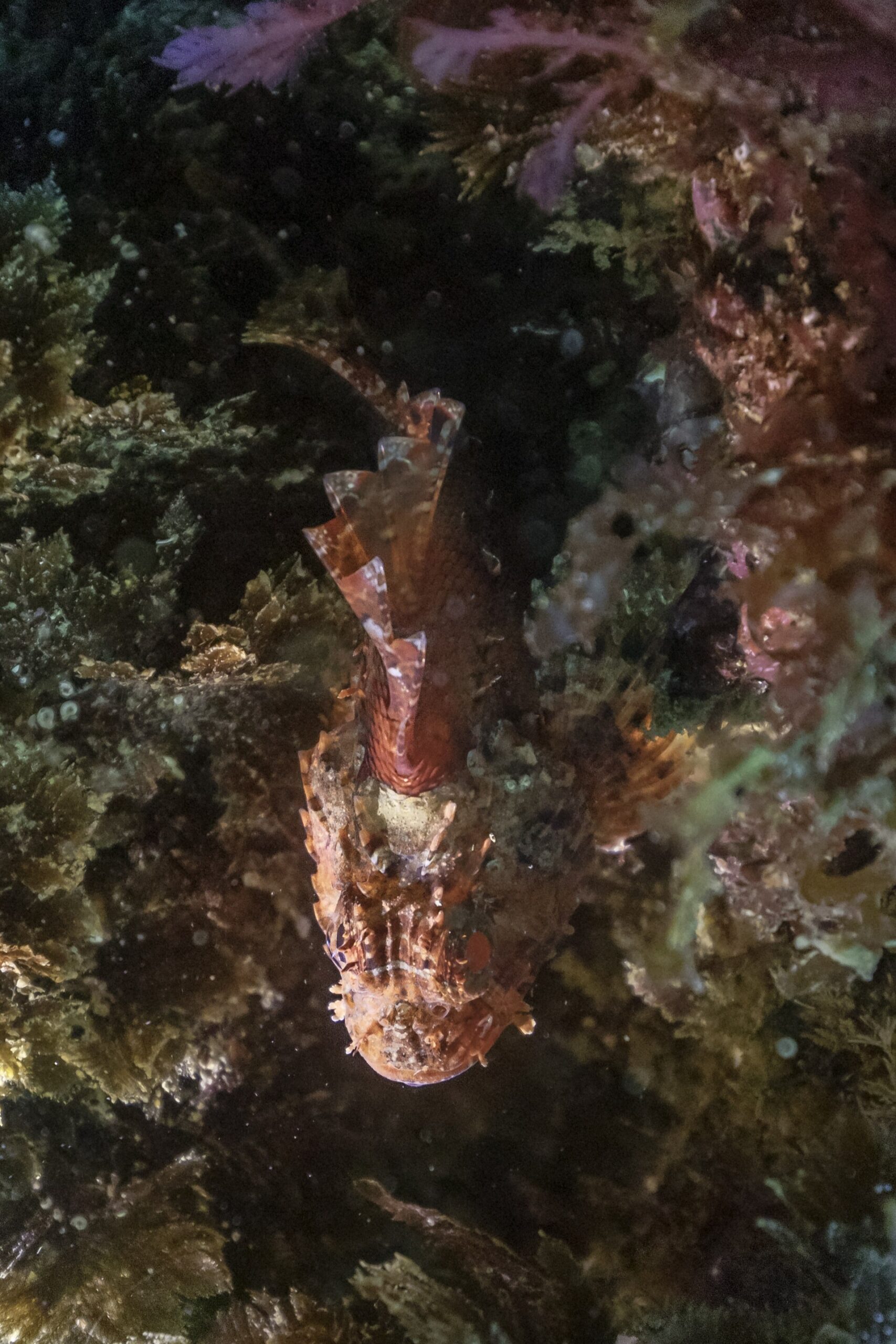
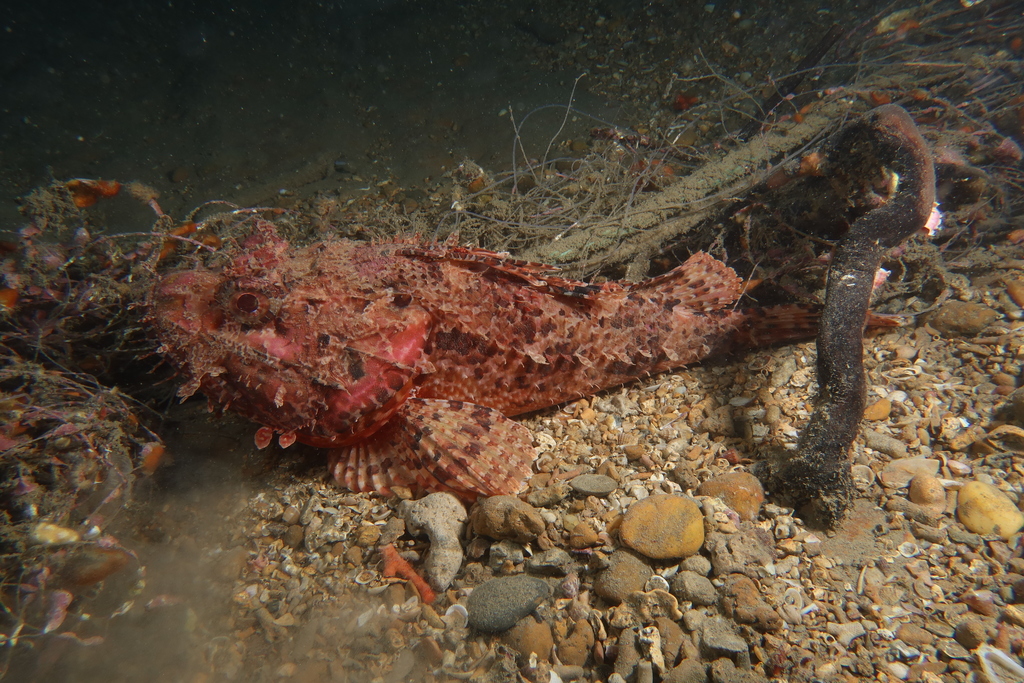
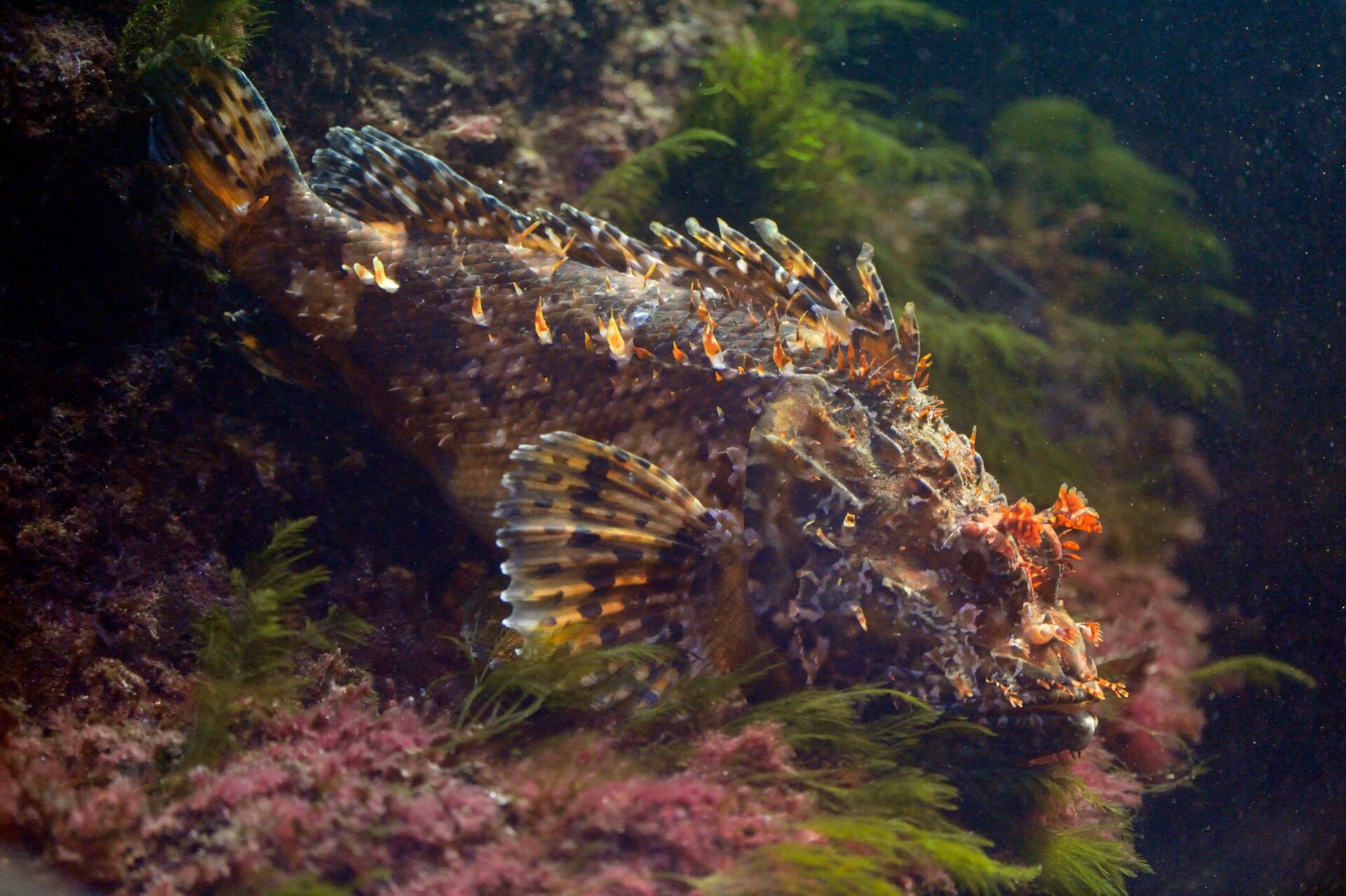
The red scorpionfish has a stocky, heavy body dominated by an enormous head. Its colouring ranges from dark red to orangey pink, mottled with dark blotches, a livery that blends perfectly into coralligenous reefs and rocky bottoms. This camouflage is the main weapon of a predator that hunts by ambush, completely invisible until the very last moment.
A head adorned with flaps of skin
The most distinctive feature of the chapon remains its head, bristling with numerous skin appendages — small flaps of skin that break up its outline and complete its disguise against the background. Its large, high-set eyes are topped with short tentacles, and its wide mouth allows it to inhale sizeable prey.
Formidable venomous spines
The front part of the dorsal fin carries a dozen spiny rays linked to venom glands; the gill-cover, pelvic and anal spines are also venomous. This heat-sensitive venom causes an extremely painful sting and local swelling. Any handling therefore requires strict precautions: we come back to this in the fishing section.
Size and colouring
An adult red scorpionfish commonly measures 30 to 40 cm and weighs 0.5 to 1.5 kg. Good specimens exceed 50 cm and can approach 3 to 4 kg, making it the largest of the European scorpionfish. Here are the species’ biometric benchmarks:
| Features | Reference point |
|---|---|
| Medium size | 30 to 40 cm |
| Maximum size | about 50 cm, sometimes more |
| Average weight | 0.5 to 1.5 kg |
| Maximum weight | 3 to 4 kg |
| Dorsal spiny rays | 12, venomous |
| Longevity | around ten years |
Where does the red scorpionfish live?
The red scorpionfish is a strictly benthic fish, tied to the bottom. It favours hard substrates: weed-covered rocks, coralligenous drop-offs, Posidonia seagrass beds, but also sandy and muddy areas scattered with boulders. Loyal to its territory, it often stays motionless for hours on end, relying on its camouflage rather than flight.
It is found from the surface down to 200 m, but mostly stays between 20 and 100 m, with the largest fish frequenting the deepest ground. Its range is wide: the whole Mediterranean, the Red Sea and the eastern Atlantic from the British Isles to Senegal, including the Azores and the Canaries.
What do scorpionfish eat?
The red scorpionfish is an opportunistic ambush predator that never gives chase. Its diet is based on any small prey that ventures within reach of its mouth:
- Crustaceans : crabs, shrimps and other small bottom-dwelling crustaceans, which make up most of the menu.
- Fish : gobies, blennies and other small rock fish.
- Cephalopods : small octopus and juvenile cuttlefish on occasion.
Its hunting technique is all about stillness: blending into the background, it waits for prey to come within reach, then suddenly opens its huge mouth to suck it in with lightning speed. This energy-saving ambush strategy explains why it is mainly active at dusk and at night.
Scorpionfish life cycle and breeding
The red scorpionfish breeds in the warmer months, when the water heats up. Spawning runs from late spring into summer, peaking in May-June. Remarkably, the eggs are released in a transparent, gelatinous mass that drifts in midwater: the larvae complete their development there before reaching the bottom, where the juveniles adopt the benthic lifestyle of the adults.
| Parameter | Data |
|---|---|
| Spawning period | April to August |
| Spawning peak | May to June |
| Egg type | floating gelatinous mass |
| Larval development | pelagic |
| Adult lifestyle | benthic, sedentary |
Regulations and minimum size for scorpionfish
Scorpionfish fishing falls under maritime regulations, which are separate from freshwater rules. In the French Mediterranean, the minimum catch size tables published by the Direction interrégionale de la mer (DIRM) set a minimum size of around 35 cm for the red scorpionfish (chapon), compared with around 15 cm for the black scorpionfish. These values may vary between areas: always check the regulations in force with the DIRM or the maritime prefecture before keeping a fish.
Beyond the minimum size, common sense applies: the scorpionfish is a slow-growing, sedentary fish, sensitive to local overfishing. Taking only what you will eat remains the best way to keep finding fish on your spots.
Red scorpionfish or black scorpionfish?
Two species regularly turn up on the end of the line. The red scorpionfish (Scorpaena scrofa), the chapon, is the larger, rather reddish, and frequents deeper ground. The black scorpionfish (Scorpaena porcus) is smaller, dark to brownish-green in colour, and readily stays in the first few metres, close to the shore. Both carry venomous spines and must be handled with the same care.
How to catch scorpionfish?
Scorpionfish are traditionally caught withnatural bait presented on the bottom — from the shore or from a boat — but they are also a prime target for rockfishing with soft lures. A sedentary ambush fish, it requires you to search precisely the breaks, boulders and sand-rock areas where it lies in wait. Here is how we organise our approach:
| Approach | Rig and lures | Ideal conditions |
|---|---|---|
| Shore rockfishing | jighead + soft lure (Power Isome, small shad), sink-and-draw retrieve | breakwaters, harbour walls, shallow areas |
| Jigging from a boat | heavy jighead, madaï / kabura, bottom shad such as the Megabass Dark Sleeper | rocky bottoms from 20 to 100 m |
| Natural bait | leader on the bottom, piece of crab, shrimp, sardine | static fishing, from the shore or a boat |
When rockfishing, the key is to scrape the bottom: let the lure touch down, lift it with short pulls, then let it fall back while keeping control of the line — the bite very often comes on the drop. Bright colours, red and orange, seem to be particularly attractive to the species. As for tackle, a light to medium rod and a fine braid and a fluorocarbon leader resistant to rock abrasion will do the job perfectly.
Safety — handling: never grab a scorpionfish with your bare hands. Its venomous dorsal and gill-cover spines cause a very painful sting: use pliers to remove the hook and a thick glove to hold it. If you are stung, as the venom is heat-sensitive, immerse the area in water as hot as you can bear (around 45 °C) for 30 to 60 minutes, and see a doctor in the event of a strong reaction or a history of allergies or heart problems.
To see these techniques in action, here is a video dedicated to rockfishing for scorpionfish with lures in the Mediterranean:
Our selection of lures and tackle
As scorpionfish share their rocky spots with sea bass, our rockfishing tackle naturally overlaps with that used for these Mediterranean predators. To go further with your choice of soft lures and rigs, see our dedicated guides:
- Our sea essentials: 10 essential lures for bass fishing
- Soft lures, perfect for scraping the bottom: best soft lures for bass
- Mediterranean special: best lures for bass in the Mediterranean
- Get properly equipped: which rod to choose for lure fishing
- Soft lure rigging: choosing the right Texas rig hook size
Records and anecdotes about scorpionfish
When it comes to records, the IGFA (International Game Fish Association) is the reference for ratified catches. The all-tackle record for the red scorpionfish long stood at a fish of 2.96 kg caught in Gibraltar in 1996; a more recent French catch of around 3.78 kg (Mathieu Courtin, 2022) is also cited. These figures, to be taken with caution, give the measure of the species: a good chapon rarely exceeds 3 to 4 kg. Its French name “chapon” is said to come from its firm flesh, essential to a genuine bouillabaisse.
Ecological role and conservation of scorpionfish
As a bottom predator, the scorpionfish helps balance rocky reef communities by regulating populations of small crustaceans and fish. Its presence is an indicator of healthy coralligenous habitats and Posidonia seagrass beds, fragile and essential environments in the Mediterranean.
A sedentary, slow-growing fish, the scorpionfish is vulnerable to excessive fishing pressure on its spots and to the degradation of coastal seabeds. As responsible anglers, we have a role to play: respect minimum sizes, keep fish in moderation, release small fish carefully and help protect seagrass beds. That is the price of rocky bottoms continuing to shelter this fascinating master of camouflage.
Scorpionfish FAQ
Is the scorpionfish dangerous?
The scorpionfish carries venomous dorsal, gill-cover, pelvic and anal spines. Its sting is very painful but rarely serious. Handle the fish with a glove and pliers; if you are stung, immerse the area in hot water (around 45 °C), as the venom is destroyed by heat.
How big can the red scorpionfish grow?
The red scorpionfish, or chapon, commonly measures 30 to 40 cm and weighs 0.5 to 1.5 kg. Large specimens exceed 50 cm and can reach 3 to 4 kg, making it the largest scorpionfish in European waters.
How to catch scorpionfish when rockfishing?
Use a jighead rigged with a soft lure (such as Power Isome or a small shad) and scrape the rocky bottom with short pulls, letting the lure fall back between each lift. The bite often comes on the drop; bright colours, red and orange, are the most effective.
What is the difference between the red scorpionfish and the black scorpionfish?
The red scorpionfish (Scorpaena scrofa), the chapon, is the larger, rather reddish, and lives on deeper ground. The black scorpionfish (Scorpaena porcus) is smaller, dark in colour, and stays close to the shore. Both have venomous spines.
What is the minimum catch size for scorpionfish?
In the French Mediterranean, the tables of the Direction interrégionale de la mer give a minimum size of around 35 cm for the red scorpionfish (chapon) and around 15 cm for the black scorpionfish. As these values may vary between areas, always check the maritime regulations in force.
When do scorpionfish breed?
Spawning runs from late spring into summer, from April to August, peaking in May-June. The eggs are released in a floating gelatinous mass and the larvae develop in open water before the juveniles reach the bottom.


