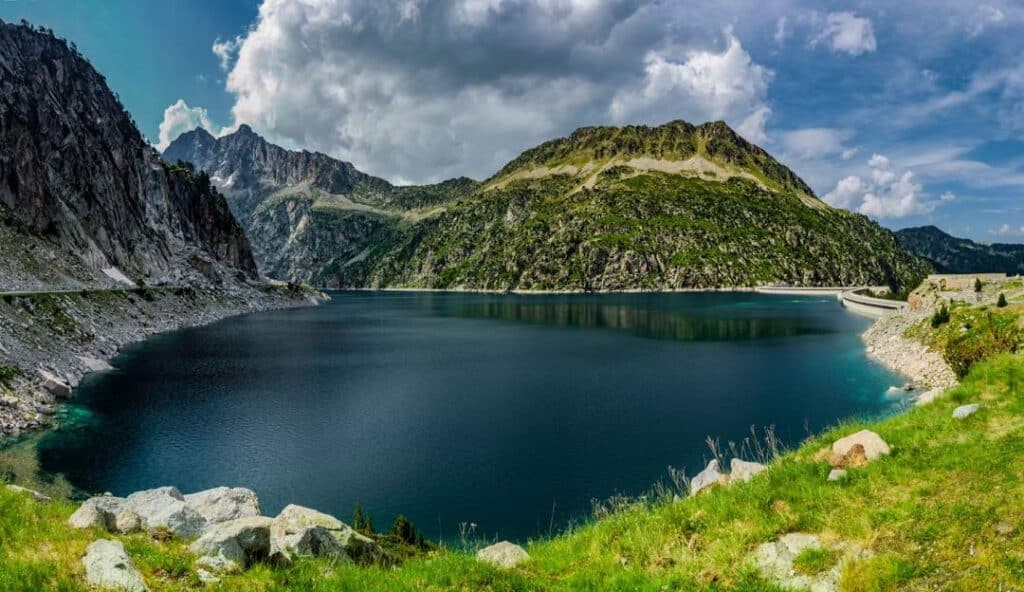
Perched more than 2,160 metres above sea level in the heart of the Néouvielle massif, in the Hautes-Pyrénées, Lake Cap-de-Long is one of the most spectacular waters we have ever had the good fortune to fish. This huge high-mountain reservoir, overlooked by the 3,091-metre Pic de Néouvielle, offers a grand, rocky setting and deep blue water that holds some of the hardest-fighting wild salmonids in France. For us lure anglers, it is a demanding playground, but an incredibly rewarding one.
In this article, we take you to discover this Pyrenean gem from the angle we love most: lure fishing. The history of the dam, the species present (with a focus on the legendary lake trout), suitable techniques, access, weather, spots to look for, hikes and accommodation: here is our complete guide to planning your session on Lake Cap de Long.
History and features of Lake Cap-de-Long
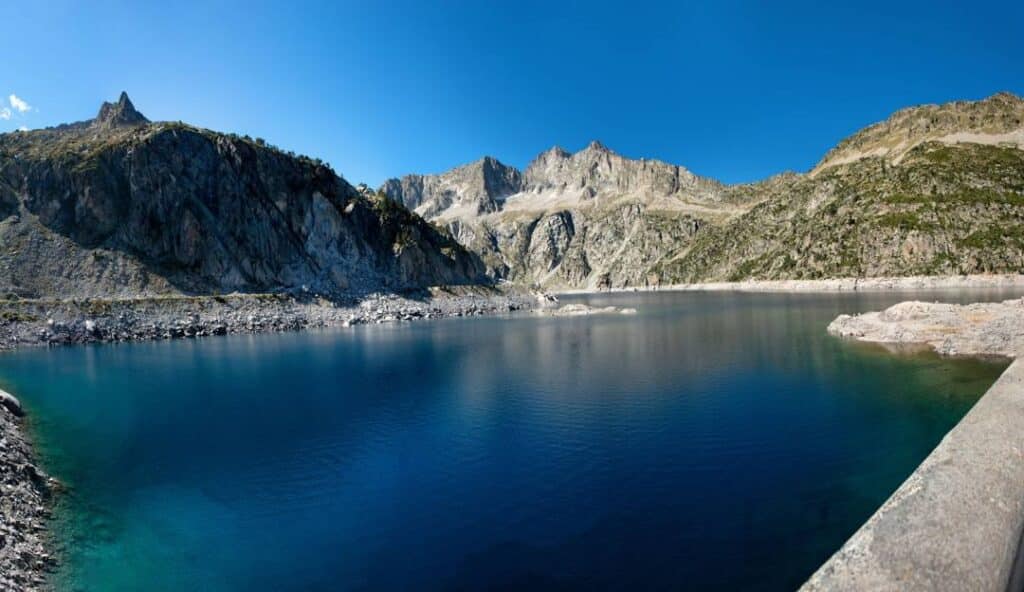
Lake Cap-de-Long is a reservoir built by EDF and completed in 1953 as part of the vast Pragnères hydroelectric scheme. A natural high-altitude lake already existed here, and it was considerably enlarged by the construction of an impressive arch dam more than 100 metres high. Today the reservoir covers around 110 hectares, sits at 2,161 metres and holds nearly 67 million cubic metres of water, with depths exceeding 100 metres in places. This makes it one of the largest high-altitude reservoirs in the Pyrenees. For us anglers, there are two direct consequences: cold, well-oxygenated water all year round, ideal for salmonids, and significant drawdown that shifts the hotspots as the season goes on. Learning to read these water-level changes is already half the work of fishing successfully here.
Which fish can you catch at Lake Cap-de-Long?
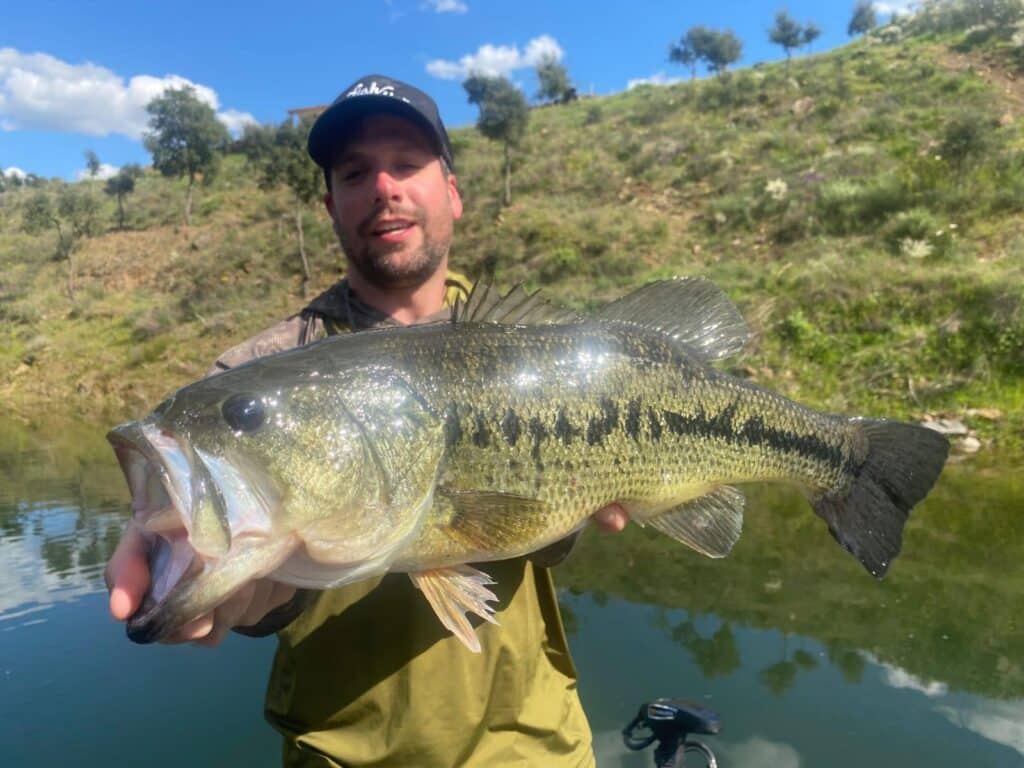
Forget pike, zander or catfish: at this altitude, we are in the exclusive kingdom of salmonids, and what a kingdom it is! Lake Cap-de-Long is famous throughout France for its population of lake trout (Canadian char), a rare fish in France that can reach remarkable sizes here, with specimens regularly topping 60 centimetres. Alongside it, we find wild brown trout, brook trout and a few Arctic char. The forage fish are mainly minnows and small salmonids, which clearly steers our lure choices towards slim, natural profiles.
As for techniques, lake trout are mainly caught early in the season, just after the thaw, when they move close to the margins: heavy wobbling spoons, blade baits and soft lures on a drop shot rig or jighead cast long and retrieved slowly near the bottom make all the difference. Later in the season, they drop back down into the cold layer of water and you then have to fish deep, sometimes beyond 15 metres. For brown trout and brook trout, the 5 to 7 cm minnow jerkbait fished with a twitching retrieve remains our favourite weapon, as do small spinners worked along the scree. Remember to check the fishing season opening dates : this is a category 1 water, with a short season dictated by the altitude.
The environment here is purely mineral: no reed beds or weed beds as in the lowlands, but scree, plunging granite slabs and a few mountain pines clinging to the slopes. These rocky structures are our best clues to where the fish are: the drop-offs where boulders sink into the deep blue concentrate hunting lake trout. As for birdlife, bearded vultures, griffon vultures and golden eagles regularly fly over the water, and watching fish-eating birds such as the goosander can also point us towards areas rich in minnows.
How to get to the lake
Access is by car from Saint-Lary-Soulan via the D929 then the D929a, a superb mountain road that climbs to the foot of the dam: it is one of the few large high-altitude lakes in the Pyrenees that you can drive straight up to. There is a free car park by the dam, next to the mountain restaurant. Be aware that the road is usually closed from November until late May or early June depending on snow cover, which incidentally coincides with the start of the best fishing period. Motorised boats are banned and the use of float tubes or rowing boats is heavily restricted by local regulations and high-mountain conditions, so we fish mainly from the bank, which is no problem given the depths reachable just a few metres from the shore. No public transport serves the site: car-sharing from the Aure valley remains the best option if you have no vehicle.
Map of the lake
Weather and fishing conditions
At 2,161 metres, the climate is harsh and changeable: ice covers the lake for a good part of the year and the surface water rarely exceeds 12 to 14 °C even at the height of summer. That is precisely what makes the salmonids so happy. In our view, June and early July, just after the thaw, are the golden window: lake trout hunt along the margins and remain within reach of lures cast from the bank. In midsummer, focus on the first hours of daylight and on deep fishing. As for conditions, a light breeze rippling the surface and an overcast sky are our allies, as the crystal-clear water makes the fish wary in bright sunshine. Stable or slightly falling atmospheric pressure often triggers the best activity. Watch out for mountain thunderstorms, which are frequent on summer afternoons: always check the forecast before heading up.
What to do at Lake Cap-de-Long?
For us, lure fishing is obviously the main activity here: tracking lake trout in a high-mountain setting is an experience few French destinations can offer. Swimming is strongly discouraged (icy water and fluctuating levels) and boating is very restricted, but the site is an exceptional starting point for hiking in the nearby Néouvielle nature reserve, with its lakes of Aumar and Aubert. Mountain bikers will find great trails in the Aure valley below, and photographers will love the evening light on the dam.
For the bank angler, several areas deserve particular attention: the dam area itself, with its great depths reachable with a long cast, the rocky points on the north shore that create pronounced drop-offs, and the far end of the lake, at the tail of the reservoir, where meltwater inflows attract minnows and hunting salmonids. Also look for places where the scree plunges steeply: these are lake trout motorways early in the season. The path along the shore makes it easy to move from spot to spot.
Hiking and scouting swims around the lake
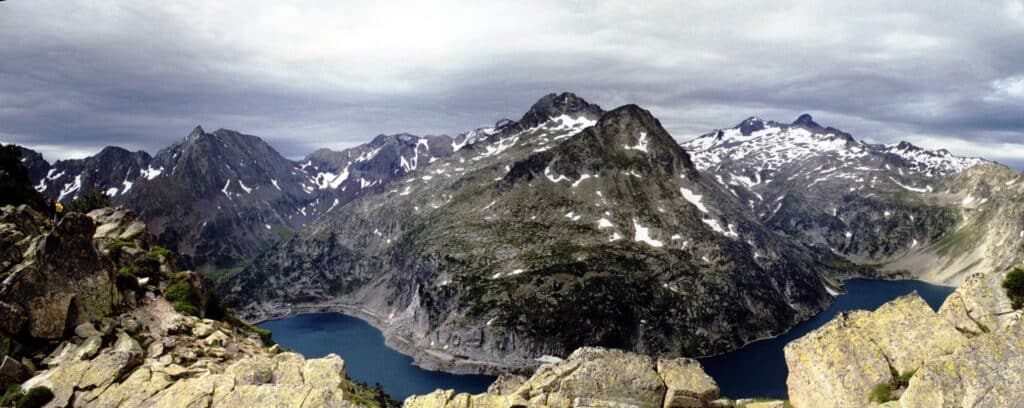
Walking around this lake kills two birds with one stone: you enjoy an exceptional panorama and scout spots for future sessions. First option: a partial circuit of the lake along the north shore path, about 5 km there and back, 1.5 to 2 hours, easy to moderate. Ideal for identifying the rocky points and drop-offs visible in the clear water. Second loop: the climb towards Upper Cap-de-Long lake and the Laquettes via the GR10 variant, about 8 km and 3 to 4 hours, moderate, with bird’s-eye views that perfectly reveal the submerged structures and drawdown zones. Finally, for the fittest, the ascent of the Turon de Néouvielle (3,035 m) from the dam, 12 km there and back and 6 to 7 hours, difficult, gives a complete aerial reading of the lake: we recommend taking binoculars and noting the shallows visible from the ridges.
Where to stay and eat?
There is no camping right on the shore of the reservoir (this is a regulated high-mountain area, and night fishing is not allowed on category 1 waters anyway), but bivouacking is tolerated under certain conditions near the Néouvielle reserve, from 7 pm to 9 am. For more comfort, the Aure valley is full of options: campsites in Saint-Lary-Soulan and Aragnouet, walkers’ lodges in Fabian and Aulon, and mountain hotels in Saint-Lary. For food, the mountain restaurant at the foot of the dam lets you have lunch on site between sessions, and the good restaurants of Saint-Lary serve garbure, Barèges-Gavarnie AOC mutton and summer-pasture cheeses. The Saturday morning market in Saint-Lary-Soulan is perfect for stocking up on local produce before heading up to fish.
FAQ – your questions about Lake Cap-de-Long
What are the best spots on Lake Cap-de-Long?
The best spots are by the dam, where the great depths can be reached with a long cast, and on the rocky points of the north shore, which create pronounced drop-offs. The tail of the reservoir, fed by meltwater, also concentrates forage fish and therefore hunting salmonids, especially early in the season.
Can you fish for trout there?
Yes, the lake holds wild brown trout as well as brook trout, in addition to the famous lake trout. 5 to 7 cm minnow jerkbaits and small spinners worked along the scree give excellent results, particularly in June and July just after the ice melts.
Which lures should you use for pike?
There are no pike in this high-altitude lake: at 2,161 metres, the cold water is the exclusive domain of salmonids such as lake trout and brown trout. If you are after pike on lures, head instead for the lowland lakes and reservoirs of the Pyrenean foothills, in category 2 waters.
Are there wels catfish in the lake?
No, there are no catfish in this high-mountain reservoir: the icy water and limited biological productivity at this altitude do not allow the species to settle. The fish population consists exclusively of salmonids, including the rare lake trout that gives the site its reputation.
Where can you find baitfish in the lake?
Minnows, the main food source for the lake’s salmonids, gather in the shallow areas at the tail of the reservoir and along the scree margins, especially during the warmest hours of the day. Spotting these concentrations of forage fish is the key to locating hunting lake trout and brown trout, particularly early in the morning.
How do you fish for perch with soft lures?
Perch are absent from this high-altitude water, but finesse soft-lure techniques remain deadly on salmonids: a small 5 cm shad on a drop shot or a light jighead, retrieved slowly along the rocky drop-offs, regularly triggers attacks from lake trout. Favour natural minnow-imitating colours in this crystal-clear water.